Prep Tools
Cha He (Tea Presentation Holder)
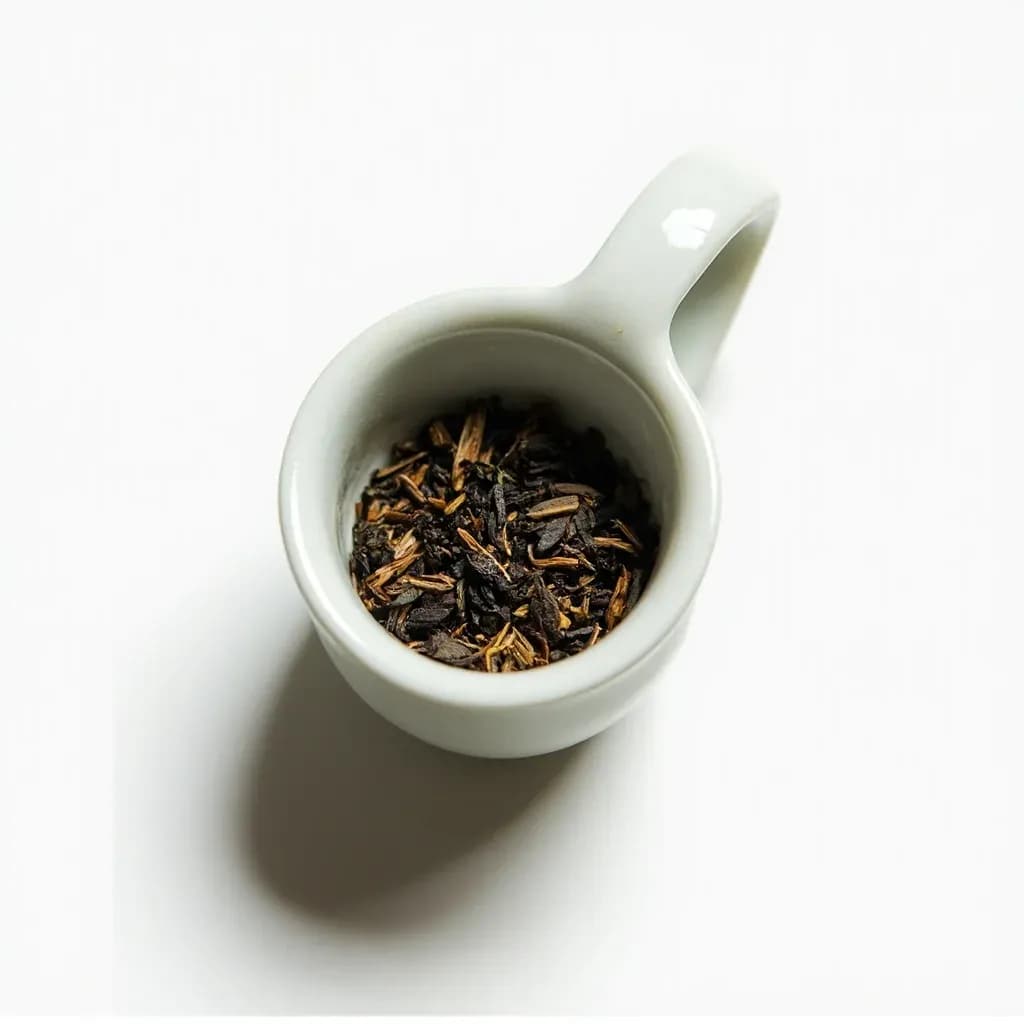
A curved scoop that presents and measures dry tea leaves before brewing.
A cha he is a small curved vessel, often shaped like a lotus petal, used to hold and display dry tea leaves so guests can admire and smell them before brewing. It also serves as a tidy scoop to portion the leaves into the teapot. It is a graceful part of the gongfu tea ritual rather than a brewing tool itself.
The cha he is a shallow, curved scoop used in the Chinese Gongfu Cha tea ceremony to display dry tea leaves to guests and to transfer them from a storage vessel into the brewing pot or gaiwan. The word literally means "tea lotus" — a nod to the leaf-, boat-, or pod-shaped silhouettes that most examples take — and the tool is, functionally, a small palette. It is not a measuring spoon and not a storage dish; its job is the brief, ceremonial moment of presentation that opens a tea session, when host and guest look at the dry leaves together, inhale their resting aroma, and judge what is about to be brewed.
Because a cha he sits between the caddy and the kettle, it shapes how the tea is perceived before any water is poured. A generous, well-shaped piece signals care; a stained or odor-laden one quietly announces the opposite. Most are sized to fit a single infusion's worth of leaves in the palm — enough to see, not enough to crowd — and they are designed to be lifted with two fingers at the rim and offered face-up to the guest, leaves visible, never heaped.
Practically, a cha he solves a small but real problem: dry leaves are brittle, aromatic, and easily bruised, and pouring them straight from a tin into a hot vessel is awkward and noisy. The scoop catches them, holds them dry, and gives the brewer a moment to portion correctly using a cha shao, the small tea spoon that is its usual companion.
Alternatives
Types & varieties
The everyday classic: light, neutral, and unlikely to interfere with the dry aroma of the leaves; the default choice for daily sessions and the easiest for beginners to learn handling with.
Usually glazed white so the true color, size, and shape of the dry leaves read clearly; favored when the visual appearance of the tea matters, such as with bud-heavy whites or rolled oolongs.
A more formal or gift-grade option; develops a soft patina with use and is reserved for higher-end tea presentations.
Decorative and often carved or painted; common in gift sets and matched tea trays, though the finish can hold scent and is best used with robust teas.
Rustic, hand-shaped, and sometimes associated with aged hei cha (dark tea) and traditionalist circles; absorbs and mellows over time.
A decorative variant sculpted to resemble a lotus seed pod, with little wells that cradle each leaf; popular as a display piece on the tea table.
Choosing a Cha He
The material matters as much as the shape, because the cha he is a sensory instrument. Bamboo and unglazed porcelain are the most neutral and will not add their own scent to the dry leaves; metal can carry a faint tinny note, and any porous or finished wood will eventually hold the ghost of past teas. White porcelain is the best choice when you need to judge a tea visually — the color of a bud, the silver down of a Bai Hao oolong, the tightness of a rolled oolong — because nothing competes with the leaf. Size should match your brewing vessel: a cha he that holds far more than one infusion's worth of leaves encourages overpouring from storage.
- Bamboo or porcelain for clean aroma and clear color reading
- Silver or lacquer for formal occasions and gifts
- Lotus-pod or carved shapes for display, not daily use
- Roughly palm-sized, with a rim that can be pinched with two fingers
Using a Cha He in Ceremony
The cha he enters the session at the appreciation step, after the cups and vessels have been warmed and before the first infusion. The host tips a small amount of dry leaf from the caddy onto the cha he, levels it with a tap of the wrist, and offers it face-up to the guest, holding it by the rim with thumb and forefinger. The guest observes the shape, notes the dry aroma, and returns the cha he; only then does the host use the cha shao to move the leaves into the warmed pot. The two tools are deliberately distinct: the cha he presents, the cha shao portions.
- Tip, do not pour, leaves from the caddy to avoid bruising
- Offer the cha he face-up so the guest sees the leaves, not the rim
- Use the cha shao to transfer leaves into the brewing vessel; never tip the cha he directly into a hot pot
- Empty and wipe the cha he between sessions, especially when switching tea types
Common uses
Tips & pitfalls
- Choose bamboo or porcelain if you want to judge a tea's dry aroma cleanly; metal and lacquered surfaces can add their own scent
- Use a cha shao for measuring; the cha he is for presentation, not portioning, and tipping the whole scoop into the pot leads to overdosing
- Do not overfill the cha he — it should hold only the amount needed for one infusion, typically 5–8 g for Gongfu
- Wipe the cha he dry between sessions; residual moisture stales delicate teas like green, white, and yellow
- Never use a damp cha he, and never scoop from a damp caddy; trace moisture will transfer into dry storage and shorten the life of the leaves
- Match the cha he's formality to the occasion — bamboo for daily brewing, porcelain or silver when hosting
- Lift the cha he by the rim with two fingers rather than cupping the underside, which leaves fingerprints on the visible face
- Store it on the tea table, on a small rest, or in a soft pouch so the concave surface does not collect dust between sessions
Good to know
- Chinese Name
- 茶荷 (chá hé), literally "tea lotus"
- Also Known As
- Tea presentation holder, tea leaf tray, tea dish
- Origin
- China, as part of the traditional Gongfu Cha ceremony
- Typical Materials
- Bamboo, porcelain, silver, lacquered wood, gourd, ceramics
- Typical Length
- Roughly 10–20 cm (4–8 in), palm-sized
- Shape
- Shallow curved scoop; commonly leaf-, boat-, or lotus-pod-shaped
- Primary Function
- Presenting dry leaves to guests and transferring them to the brewing vessel
- Paired With
- Cha shao (tea spoon) for measuring; cha cang (tea caddy) for storage
Also called
Tea Presentation Holder · Tea Scoop · Cha He Vessel
Related

Peeler
Swift blade for stripping skin off fruit and vegetables

Grater
Sharp-toothed surface for shredding cheese and vegetables

Microplane
Ultra-fine rasp for citrus zest, garlic, and hard cheese

Mixing Bowl
All-purpose bowl for combining, whisking, and tossing

Whisk
Looped wires that beat air into eggs, cream, and sauces

Spatula
Flat blade for flipping, lifting, and scraping

Slotted Spoon
Pierced spoon that lifts solids and drains the liquid behind

Wooden Spoon
Gentle, heat-friendly spoon for stirring anything