Prep Tools
Champagne Stopper
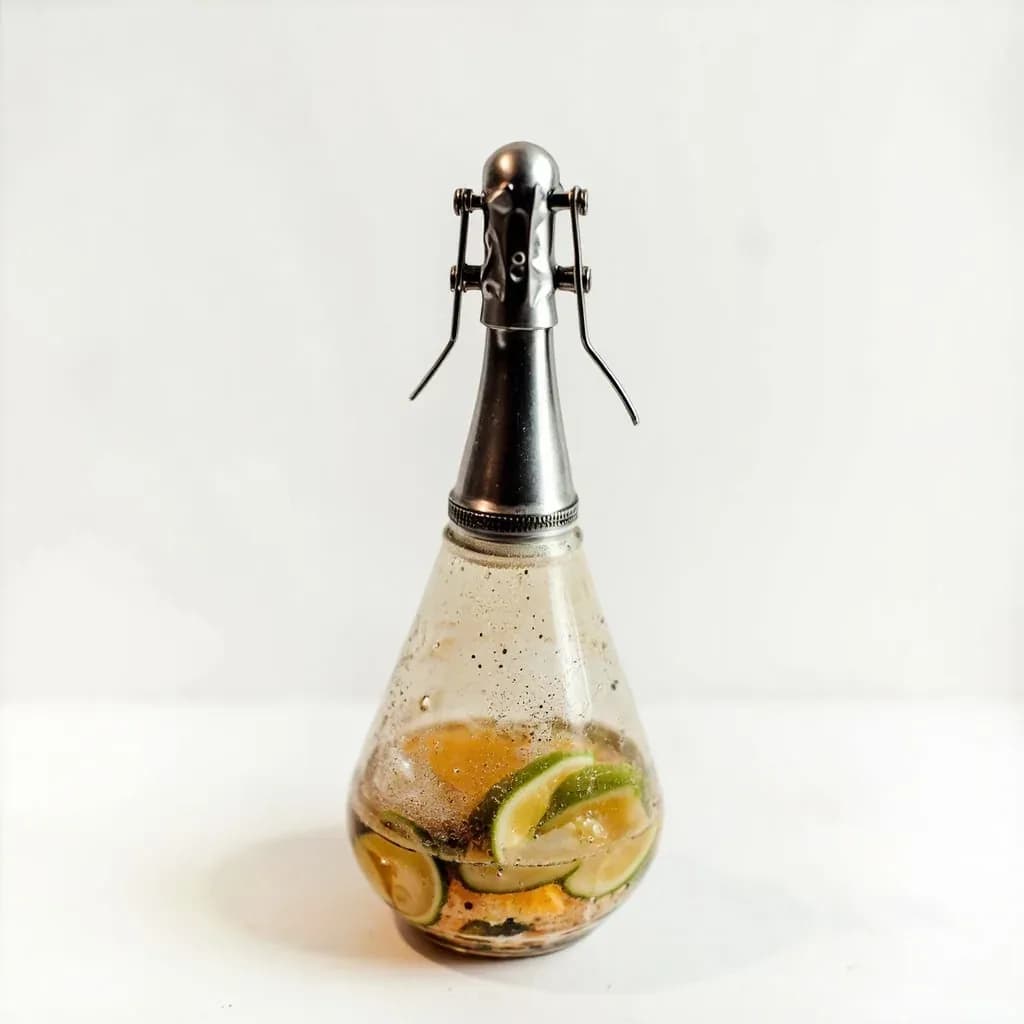
A clamping or vacuum stopper that reseals sparkling wine to keep the bubbles in.
A champagne stopper is a sealing plug with hinged side arms or a vacuum pump that grips a sparkling-wine bottle's lip to trap carbonation after opening. It lets you save an unfinished bottle of Champagne, cava, or prosecco for a day or two without it going flat. The arms lock under the bottle's flange to resist the internal pressure that would push a plain cork out.
A champagne stopper is a small closure designed to reseal an opened bottle of sparkling wine tightly enough that the dissolved carbon dioxide and the wine's aromatic freshness stay trapped inside. Unlike still wine, which can tolerate a cork or even a screw cap for days, sparkling wine is under pressure — typically 5–6 atmospheres in a standard bottle — and once the bottle is opened, that pressure begins escaping immediately. A good stopper fights that escape on two fronts: it blocks the neck mechanically so CO2 cannot vent, and in the better designs it also reduces the headspace air that drives oxidation and flattens the flavor.
The reason the tool matters in any serious bar or home kitchen is purely economic and sensory. A bottle of good Champagne or grower Champagne does not get cheaper once poured, and an open bottle left to its own devices loses perceptible fizz within two to four hours at room temperature. With the right stopper and proper cold, upright storage, the same bottle can be poured across a brunch, a tasting flight, or a second-day dinner without tasting like a still, bruised version of itself. The clamp/lever style handles the common overnight case; a vacuum-pump stopper extends that window when the bottle has to last longer.
There is no magic in any of these devices. They cannot create bubbles that have already escaped, and they work best as part of a habit — chill the bottle, seal it, return it to the fridge upright — rather than as a rescue for a warm, half-finished bottle left on the counter for hours.
Alternatives
Types & varieties
Two hinged metal arms snap over the bottle lip while a rubber pad seals the opening. The most traditional and bar-common design; relies on mechanical grip plus the residual internal pressure of the still-fizzy wine.
A silicone plug seated in the neck with a small hand pump on top. Pumping extracts headspace air so atmospheric pressure holds the plug down. The best choice when a bottle must last more than 48 hours, because it slows oxidation in addition to holding CO2.
A cap that threads onto the bottle finish or onto an adapter ring. Tighter than a press-in plug but uncommon in home barware.
A single-piece silicone cone pushed into the neck. Inexpensive and easy to clean, but the least reliable under pressure and prone to popping if the bottle is jostled.
A small hand-crimper that reinstalls a metal bottle cap on the crown finish. A restaurant and bar tool that delivers a near-factory seal but requires a supply of caps and practiced technique.
Gift-shop designs shaped like animals, figures, or bottle charms. Mechanically similar to a press-in plug, sometimes weighted for visual effect.
How a Champagne Stopper Actually Works
Sparkling wine loses its character through two parallel processes: CO2 escaping into the air, and oxygen dissolving back into the wine and oxidizing its delicate aromatics. A clamp/lever stopper addresses mainly the first — its rubber pad blocks the neck and the hinged arms lock it in place, using the bottle's own remaining pressure to keep the seal loaded. A vacuum-pump stopper addresses both, because pulling air out of the headspace reduces the partial pressure of oxygen sitting above the wine, which measurably slows the stale, bruised-fruit notes that appear in a flat Champagne.
The practical limit is not the stopper but the wine itself. Once CO2 has degassed, no seal can put it back. That is why every reliable preservation routine begins with a cold bottle and ends with the fridge, not with the stopper alone.
- Clamp/lever styles depend partly on residual bottle pressure — once the wine is flat, the seal can slip.
- Vacuum-pump styles buy you extra hours by reducing headspace oxygen, but only if the bottle stays cold and still.
- No stopper restores fizz that has already escaped; it only slows further loss.
Choosing Between a Clamp and a Pump
For a home cook who finishes a bottle the next day, a clamp/lever stopper is the right tool: it is one motion, no setup, no pump to lose. For a bar, a tasting room, or anyone pouring Champagne by the glass across a long service, the vacuum-pump stopper pays for itself quickly because the wine actually tastes alive on day two and sometimes day three. The trade-off is one more step (pumping, removing the pump, storing the pump) and the need to keep the silicone gasket clean.
Common uses
Tips & pitfalls
- Chill the bottle fully before resealing — cold liquid holds CO2 in solution far longer than a room-temperature bottle.
- Store the resealed bottle standing upright; lying it on its side encourages micro-leaks and can work a press-in plug loose.
- Wipe the bottle rim dry before seating the stopper. Residual Champagne sugar breaks the rubber-to-glass seal and causes slow weeping.
- Do not push a press-in plug down to the bulge of the bottle. Seat it just at the straight-walled lip, where the glass walls are parallel.
- Remove and hand-wash the silicone gasket every few uses. Trapped moisture under the gasket grows mold and taints the next bottle.
- Skip the improvised foil-and-bung method from old bartender lore. It leaks within hours compared with any purpose-made stopper.
- Listen when you remove the stopper. A clean hiss means the seal held and the wine should still be lively; silence means it has gone flat and will taste dull.
Good to know
- Also called
- Champagne saver, sparkling wine stopper, bubbly stopper
- Primary purpose
- Reseal an opened bottle of sparkling wine to retain carbonation and slow oxidation
- Typical bottle fit
- Standard 750 mL sparkling wine bottle with a 29.5 mm crown-finish neck
- Average preservation time
- 1–3 days for clamp designs; vacuum-pump models can stretch to 5–7 days if kept cold
- Common materials
- Stainless steel, ABS plastic, silicone rubber gasket, chrome-plated zinc alloy
- Mechanism types
- Clamp/lever, vacuum pump, threaded, press-in silicone, crown-cap re-sealer
- Iconic example
- Vacu Vin Champagne Pump Stopper, introduced in 1986
- Storage after sealing
- Upright, refrigerated at 2–4 °C (35–39 °F)
- Cleaning
- Top-rack dishwasher safe; silicone gaskets should be removed and hand-washed
- Typical price range
- $5–$15 for basic clamp or plug styles; $15–$40 for premium lever or pump models
Also called
Vacuum Wine Stopper · Sparkling Wine Stopper · Bubbly Stopper
Related

Peeler
Swift blade for stripping skin off fruit and vegetables

Grater
Sharp-toothed surface for shredding cheese and vegetables

Microplane
Ultra-fine rasp for citrus zest, garlic, and hard cheese

Mixing Bowl
All-purpose bowl for combining, whisking, and tossing

Whisk
Looped wires that beat air into eggs, cream, and sauces

Spatula
Flat blade for flipping, lifting, and scraping

Slotted Spoon
Pierced spoon that lifts solids and drains the liquid behind

Wooden Spoon
Gentle, heat-friendly spoon for stirring anything