Prep Tools
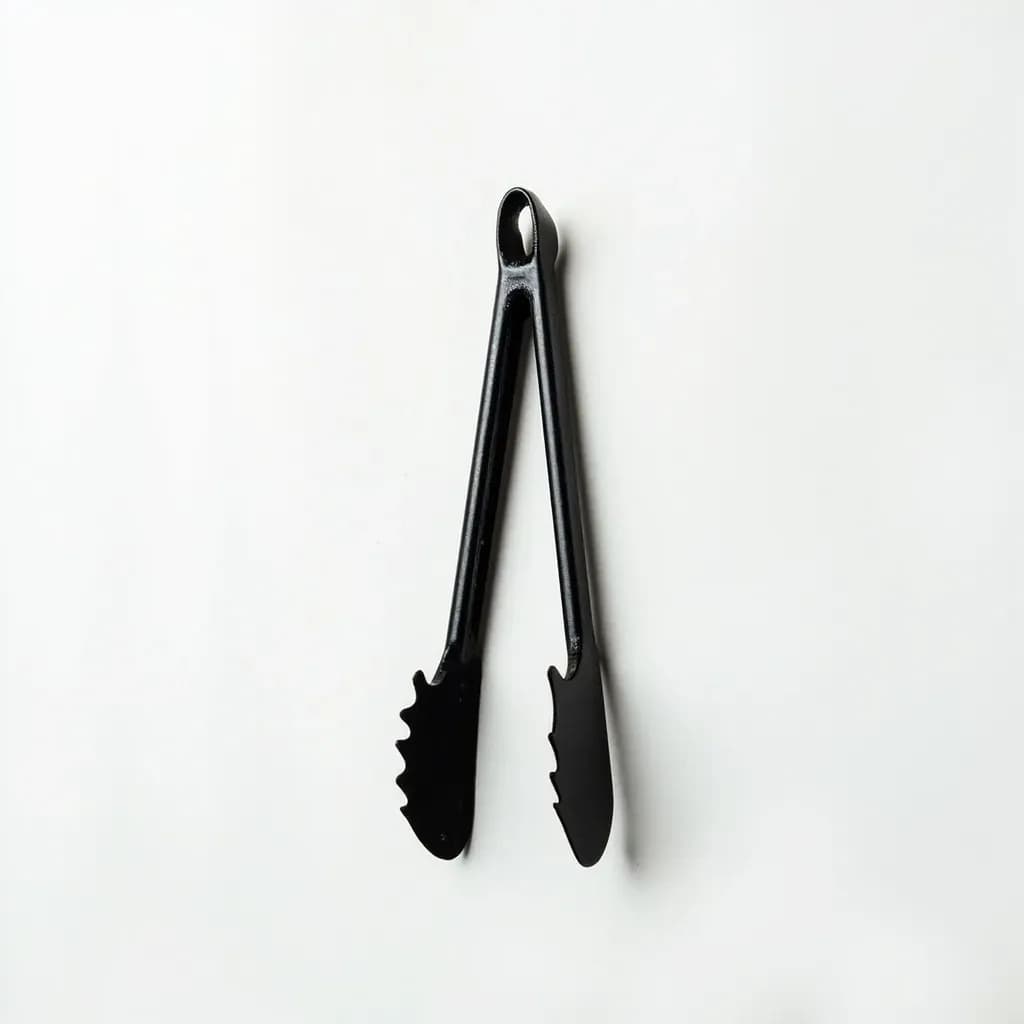
Charcoal Tongs
Long sturdy tongs for arranging glowing coals and lump charcoal in a grill or smoker.
Charcoal tongs are long, heat-tolerant tongs made specifically to grab and reposition hot coals rather than food. Their length keeps the hands away from the fire while the cook builds, banks, or refuels a charcoal bed. They are heavier and coarser than food tongs and often have a wider gripping head for irregular lumps.
Charcoal tongs are long, heat-rated tongs purpose-built for moving, rearranging, and adding live coals and unlit lump charcoal in a grill or smoker. They occupy a narrow but important niche between short kitchen tongs (which will melt, deform, or simply lack the reach) and heavier fireplace tools like pokers and shovels (which are clumsy when working around food). The working end is always bare metal — typically stainless steel or wrought iron — because no plastic, silicone, or wood can survive repeated contact with glowing embers, and the length (usually 16 to 26 inches for kettle grills, up to 36 inches for kamados and offset smokers) keeps the cook's hand well back from radiant heat and flare-ups.
What separates a good pair from a bad one is jaw geometry. The most useful tongs have flared, slightly hooked or scalloped tips that cradle an individual lump without crushing it, and a pivot or scissor action — often spring-loaded — that returns the jaws to the open position. Ring-and-lever styles, descended from old fireplace tongs, use a sliding collar to lock the jaws shut, which many pitmasters prefer for hauling irregular hunks of lump without dropping them. In practice, the tong earns its keep during the quiet adjustments that define good live-fire cooking: building a two-zone fire, dropping fresh coals onto a fading bed, banking embers away from the cook, or sweeping ash without dismantling the firebox.
Cooks also use them for moving wood chunks and smoking splits onto hot coals, but they are not flippers for food — the same soot-coated, heat-soaked jaws that grip glowing lump will deposit ash and metal residue on a steak and should never touch raw or cooking protein. Keep a dedicated pair of grilling tongs for food; the charcoal pair lives with the ash tools and the chimney starter.
Alternatives
Types & varieties
The most common style — two arms joined by a rivet, usually spring-loaded, with flared jaws. Easy one-handed use.
Older fireplace-style design with a sliding ring or collar that locks the jaws closed; favored by traditionalists for carrying large, oddly shaped lumps of charcoal.
Extra-long (24–36 in) versions built for kamado cookers and offset smokers where the firebox sits well back from the cook surface.
Heavy, rustic, often made by individual blacksmiths; prized for longevity and a confident grip on big lump.
Lightweight, mass-produced, often with a locking catch and a hanging loop; the everyday workhorse for kettle grills.
A hybrid with cupped, spoon-like jaws for moving a pile of ash or scooping many small briquettes at once.
Choosing the Right Length and Jaw Shape
Match the tong to the cooker, not the other way around. A 16- to 18-inch pair is comfortable on a standard kettle grill, where the coals sit a forearm's length from the cook's hand. Kamado cookers and offset smokers push the firebox back and add a thick ceramic or steel wall in the way; anything shorter than 24 inches forces the cook to hover over the rim, which is uncomfortable and unsafe. For working over a deep firebox or reaching across a wide grate, step up to 30 inches or more. Jaw shape matters as much as length: flared, hooked, or scalloped tips grab the irregular chunks of lump without crushing them, while flat parallel jaws — fine for uniform briquettes — tend to let pointy lump pieces skate out.
- Kettle grill: 16–18 in is the sweet spot.
- Kamado cooker (Big Green Egg, Kamado Joe, etc.): 24 in minimum.
- Offset smoker with a side firebox: 24–36 in depending on firebox depth.
- Lump charcoal: prefer flared or hooked jaws.
- Briquettes only: flat parallel jaws are fine and easier to manufacture.
Care and Maintenance
Stainless steel tongs need almost nothing: a wipe-down while still warm (not hot enough to burn) to clear ash, then storage out of the rain. Wrought iron versions reward a thin coat of food-safe oil after each use to keep surface rust at bay — the same way you would treat a carbon-steel pan. Avoid the dishwasher; harsh detergent and pooled water pit the metal and weaken any wooden or silicone grips. If a spring loosens over years of use, a firm hand-squeeze back into shape usually restores the action; prying the spring apart is the fastest way to snap it.
- Hang by the loop or ring rather than tossing in a drawer — protects the pivot and spring.
- Wipe ash off while the tongs are still warm; once it cools it hardens on the surface and traps moisture that can corrode the metal.
- Oil wrought iron lightly after cleaning to prevent rust; stainless needs no oil.
- Skip the dishwasher on every variety.
- Replace if the pivot rivet develops side-to-side wobble — the jaws will no longer meet cleanly.
Common uses
Tips & pitfalls
- Choose length to match your grill: kettle grills work with 16–18 in; kamados and offsets usually need 24 in or more.
- Never substitute short kitchen tongs for live coals — the plastic or silicone will melt and the reach is unsafe.
- Keep the jaws dry before contacting hot coals; trapped moisture can spit steam or, in extreme cases, crack thinner stamped metal.
- Hang the tongs rather than tossing them in a drawer; this keeps the spring and pivot from being bent out of alignment.
- For lump charcoal with irregular shapes, prefer tongs with flared or hooked tips rather than flat parallel jaws.
- Wipe down after use while still warm (not hot) to remove ash before it hardens and traps moisture against the metal; oil lightly on iron versions.
- If a spring loosens over time, a firm hand-squeeze back into shape usually restores action — avoid prying the spring apart.
- Don't flip food with charcoal tongs; dedicate a separate pair of grilling tongs or a spatula for protein to keep things sanitary and avoid ash and residue on the food.
Good to know
- Also called
- Coal tongs, fire tongs (in grilling contexts)
- Typical length
- 16–26 in (40–66 cm); kamado and offset-smoker versions often 24–36 in
- Materials
- Stainless steel (most common) or hand-forged wrought iron; handles may be plain metal or fitted with silicone or wood grips
- Mechanism
- Pivot or scissor action on a riveted fulcrum; many are spring-loaded to self-open
- Heat tolerance
- Rated for direct contact with live coals — no plastic, silicone, or wood on the working end
- Jaw shape
- Wide, flared, often slightly hooked or scalloped to cradle irregular lump
- Origin
- Adapted from blacksmith's and fireplace tongs; long-handled grilling versions became widespread with the rise of offset smokers and kamado cookers in the late 20th century
- Storage
- Hang by a ring or loop; keep dry to prevent rust on iron versions
- Cost range
- Roughly $15–$80 USD depending on length, material, and brand
Also called
coal tongs · grill tongs · ember tongs
Related

Peeler
Swift blade for stripping skin off fruit and vegetables

Grater
Sharp-toothed surface for shredding cheese and vegetables

Microplane
Ultra-fine rasp for citrus zest, garlic, and hard cheese

Mixing Bowl
All-purpose bowl for combining, whisking, and tossing

Whisk
Looped wires that beat air into eggs, cream, and sauces

Spatula
Flat blade for flipping, lifting, and scraping

Slotted Spoon
Pierced spoon that lifts solids and drains the liquid behind

Wooden Spoon
Gentle, heat-friendly spoon for stirring anything