Prep Tools
Chasen (Bamboo Matcha Whisk)
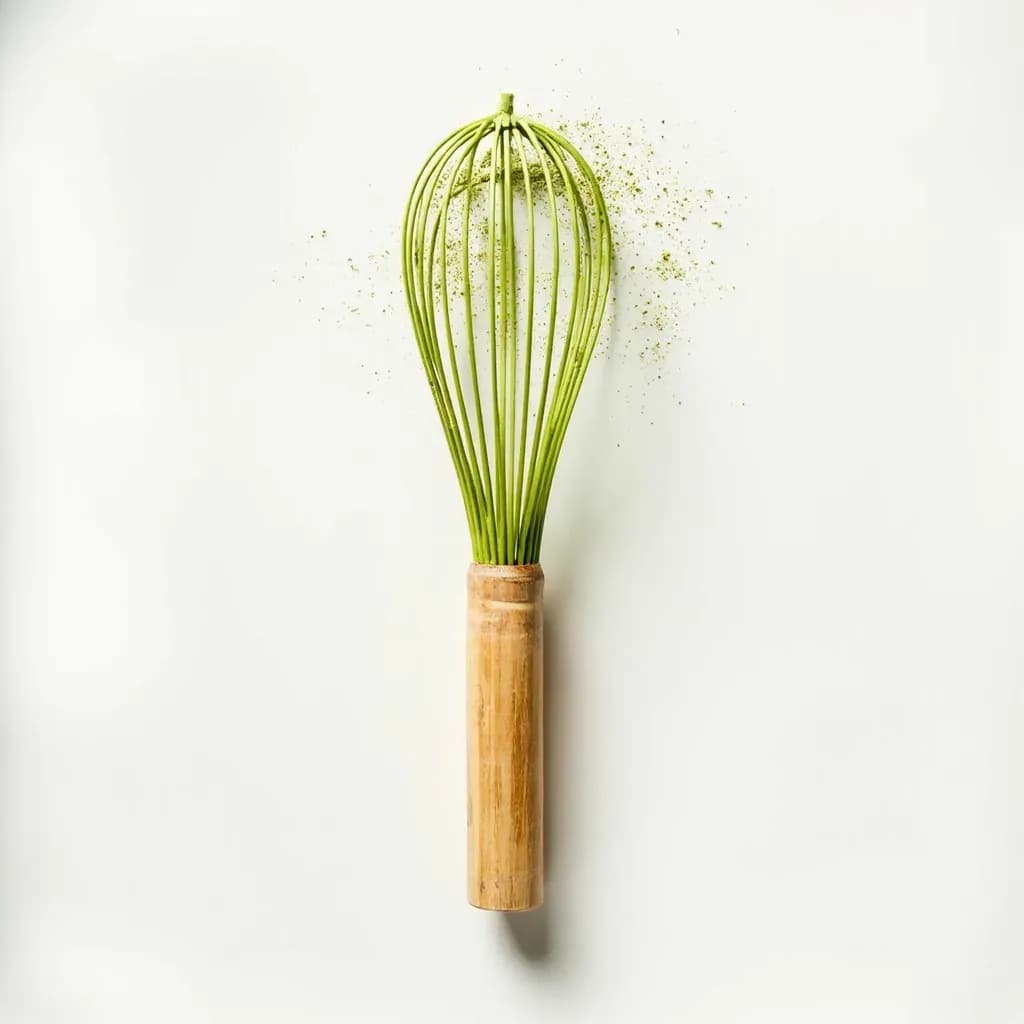
A finely split bamboo whisk used to froth powdered matcha into a smooth, foamy tea.
A chasen is carved from a single piece of bamboo into dozens of thin, curved tines that whisk matcha powder and hot water into a lump-free, frothy bowl of tea. The cook moves it in a brisk zigzag to aerate the matcha without scratching the tea bowl. It is a central tool of the Japanese tea ceremony and is also used by cooks to disperse matcha into desserts and drinks.
A chasen is a single piece of madake (timber bamboo) carved into a whisk of 16 to 120 fine tines, almost all of them made in Takayama, Ikoma District of Nara Prefecture, where the craft is designated a Traditional Japanese Craft. The bamboo is aged and smoke-cured for two to three years before carving, which darkens it honey-tobacco brown and stabilizes the fibers so the tines hold their spring through years of hot-water use. What sets the chasen apart from any wire or metal whisk is the U-shaped curve where handle meets tines — that arc is the spring of the tool, flexing on the surface of the liquid to whip matcha into a fine crema that no other implement reproduces quite as cleanly.
In use, the chasen is paired with a wide, rough-footed chawan and works by skimming the surface of the tea rather than beating through it. Agitation happens at the boundary of liquid and air, which is why a rapid side-to-side M or W motion produces tight, uniform microfoam while a circular stir leaves a few large bubbles and a thin body. The whisk is purpose-built for matcha but is forgiving enough to handle small jobs with hojicha or genmaicha powder.
For the home cook, the chasen is a specialized but deeply satisfying tool. With a 64- or 80-tine model and a few seconds of technique, a teaspoon of bitter green powder becomes a drink with the texture of a fine espresso crema. It asks for gentle care — no soap, no sealed storage, tines always up while drying — and rewards that care with one to two years of consistent foaming before the spring finally gives out.
Alternatives
Types & varieties
Sixteen thick tines; the basic everyday whisk, well suited to koicha (thick tea) and casual use where a creamy foam is not essential.
Around twenty tines; a versatile mid-grade whisk for general matcha service.
Sixty-four fine tines; the standard size for producing a tight, even crema on usucha at home.
Eighty very fine tines; the workhorse of formal usucha, capable of dense, silky foam with practice.
One hundred fine tines; a high-grade whisk for the silkiest, most refined foam in formal settings.
One hundred twenty tines; rare and specialist-grade, reserved for ceremonial usucha and prized by collectors.
A 16- or 20-tine whisk reinforced with a metal collar at the prong base; tougher and more forgiving for learners and tea schools.
Choosing a Tine Count
Tine count is the single most useful spec to understand. Fewer tines mean stiffer, faster whisking and a coarser foam — fine for koicha, where matcha is kneaded more than whisked, but less useful for the crema that defines a good usucha. More tines mean finer foam and a more delicate tool: an 80- or 100-tine chasen needs a softer hand and a wet pre-soak to survive. For most home cooks, 64 tines is the sweet spot — forgiving enough to learn on, fine enough to make a creditable foam. 80 is the upgrade once technique is consistent.
- 16–20 tines: koicha, casual use, learners who are hard on tools.
- 64 tines: the home sweet spot for usucha.
- 80 tines: workhorse for formal usucha.
- 100–120 tines: ceremonial-grade, best in expert hands.
Care and the Life of the Whisk
A bamboo whisk is a tool that fails gracefully. A new chasen is stiff and a little unruly; after a few uses, the tines relax into their working curve. That curve is the tool's life: when tines stay splayed after drying, when tips snap, or when the U at the base no longer springs back, the chasen is spent. Three habits extend it — a 30–60 second soak in warm (not hot) water before whisking, an immediate clear-water rinse afterward, and drying tine-end up on a chasen-kake so air circulates and moisture drains away from the base. Never soap it; alkali dries and cracks the fibers. Never store it sealed in a drawer while damp; that is how you grow black mold inside the prong base.
- New: stiff tines, settles into its working curve after 2–3 uses.
- Mature: tines spring back cleanly after each whisk.
- Worn: tines stay splayed when dry, tips fray or snap, U-base loses spring.
Common uses
Tips & pitfalls
- Soak the tines in warm water for 30–60 seconds before whisking; dry tines snap and split at the tips, especially on higher-count whisks.
- Whisk in a rapid side-to-side M or W motion, not a circle — circular motion produces large bubbles, while the zigzag shears air into the surface and yields microfoam.
- Keep the tines riding the surface of the liquid. Pressing them into the bottom of the bowl flattens the spring and shortens the whisk's life.
- Use filtered, low-mineral water; hard water flattens the foam and leaves mineral deposits on the bamboo that dull the tines.
- Rinse in clear running water immediately after use and skip the soap — alkali dries the bamboo and cracks the tines within weeks.
- Dry tine-end up on a chasen-kake (whisk stand); storing the whisk sealed in a drawer or box while damp invites mold at the prong base.
- Replace the chasen when tines splay permanently, lose their spring, or the tips break — a tired whisk cannot hold foam no matter how good your water or powder is.
- A karakane (metal-ribbed) chasen is the best choice for learners and for tea schools; the metal collar keeps the tines aligned and tolerates a heavier hand.
Good to know
- Origin
- Takayama, Ikoma District, Nara Prefecture, Japan — designated a Traditional Japanese Craft (伝統的工芸品)
- Material
- A single culm of madake (timber bamboo), aged and smoke-cured 2–3 years before carving
- Construction
- Handle and tines carved from one continuous piece of bamboo; the U-curve at the base is the source of its spring
- Tine count
- 16 (basic) to 120 (specialist); 64 and 80 are the everyday standards for foamy usucha
- Standard pairing
- Used with a chawan — a wide, roughly glazed tea bowl with a textured foot that grips the whisk
- Care
- Rinse in clear water only, no soap; dry tine-end up on a chasen-kake to drain and air
- Lifespan
- Roughly 1–2 years of regular use before the tines splay permanently or lose their spring
Also called
matcha whisk · bamboo whisk · chasen
Related

Peeler
Swift blade for stripping skin off fruit and vegetables

Grater
Sharp-toothed surface for shredding cheese and vegetables

Microplane
Ultra-fine rasp for citrus zest, garlic, and hard cheese

Mixing Bowl
All-purpose bowl for combining, whisking, and tossing

Whisk
Looped wires that beat air into eggs, cream, and sauces

Spatula
Flat blade for flipping, lifting, and scraping

Slotted Spoon
Pierced spoon that lifts solids and drains the liquid behind

Wooden Spoon
Gentle, heat-friendly spoon for stirring anything