Prep Tools
Chawan (Matcha Bowl)
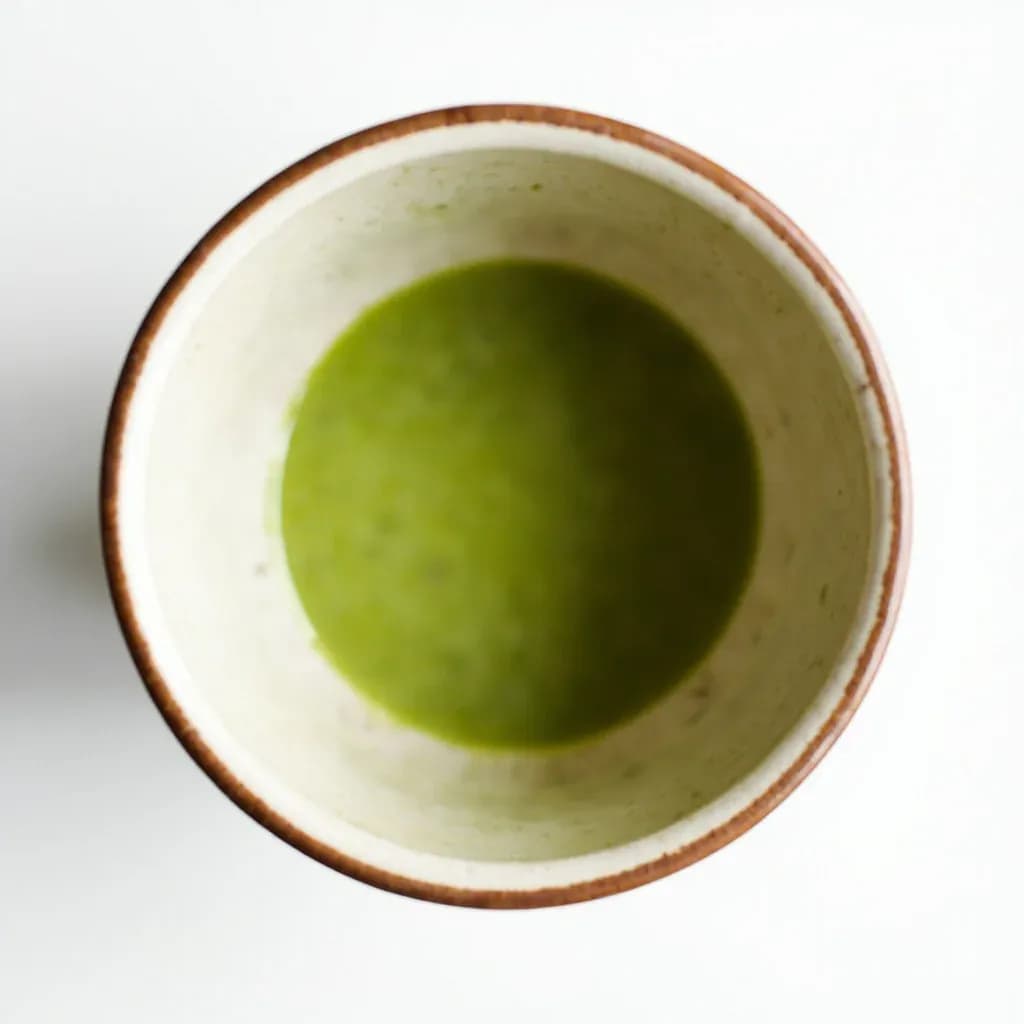
A wide ceramic bowl used to whisk and drink matcha in the Japanese tea ceremony.
A chawan is a broad, deep ceramic bowl used in Japanese tea practice to whisk powdered matcha with hot water and then drink it directly from the bowl. Its width gives the bamboo whisk room to move and froth the tea, while the heavy walls hold heat. Styles vary by season, with deeper bowls retaining warmth in winter and shallower ones cooling tea faster in summer.
The chawan looks like a wide, hand-thrown cereal bowl, but its proportions are dictated by a very specific job: whipping matcha into a froth with a bamboo whisk. Deep enough to contain the chasen's vigorous motion, wide enough that the fine tines never strike the walls, and shaped to bring the prepared tea to the drinker's lips in a single graceful gesture, it is the central tool of the Japanese tea ceremony and, by extension, of any serious matcha practice at home. The form is deceptively simple, but it is the result of centuries of refinement tied to the development of chanoyu, and even a modest modern chawan is almost always handmade.
The bowl is more than a tool — it is the visual and tactile anchor of chanoyu. The host selects a chawan to suit the season, the theme of the gathering, and the character of the guests; the bowl's glaze, weight, and decoration are part of the ceremony's aesthetic program. Because matcha is whisked and drunk from the same vessel, the chawan must perform three jobs at once: hold hot water for warming, accept the friction of a bamboo whisk without degrading, and feel good cradled in both hands. That combination of duties is why an ordinary soup or cereal bowl is a poor substitute.
Most chawan measure 11 to 15 cm (4.5 to 6 in) at the rim and hold roughly 200 to 300 ml, with a low foot ring (kōdai) that lets the bowl sit steadily on a flat surface or tatami mat. The body ranges from low-fired raku at about 1000 °C to high-fired porcelain, and may be glazed or left raw. Antique and named chawan are catalogued and exhibited as art objects; several are designated Important Cultural Properties or National Treasures of Japan.
Alternatives
Types & varieties
Hand-built by the Raku family line, founded by Chōjirō in the 16th century for Sen no Rikyū; low-fired, often black or red glaze, soft body. Considered the canonical chawan form.
From Yamaguchi Prefecture; pale cream crackled glaze over buff clay. The glaze crazes with use, gradually changing the bowl's appearance — a valued feature.
From Saga Prefecture; restrained, earthy glazes. One of the oldest Japanese tea-ware traditions, with a strong wabi aesthetic.
Unglazed stoneware from Okayama; surface character comes from natural wood-ash effects during firing.
From Tochigi Prefecture; rustic and robust. Brought to wider attention by Shōji Hamada and the mingei (folk craft) movement.
Korean-influenced 'well' bowls imported in the 16th century, considered the supreme classical form. Several are designated National Treasures.
Dark iron-rich glaze of Chinese origin; often shows hare's-fur or oil-spot patterning. Highly prized in Song-style tea.
Green copper glaze, often with geometric or naturalistic motifs; named for Furuta Oribe (16th century).
Kyoto-produced; the widest stylistic range of any Japanese tradition, often elaborately painted for aristocratic or seasonal use.
Bowls broken and rejoined with urushi lacquer dusted with gold (or no gold); valued in wabi-sabi aesthetics as improved by mending.
Form Follows Function
Every line of a chawan is dictated by the chasen. The bamboo whisk has dozens of fine tines that splay outward when moved; if those tines catch on a narrow wall, the whisk breaks or the glaze chips. A proper chawan is therefore wide at the rim and gently curved through the body, giving the whisk enough clearance on every side to move freely. The interior is also slightly deeper than it looks, so the tea can be whisked into a fine crema without sloshing over the edge.
The foot ring (kōdai) is the other functional tell. A cleanly cut, slightly ground foot shows that the potter trimmed the bowl carefully after throwing and that it will sit flat on a tatami mat or wooden tray. Rough, hollow, or wobbly feet are common in mass-produced pieces and are a useful warning sign when buying or evaluating a chawan.
For different teas, the proportions shift. Koicha (thick tea) is brewed in a slightly narrower, deeper bowl that keeps the dense, concentrated tea pooled; usucha (thin tea) uses a wider, shallower bowl that gives the whisk room to whip up foam. The two forms are not interchangeable, and a host will choose the bowl partly to suit the tea being served.
Common uses
Tips & pitfalls
- Warm the bowl before use: pour in hot water, swirl, and discard before adding matcha so the bowl does not chill the tea.
- Hold the bowl with both hands; rotate it roughly 180° (away from you) before drinking so the 'front' design does not touch your lips — this is protocol in formal chanoyu.
- For koicha (thick tea) use a deeper, narrower bowl; for usucha (thin tea), a wider bowl gives the chasen room to move and produce a fine crema.
- Wash by hand in warm water only. Avoid dish detergent, especially on antique, unglazed, or raku-fired pieces, which are porous and absorb soap and odors.
- Do not use a dishwasher or microwave. Kintsugi-repaired bowls (urushi and gold) and low-fired raku pieces are particularly vulnerable to heat and soaking.
- Dry upside down on a cloth before storing, and wrap individually in soft cloth to protect the foot ring and glaze from chipping.
- Whisk gently. Dragging the chasen hard against a soft, low-fired glaze can wear or crack the surface over time.
- Match the bowl to the season by convention: lighter, brighter forms in spring and summer; heavier, deeper, earth-toned glazes in autumn and winter.
- When evaluating a chawan, look at the kōdai (foot ring) — a cleanly cut, slightly ground foot is a mark of a well-made piece.
Good to know
- Origin
- Japan; developed for chanoyu (Japanese tea ceremony), with roots in Song and Yuan dynasty Chinese tea bowls
- Etymology
- Japanese chawan (茶碗): cha (tea) + wan (bowl)
- Material
- Ceramic — stoneware, earthenware, or porcelain; nearly all are handmade, glazed or unglazed
- Typical dimensions
- 11–15 cm (4.5–6 in) rim diameter; 7–9 cm tall; roughly 200–300 ml capacity
- Form
- Wide, rounded interior with a foot ring (kōdai), shaped so a chasen moves freely without striking the walls
- Firing range
- From low-fired raku (~1000 °C) to high-fired stoneware and porcelain
- Pairs with
- Chasen (bamboo whisk), chashaku (bamboo scoop), and matcha
- Cultural status
- Many historical chawan are designated Important Cultural Properties or National Treasures of Japan
Also called
Matcha Bowl · Tea Bowl
Related

Peeler
Swift blade for stripping skin off fruit and vegetables

Grater
Sharp-toothed surface for shredding cheese and vegetables

Microplane
Ultra-fine rasp for citrus zest, garlic, and hard cheese

Mixing Bowl
All-purpose bowl for combining, whisking, and tossing

Whisk
Looped wires that beat air into eggs, cream, and sauces

Spatula
Flat blade for flipping, lifting, and scraping

Slotted Spoon
Pierced spoon that lifts solids and drains the liquid behind

Wooden Spoon
Gentle, heat-friendly spoon for stirring anything