Prep Tools
Cheesecloth
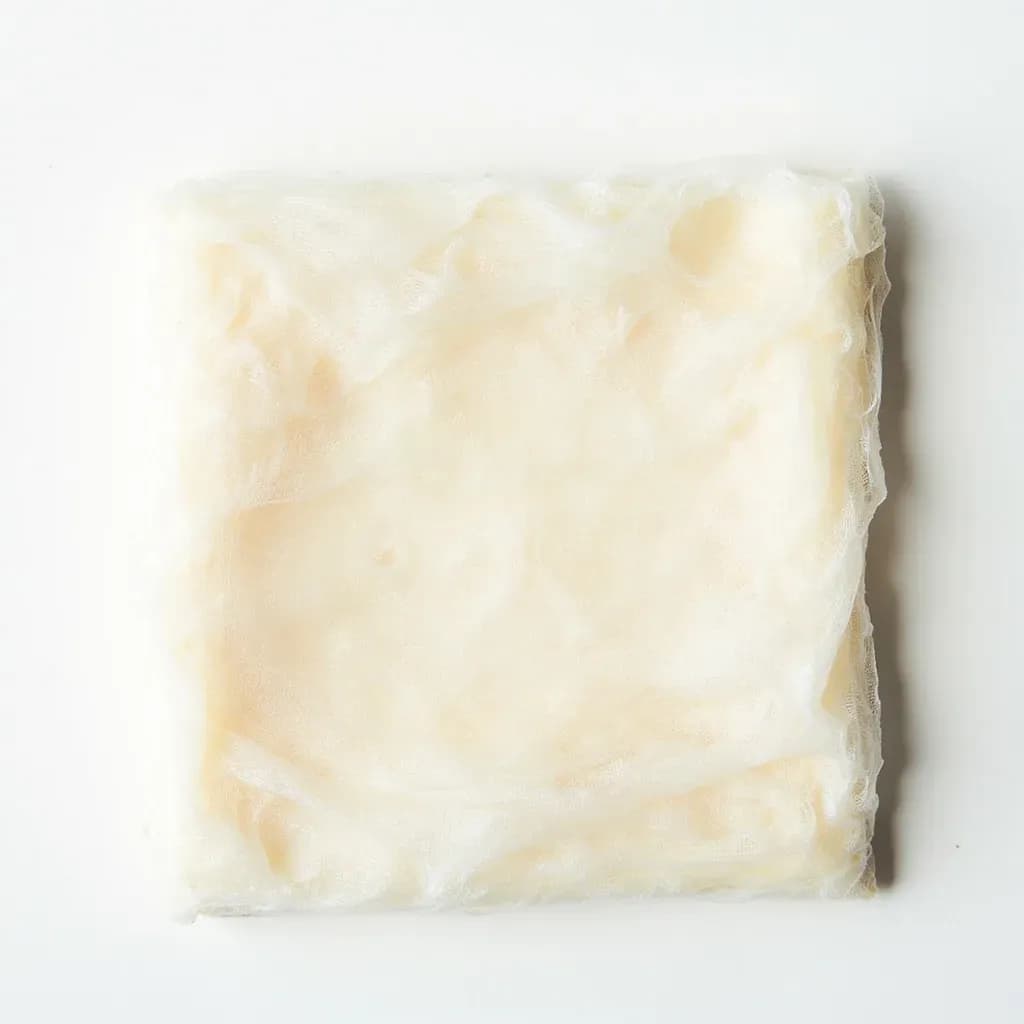
A loose-woven cotton gauze used to strain liquids, drain curds, bundle aromatics, and clarify stocks.
Cheesecloth is a lightweight, open-weave cotton fabric used throughout the kitchen for straining and wrapping. It drains whey from curds in cheesemaking, lines sieves to clarify stocks and nut milks, and forms sachets to hold herbs and spices. It is sold in different grades by thread count, with finer grades catching smaller particles.
Cheesecloth is a lightweight, loosely woven cotton gauze that earns its place in the kitchen through sheer versatility. The deliberately open weave lets liquid pass through while holding back solids ranging from coarse cheese curds to fine sediment in a clarified consommé. Because it is 100% cotton, it tolerates boiling temperatures, can be reused many times, and imparts no flavor when properly prepared.
Cooks reach for cheesecloth when no other strainer is quite right—when the holes of a colander are too coarse, when a chinois still lets fine particles through, or when flavor solids need to be bundled and removed whole. Its softness also makes it useful for pressing soft cheeses and tofu without tearing, and for wrapping meats to hold aromatics against the surface during cooking.
Understanding the grade system is the key to choosing the right cloth. U.S. suppliers number cheesecloth from 10 (loosest) to 90 (finest); the higher the number, the tighter the weave and the smaller the particles it will catch. Matching the grade to the task—open weave for draining curds, mid-grade for stocks, fine butter muslin for clarification—turns a humble gauze into a precision tool.
Alternatives
Types & varieties
Largest, visible holes; for coarse draining of fresh cheese curds, lining colanders, and fruit pulp.
Loose weave for general stock straining and bundling large aromatics.
Common mid-grade for everyday straining, herb bundles, and sachet work.
Balanced filtration for nut milks, broths, and yogurt draining into labneh.
Very fine weave for clarifying consommé, aspics, and clear jellies; often sold in the U.K. and Europe as 'butter muslin.'
Pre-washed and whitened; low lint and a neutral color suited to clear liquids.
Natural ecru cotton, food-safe; an initial boil reduces lint and softens the hand.
Stitched-edge squares sold as straining bags; convenient for bouquet garni and sachet d'épices.
Choosing the right grade
The grade is the single most useful piece of information on the package, and it should drive your purchase rather than price alone. Open weaves (Grade 10–20) drain quickly and are forgiving when you want whey to leave a basket of curds fast, but they will let fine particles and lint into a stock. Finer weaves (Grade 80–90) give a clear, polished result but slow the flow and clog if used on coarse jobs. For most home kitchens, a yard each of Grade 50–60 and Grade 80–90 covers nearly every task.
- Grade 10–20: draining fresh cheese, fruit pulp, very coarse stocks.
- Grade 40–60: everyday straining, nut and seed milks, herb bundles, yogurt cheese.
- Grade 80–90: consommé clarification, aspics, jellies, seedless berry coulis, racking wine.
Care and longevity
A well-tended piece of cheesecloth can last through dozens of uses. The two enemies are lint in the first job and mildew in storage, both of which are easy to head off.
- Boil new cheesecloth for 5–10 minutes, then rinse, to remove loose fibers and any residual finishes.
- Wash with unscented detergent; skip fabric softener, which leaves a film that can transfer to food.
- Hang or drape over a rack to air-dry completely before folding; store in a dry, breathable bag rather than sealed plastic.
- Reserve dedicated cloths for strong-flavored tasks (mulled wine, garlic infusions) to avoid cross-flavoring delicate stocks.
Common uses
Tips & pitfalls
- Buy food-grade cheesecloth from a kitchen or specialty supplier—hardware-store rolls may be treated with sizing and are not food-safe.
- Rinse or boil new cheesecloth before first use to flush out loose lint, which will otherwise cloud stocks and consommé.
- Wet the cloth with cold water before straining hot liquids; this pre-saturates the fibers so the cloth absorbs less fat and flavor.
- Never wring a hot cheesecloth full of fat or stock—let it cool briefly, then press gently, or you will push sediment back through and risk burns.
- For a clearer result, double or triple up a Grade 50 cloth rather than chasing a single layer of a finer grade that will clog quickly.
- Avoid fabric softener and heavily scented detergents; residues transfer to food and can mute delicate infusions.
- Tie a bouquet garni with unflavored kitchen twine and leave a long tail draped over the pot rim so the bundle cannot escape and is easy to retrieve.
- Do not substitute pharmacy gauze or medical-grade cotton; these are not guaranteed food-grade and can shed fibers differently from kitchen cheesecloth.
- If you are out of cheesecloth, line a fine-mesh sieve with a few sheets of dampened paper towel for small-volume straining of thin sauces.
Good to know
- Material
- 100% cotton gauze in a loose plain weave
- Grading
- Numbered system from 10 (loosest) to 90 (finest); higher number = closer weave and finer filtration
- Standard width
- Sold by the yard, typically 36 in (91 cm) wide
- Bleached vs. unbleached
- Bleached is whiter and lower-lint for clear liquids; unbleached is ecru and benefits from an initial boil
- Reusability
- Washable and reusable; boil or machine-wash without fabric softener, then air-dry fully
- Heat tolerance
- Cotton tolerates boiling liquids, hot stocks, and prolonged simmering
- Food safety
- Food-grade untreated cotton; not interchangeable with hardware-store cheesecloth, which may carry sizing or finishes
- Approximate price
- A few dollars per yard for standard grades; pre-cut squares cost slightly more per unit area
Also called
Cheesecloth Strainer · Muslin Cloth · Butter Muslin
Related

Peeler
Swift blade for stripping skin off fruit and vegetables

Grater
Sharp-toothed surface for shredding cheese and vegetables

Microplane
Ultra-fine rasp for citrus zest, garlic, and hard cheese

Mixing Bowl
All-purpose bowl for combining, whisking, and tossing

Whisk
Looped wires that beat air into eggs, cream, and sauces

Spatula
Flat blade for flipping, lifting, and scraping

Slotted Spoon
Pierced spoon that lifts solids and drains the liquid behind

Wooden Spoon
Gentle, heat-friendly spoon for stirring anything