Prep Tools
Cheese Dome (Cloche)
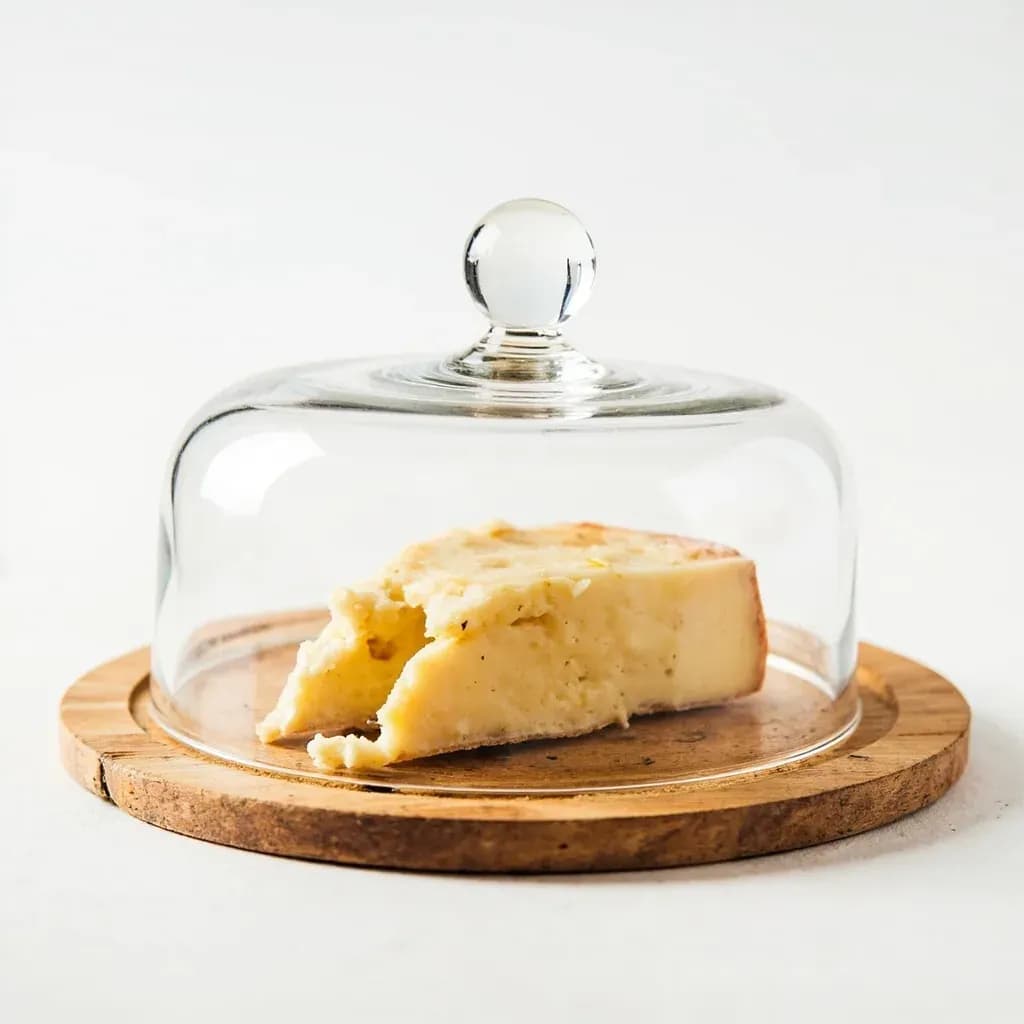
A covered serving stand with a lifting dome that protects and displays cheese.
A cheese dome is a serving piece with a flat plate or board and a lifting glass, ceramic or metal cover that shields cheese from drying air while keeping it on display. It lets cheese breathe a little under the dome and protects it on a table or counter. The same cloche style is also used for cakes, butter and other foods.
A cheese dome — cloche à fromage in its original French — is a serving piece built from two parts: a flat platter, board, or tray that acts as the base, and a bell-shaped cover, almost always clear glass, lifted by a knob at the top. The form descends from the 19th-century European table bell, a piece of tableware used across bourgeois and hotel dining to keep food warm and shield it from flies and dust. In modern kitchens the cheese dome has settled into a narrow but well-defined role: presenting a single cheese (or a small group of accompaniments) as the visual anchor of a cheese course, brunch board, or buffet spread, while giving it a brief shield of protection during service.
The reason the dome is almost always glass is that the cheese itself is the show. A clear bell lets the wheel, terrine, or butter shape read from every angle, marks the 'star' of the board so guests know where to start, and physically keeps fingers, fruit flies, and dust off the surface. The catch is one every cheese professional learns quickly: cheese respires. Seal a bloomy or washed-rind wheel under a glass bell and the rind will fog, drip, and pool whey within minutes, the surface goes slick, and the delicate geotrichum or brevibacterium bloom collapses back into the cheese. A cheese dome is a service object measured in tens of minutes, not hours — closer in spirit to a serving cloche than to a storage vessel.
The base of a modern cheese dome is where most of the personality lives, and where most of the cooking decisions are made. Wood (acacia, beech, olive, oak) gives a warm, rustic feel that pairs naturally with aged, hard, or crystalline cheeses. Slate is dark, chalk-labelable, and reads as restaurant-modern. Marble is the heaviest and coolest of the three, and the cool surface is genuinely useful beneath a Brie or a fresh goat cheese that you want to hold its shape. The dome's job is the same in every case: short, beautiful, and lifted often enough that the cheese underneath can breathe.
Alternatives
Types & varieties
The classic form: a turned or live-edge wooden platter (beech, acacia, oak, olive) paired with a clear glass bell and a metal or wooden knob. Warm, rustic, the most common style sold for home use.
Slate tray with a glass cloche on top. The slate can be chalk-labeled for cheese names, milk type, or tasting notes, which is useful on buffets and tasting flights.
Heavier and more formal; the marble surface stays cool beneath the cheese, which helps soft and bloomy cheeses hold their shape during service.
Shatter-resistant plastic cloche, lighter and less expensive than glass. Safer for outdoor service and family settings, but it scratches easily and clouds over time.
One-piece stoneware or porcelain bell on a matching plate — the classic butter-dish form, also used for pâtés, mousses, and small cakes.
Wood board with a recessed groove, slot, or pull-out drawer for cheese knives, paired with a matching glass dome. A self-contained cheese service station.
Base raised on a foot for a more formal table presence; common in hotel and banquet service, less common in home kitchens.
Cheese under glass: the respiration problem
A cheese dome is one of the few serving pieces in the kitchen where the food actively works against the tool. Hard and semi-hard cheeses tolerate being domed for an hour or two with only mild sweating. Soft, bloomy, and washed-rind cheeses are a different story: their rinds are alive, they continue to ripen at room temperature, and they exhale water vapor that has nowhere to go under a sealed glass bell. The interior fogs, condensation beads on the glass, and droplets fall back onto the rind, which then turns slick and can develop off-flavors. The fix is mechanical: lift the dome every 10–15 minutes, prop it slightly open with a folded napkin, or set it askew on the board. A small sheet of parchment or wax paper laid loosely over the top of a soft wheel before doming absorbs condensation without touching the rind, and is the simplest insurance you can buy for a Brie under glass.
Related forms: butter bells and pastry cloches
The cheese dome belongs to a wider family of bell-shaped table covers, and the boundaries between them are mostly marketing. A butter bell or butter dome is usually all-ceramic, with the bell sitting in a water-filled base that creates an airtight seal and keeps a stick of butter cool and spreadable on the counter. A pastry cloche is the same glass-on-wood form sold for cakes, tarts, and viennoiseries, and is functionally interchangeable with a cheese dome. None of these is a substitute for proper cheese storage between services, which still wants cheese paper, parchment, or a beeswax wrap in the refrigerator.
Choosing a dome that fits the cheese
- Match height to the cheese: the dome should clear the tallest item on the base by at least 2–3 cm. A low dome pressing onto a bloomy rind will mark and deform the cheese.
- Match material to style: warm woods (acacia, olive) suit aged, hard, and crystalline cheeses; cool stones (slate, marble) suit soft whites and bloomy cheeses.
- Knob material matters under heat: glass domes placed near buffet lamps or in sunlight get hot. A wooden or stainless knob stays cool to the touch; a brass or chrome knob will not.
- Acrylic over glass for outdoor and family use: it will not shatter if knocked off a table, and the lower weight makes it easier to lift one-handed.
Common uses
Tips & pitfalls
- Lift the dome every 10–15 minutes over bloomy and washed-rind cheeses. A sealed glass bell traps the cheese's respiration, fogs, and pools whey that drips back onto the rind.
- Slip a small sheet of parchment or wax paper over the top of a soft wheel before doming to absorb condensation without touching the cheese.
- A cheese dome is a service piece, not a storage piece. Between services, wrap cheese in cheese paper, parchment, or a beeswax wrap and refrigerate it; never leave cheese sealed under glass overnight.
- Temper the cheese (60–90 minutes at room temperature for most varieties) before putting it under the dome. Cold cheese under a warm glass bell sweats far faster than cheese that has already reached service temperature.
- Wood bases: hand-wipe with a damp cloth, dry immediately, and refresh periodically with food-safe mineral oil or a beeswax-and-mineral-oil blend. Never soak or run through the dishwasher.
- Slate bases: wipe with a damp cloth and dry. Food-grade slate can be lightly oiled with a neutral oil to deepen the color, but avoid oils that can go rancid next to cheese.
- Acrylic domes scratch easily — clean only with a soft cloth and mild dish soap, and avoid scouring pads, ammonia, or alcohol-based cleaners that will craze the surface.
- If displaying a strong-aroma cheese (Époisses, Munster, washed-rinds), keep the dome lifted or off-set so the smell does not concentrate under glass and overwhelm the table.
Good to know
- Also called
- Cheese cloche, cheese bell, cheese cover, cloche à fromage
- Components
- A flat base (platter, board, or tray) and a lifting domed cover with a knob handle
- Common base materials
- Beech, acacia, oak, or olive wood; slate; marble; ceramic
- Common dome materials
- Clear glass (most common), acrylic or Plexiglas, occasionally crystal
- Typical dimensions
- Base 20–35 cm (8–14 in) diameter; dome 10–20 cm (4–8 in) tall
- Weight
- Glass dome on wood or marble base: roughly 1.5–4 kg (3–9 lb)
- Primary function
- Presentation and short-term protection of cheese during a single service
- Not suitable for
- Long-term cheese storage — wrap in cheese paper or parchment and refrigerate between services
Also called
Cheese Cloche · Cheese Bell · Cloche
Related

Peeler
Swift blade for stripping skin off fruit and vegetables

Grater
Sharp-toothed surface for shredding cheese and vegetables

Microplane
Ultra-fine rasp for citrus zest, garlic, and hard cheese

Mixing Bowl
All-purpose bowl for combining, whisking, and tossing

Whisk
Looped wires that beat air into eggs, cream, and sauces

Spatula
Flat blade for flipping, lifting, and scraping

Slotted Spoon
Pierced spoon that lifts solids and drains the liquid behind

Wooden Spoon
Gentle, heat-friendly spoon for stirring anything