Prep Tools
Cheese Harp (Curd Cutter)
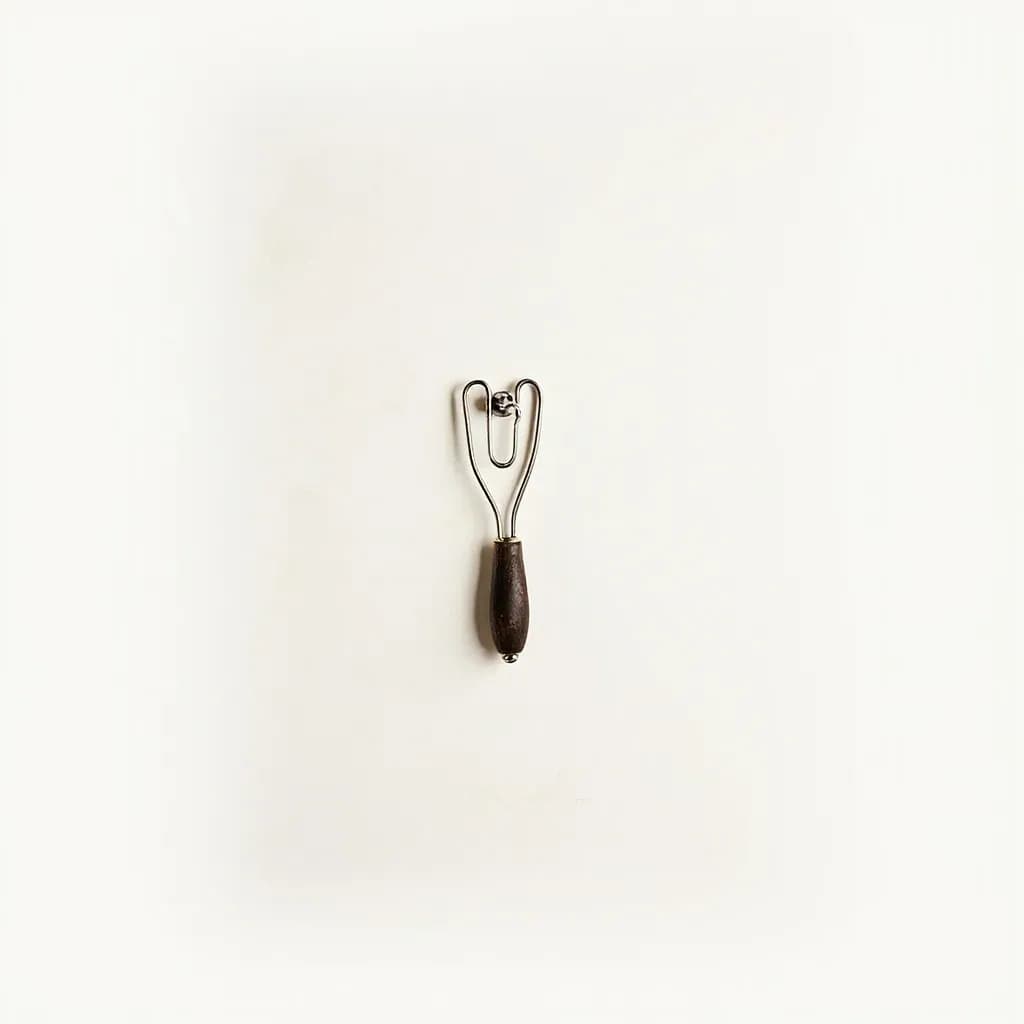
A frame strung with parallel wires used to cut a vat of set milk into uniform curds during cheesemaking.
A cheese harp is a stainless-steel frame strung with evenly spaced wires that slices coagulated milk into cubes of curd. Cheesemakers draw it through the vat in two directions so the curds release whey uniformly, which controls moisture and final texture. Vertical and horizontal harps are often used as a pair, and wire spacing is chosen to suit the cheese style.
The harp — also called a curd cutter — drops into a vat of set milk and slices the surface into uniform curd strips in a single pass, functioning as a precision, multi-wire version of the traditional long curd knife used in farmhouse dairies for centuries. The name comes from its resemblance to a musical harp. In practice it is used twice: a vertical cut in one direction, then a perpendicular horizontal cut, turning the gel-like coagulum into a grid of even cubes that are then stirred, heated, and drained.
Curd size is the single most important lever a cheesemaker has for controlling final moisture and texture, which is why a harp matters more than almost any other piece of home cheesemaking equipment. Smaller cubes expel whey faster and yield drier, denser, harder cheeses; larger cubes hold on to moisture and produce softer, creamier styles. A knife gives the cook one cut at a time and almost guarantees ragged, variable cubes; a harp delivers dozens of identical cuts simultaneously, so every piece of curd drains at the same rate and the batch behaves predictably during cooking, pressing, and aging.
The tool became standard in commercial creameries during the late 19th and 20th centuries as cheesemaking industrialized, but handmade wooden harps strung with wire or gut cord appear in farmhouse traditions well before that. For a home cook making a 1- to 5-gallon batch of Cheddar, Gouda, Caerphilly, or a soft chèvre, a small stainless-steel harp is the upgrade that most reliably moves a cheese from inconsistent to repeatable.
Alternatives
Types & varieties
Cuts in one direction; used for the first pass across the vat. Most common in home cheesemaking.
Second frame oriented 90° to the first; completes the cube cut in a second pass.
Single frame with wires running in both axes; produces cubes in one motion. Common in mid-size commercial vats.
Small wooden-handled frame for 1–5 gallon home batches, dipped by hand into the vat.
Motorized assembly that travels on a rail across industrial vats for uniform, repeatable cutting at scale.
Narrower spacing than standard for soft cheeses such as fresh chèvre and ricotta where delicate, small curds are wanted.
Wider spacing than standard for Cheddar, Gouda, and other pressed styles where large curd pieces accelerate whey release.
Why curd size controls the final cheese
Curd size is the upstream variable that sets almost everything else downstream: cooking time, whey acidity, moisture in the finished wheel, and the texture of the paste after pressing and aging. When a harp drops into a vat, the wires rupture millions of fat- and protein-laden cells in a single, even grid; the smaller the cube, the more surface area exposed to the warm whey, and the faster moisture and lactose escape. A Cheddar made with roughly 1/2-inch cubes loses whey briskly and finishes dry and crumbly; a Camembert-style or fresh lactic cheese made with finer cubes stays wet, tender, and high in moisture. Wire spacing is therefore chosen with the target style in mind, not by default.
Cutting technique in practice
A clean cut depends as much on the cook's motion as on the tool. The harp is meant to descend through the curd in one slow, steady stroke, not to be sawed. Sawing shreds the fragile protein matrix and creates fines — tiny curd fragments that slip through draining mats and cheesecloth, lowering yield and giving the whey a milky, cloudy look. Before the cut, the wires should be wet with warm water or skimmed whey so they glide rather than drag. After the second (perpendicular) pass, the curds should rest for roughly a minute before any stirring, so the cut faces can firm up and resist shattering.
Common uses
Tips & pitfalls
- Submerge the harp in warm water or skimmed whey for a minute before cutting to lubricate the wires and keep them from tearing the curd surface.
- Cut in a single, slow, steady pass — do not saw back and forth, which shreds the curd and increases fines lost to the whey.
- Always make a perpendicular second pass; vertical cuts alone produce slabs, not cubes, and slabs drain unevenly and cook unevenly.
- Match wire spacing to the cheese style: tight spacing for soft, high-moisture cheeses, wider spacing for hard, aged styles.
- Inspect every wire before each batch — a bent, kinked, frayed, or slack wire produces ragged cuts and inconsistent cubes.
- Sanitize as you would any food-contact surface, then rinse with clean water so no sanitizer residue contacts the curd.
- Hold the harp at a slight angle as it enters the curd so trapped air can escape; a flat, vertical entry can capture bubbles that distort the cut.
- Let the curds rest a minute after the second pass before stirring, so cut surfaces firm up and resist shattering during the first stir.
Good to know
- Also known as
- Curd cutter, curd harp, cheese cutter, vat harp
- Primary function
- Slicing set coagulated milk into uniform curd cubes inside a cheese vat
- Construction
- Wood or stainless-steel frame strung with parallel food-grade stainless steel wires
- Wire spacing
- Typically about 1/2 in (≈12 mm); finer for soft cheeses, wider for hard styles
- Standard cuts
- Vertical pass followed by a perpendicular horizontal pass to produce cubes
- Scale
- Handheld 1–5 gal models up to motorized units for industrial vats
- Effect on cheese
- Smaller curds release more whey → drier, harder cheese; larger curds retain moisture → softer cheese
- Hygiene
- Must be sanitized like any food-contact surface; all-metal construction preferred
Also called
Curd Cutter · Curd Harp
Related

Peeler
Swift blade for stripping skin off fruit and vegetables

Grater
Sharp-toothed surface for shredding cheese and vegetables

Microplane
Ultra-fine rasp for citrus zest, garlic, and hard cheese

Mixing Bowl
All-purpose bowl for combining, whisking, and tossing

Whisk
Looped wires that beat air into eggs, cream, and sauces

Spatula
Flat blade for flipping, lifting, and scraping

Slotted Spoon
Pierced spoon that lifts solids and drains the liquid behind

Wooden Spoon
Gentle, heat-friendly spoon for stirring anything