Prep Tools
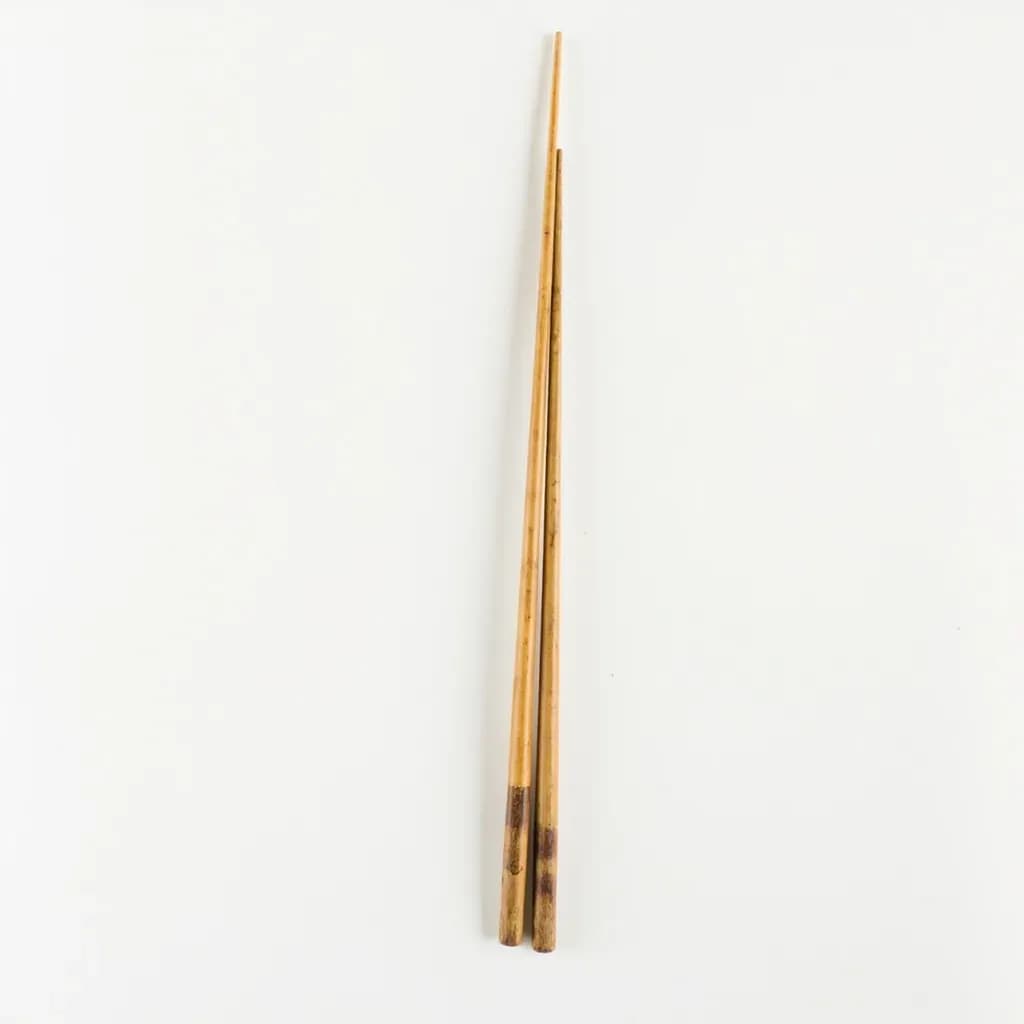
Long Cooking Chopsticks (Saibashi)
Extra-long chopsticks for cooking, used to fry, flip, and plate without getting hands near the heat.
Long cooking chopsticks, or saibashi, are oversized chopsticks made of bamboo or metal used to handle food during frying, boiling, and noodle cooking. Their length keeps hands clear of hot oil and steam while giving fine control to turn, separate, and arrange ingredients. Often tied with a string near the top, they are a versatile everyday tool in East Asian kitchens.
Saibashi are the long, slim chopsticks used in Japanese kitchens to manipulate food over heat and during plating. Roughly 30–40 cm (12–16 in) for most home and pro work, with 45–50 cm versions for very deep pots, they extend the cook's reach by 10–15 cm beyond a standard pair of eating chopsticks so the hand stays clear of hot oil, steam, and splatter. The working end is tapered to a fine point and almost always unsplit, which is what allows the tips to pinch a single piece of tempura, lift a tangle of noodles, or steady a sliver of fish for an even slice without crushing it.
The tool is not just a longer version of the chopsticks you eat with. The unsplit tip behaves more like a precise pair of tweezers, and the leverage of the long shaft makes it possible to flip, turn, and plate with very small wrist movements, which is why Japanese cooks reach for saibashi for tasks where a spatula or tongs would be too clumsy or too heavy. Bamboo is the traditional and still most common material because it is light, takes a fine point, and tolerates brief contact with hot oil; stainless steel, natural wood (often Hinoki cypress), lacquered wood, and disposable bamboo fill out the rest of the category.
The long-cooking-chopstick concept shows up across East Asia — Chinese 厨筷 and Korean cooking chopsticks are close cousins used over the wok and at the banquet — but the tapered, unsplit Japanese form is the one most often sold as saibashi.
Alternatives
Types & varieties
The classic everyday choice: light, inexpensive, takes a fine point, ideal for general cooking, stirring, and plating.
40–50 cm versions for deep pots, tall donabe, and home tempura work where standard lengths fall short.
Heavier and very durable, the go-to for repeated deep-frying and high-heat work where bamboo would scorch over time.
Often cypress or similar woods; warmer in the hand than steel and a popular all-rounder for cooking and plating.
Decorative finish, usually reserved for serving or formal plating rather than sustained heat.
Single-use bamboo pairs used at sushi counters and in catering for hygienic, per-order plating.
Flat, tweezer-like chopsticks specialized for handling grilled eel; grouped with saibashi in retail but a distinct tool.
Grip and Handling
Most cooks new to saibashi grip them like eating chopsticks, which puts the hand too close to the working end and quickly tires the wrist. The right grip is closer to how you would hold a pencil over a long stick: index finger resting along the upper chopstick, thumb bracing it, and the rest of the hand relaxed.
- Hold back from the working end — grip the rear third, not the middle, for steadier tip control.
- Let the upper chopstick pivot between thumb and index finger; the lower chopstick stays still and acts as a pivot.
- Use a light pinch at the tips, not a clamp, so delicate items like a tempura tail or a noodle nest aren't crushed.
- For deep-frying, dip and lift in a gentle scooping motion so wet batter clings to the food rather than being scraped off by the chopstick tips.
Choosing a Material
Material matters more than length for most cooks. Each behaves differently in the hand, over heat, and after washing, so the right choice depends on what you cook and how often.
- Bamboo: light, takes the finest point, and tolerates brief oil contact. The best starter pair; replace when the tip darkens or frays.
- Stainless steel: nearly indestructible and a workhorse for high-volume frying, but the held end warms up over time and the weight can feel clumsy for fine plating.
- Natural wood: a middle ground — warmer in the hand than steel, more heat-tolerant than lacquered wood, and a good general-purpose choice.
- Lacquered wood: keep it off the stove. The lacquer scorches and can flake into food; use it for serving and presentation only.
- Disposable bamboo: a fresh pair for raw fish, allergen-sensitive plating, or anywhere you want an untouched tool per order.
Common uses
Tips & pitfalls
- Hold back from the working end — gripping the rear third gives finer, steadier control of the tip and keeps knuckles farther from the heat.
- Use a light grip and let the upper chopstick pivot between thumb and index finger; clamping with the whole hand causes fatigue and crushes delicate food.
- For deep-frying, work in a gentle pinching motion at the tips so wet batter stays on the food rather than being scraped off by the chopsticks.
- Never leave bamboo saibashi resting in hot oil unattended — the submerged end can scorch, darken, or split.
- If you use stainless steel, expect the held end to warm up during long frying sessions; switch hands or rest the pair on a cool surface between batches.
- Dry bamboo saibashi thoroughly after washing; trapped moisture at the joint is the usual cause of mold and splitting.
- Skip the dishwasher for wooden and bamboo pairs — hand-wash briefly, rinse, and air-dry upright so water runs off the joint.
- Keep at least two pairs on hand: one dedicated to frying and another for plating, tasting sauces, or handling raw fish, to avoid flavor and oil transfer.
- If a tip chars or frays, sand it lightly with fine sandpaper rather than retiring the pair — a quick touch-up extends the life of a good bamboo set.
- Use disposable bamboo saibashi for raw fish service and for plating in allergen-sensitive settings to eliminate cross-contact.
Good to know
- Japanese name
- 菜箸 (saibashi), literally "vegetable/food chopsticks"
- Typical length
- 30–40 cm (12–16 in); 45–50 cm versions exist for deep pots and fryers
- Comparison
- About 10–15 cm longer than standard eating chopsticks, which run roughly 22–23 cm
- Traditional material
- Bamboo (most common), or woods such as Hinoki cypress; bamboo versions are typically made from split bamboo
- Other materials
- Stainless steel, lacquered wood, and disposable bamboo
- Shape
- Tapered to a fine point with a square or round cross-section; unsplit at the tip
- Heat tolerance
- Bamboo tolerates brief oil contact; stainless steel conducts heat into the held end; lacquered wood is for serving, not heat
- Origin
- Japan; a long-standing tool in both home and professional kitchens
Also called
Saibashi · Cooking Chopsticks · Long Chopsticks
Related

Peeler
Swift blade for stripping skin off fruit and vegetables

Grater
Sharp-toothed surface for shredding cheese and vegetables

Microplane
Ultra-fine rasp for citrus zest, garlic, and hard cheese

Mixing Bowl
All-purpose bowl for combining, whisking, and tossing

Whisk
Looped wires that beat air into eggs, cream, and sauces

Spatula
Flat blade for flipping, lifting, and scraping

Slotted Spoon
Pierced spoon that lifts solids and drains the liquid behind

Wooden Spoon
Gentle, heat-friendly spoon for stirring anything