Knives & Cutting
Chef's Knife (French Knife)
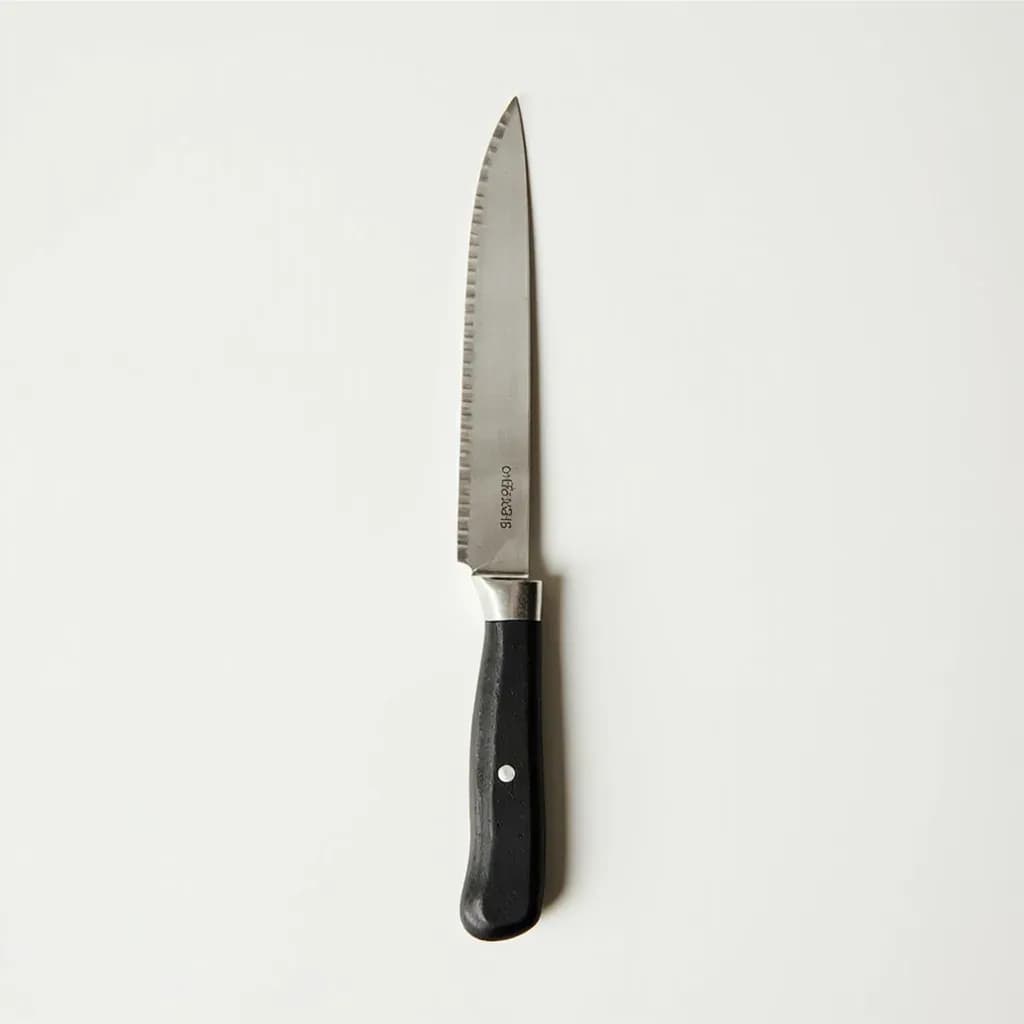
The all-purpose kitchen blade with a broad curved edge for chopping, slicing, dicing, and mincing.
A chef's knife is the workhorse of the kitchen, with a wide blade typically 20 to 25 cm long and a gently curved edge that supports a rocking motion. It handles most cutting tasks, from breaking down vegetables to slicing meat and mincing herbs. Western French and German styles have a curved belly, while the Japanese gyuto is lighter and flatter.
The chef's knife is the single most important tool in most kitchens, professional or home. Its broad, gently curving blade — typically 8 inches long — does the work that no specialty knife can match as efficiently: it chops an onion, breaks down a chicken, slices a roast, minces a pile of parsley, and crushes a clove of garlic, all in one tool. The curve of the cutting edge, called the belly, is what makes the knife feel alive in the hand; the blade rocks against the board in a continuous arc, the tip staying down while the heel rises and falls, turning repeated vertical chops into a fluid, fast motion.
What separates a good chef's knife from a mediocre one is geometry and balance. The point where the handle meets the blade — where you should pinch the steel, not the handle — becomes the pivot of every cut. A heavier, wedge-shaped German profile drives through tough squash and root vegetables with authority; a lighter, thinner French or Japanese profile rewards a softer, more precise touch and holds a working edge longer in skilled hands. Most cooks keep one of each in mind: a forgiving all-rounder for daily prep, and a sharper, nimbler blade for produce and fish. Neither is "better" in the abstract; they are tuned to different cuisines and different boards.
The name is a small puzzle. In American kitchens, "chef's knife," "French knife," and "cook's knife" all describe the same general-purpose tool. In older European cutlery catalogs, "French knife" sometimes meant a narrower, more aggressively curved Sabatier-style blade, distinct from the stouter German model. The labels matter less than the feel: when you pick the knife up, your index finger and thumb should be able to pinch the base of the blade just ahead of the bolster, the spine should sit comfortably under your knuckles, and the belly should reach the board without your wrist cocking sideways. Get that right, and the rest is practice.
Alternatives
Types & varieties
Lighter, thinner blade with a more pronounced belly; favors a fluid rocking cut; often no full bolster; preferred in classical French kitchens.
Heavier, thicker blade with a full bolster and stout spine; more wedge-like, durable, and forgiving for stiff produce like squash and root vegetables.
Western-shape chef's knife made of harder, thinner steel; ground steeper; sharper edge but more brittle; needs a softer board and gentler technique.
Blade has shallow scallops or oval dimples that create air pockets to reduce sticking when slicing squash, potato, or moist proteins.
Cut from a steel sheet, lighter, no bolster, often more affordable; flexes slightly and is easy to thin on a whetstone.
Hot-forged from a single bar; heavier, full tang, typically with a bolster; more durable and better balanced for heavy work.
Not technically a chef's knife but serves the same all-purpose role in Chinese kitchens; rectangular blade, light, can slice and transfer food in one motion.
Grip and Rocking Motion
The grip and the cut are two halves of the same movement. Pinch the base of the blade between thumb and the side of your curled index finger, just ahead of the bolster, and wrap the remaining three fingers around the handle. Your guide hand forms a claw: fingertips curled inward, knuckles forward, the side of the blade riding along the knuckles as a guard. For slicing, push the blade forward and down in a single stroke, the belly traveling from heel to tip. For mincing, keep the tip on the board and lift only the heel, rocking the blade in quick arcs over the food while your claw hand feeds it forward.
Care, Honing, and Storage
A chef's knife is mostly steel, and steel rewards simple habits. Wipe the edge and the face of the blade with a damp cloth as you cook, especially after cutting acidic or salty foods, and wash by hand in warm soapy water before drying immediately. A magnetic strip mounted at eye level keeps blades dry, visible, and out of the way; wooden blocks are gentler on edges but trap moisture. Never leave a knife loose in a drawer, where the edge will meet cutlery, keys, and ceramic — a blade edge that has touched another hard surface has been dulled, full stop. Hone lightly every few uses and sharpen on a 1000/4000-grit whetstone (or have a professional do it) two or three times a year.
- Hone, don't sharpen, for routine maintenance: a steel realigns a rolled edge without removing metal.
- Sharpen on a whetstone when the hone no longer restores the bite; pull-through sharpeners are faster but remove more steel and shorten blade life.
- Dry the blade the moment you finish washing, especially at the heel and around the bolster, where water collects and can spot or pit even stainless steel.
Common uses
Tips & pitfalls
- Hold with a pinch grip on the blade just past the bolster, not wrapped around the handle — this gives control and reduces fatigue.
- Keep the tip down and lift only the heel when slicing, so the curved belly stays in contact with the board.
- Hone with a honing steel before or after each use to realign the edge; sharpen on a whetstone or pull-through every few months depending on use.
- Hand wash in warm soapy water, rinse, and dry immediately — dishwashers destroy edges and handles, especially wood and riveted composites.
- Use wood or high-density polyethylene boards; avoid glass, stone, marble, and bamboo, which dull edges fast.
- Never pry, twist, or strike with the blade; don't cut through bone, frozen food, or hard squash stems — use a cleaver or boning knife instead.
- Pick 8 inches (20 cm) for most home cooks — long enough for a cabbage, short enough to control.
- If buying one good knife, choose a mid-weight forged stainless chef's knife in the $80–$150 range from a reputable maker — it will outlast cheap knives many times over.
Good to know
- Also known as
- French knife, cook's knife, chef's knife
- Typical blade length
- 8 inches (20 cm); common range 6–12 in (15–30 cm)
- Standard Western weight
- 6–10 oz (170–280 g)
- Construction
- Forged (full tang, often with bolster) or stamped (cut from sheet steel, usually bolsterless)
- Bevel angle
- ~20–22° per side (Western); ~10–15° per side (Japanese-style)
- Most common material
- High-carbon stainless steel (also carbon steel, Damascus, ceramic)
- Hardness
- Western ~54–58 HRC; Japanese-style often 60–62 HRC
- Key design feature
- Curved belly that permits a rocking mincing motion
Also called
French Knife · Gyuto Knife · Cook's Knife
Related

Knife
The fundamental cutting tool every kitchen is built around

Chef's Knife
The do-everything blade for chopping, slicing, and mincing

Paring Knife
Small, nimble blade for peeling and detailed in-hand work

Serrated Knife
Saw-toothed blade that slices crusty bread without crushing

Cleaver
Heavy broad blade for chopping through bone and bulk prep

Cutting Board
The stable surface every cut starts on

Mandoline
Adjustable blade for paper-thin, perfectly even slices

Kitchen Shears
Heavy-duty scissors for poultry, herbs, and packaging