Prep Tools
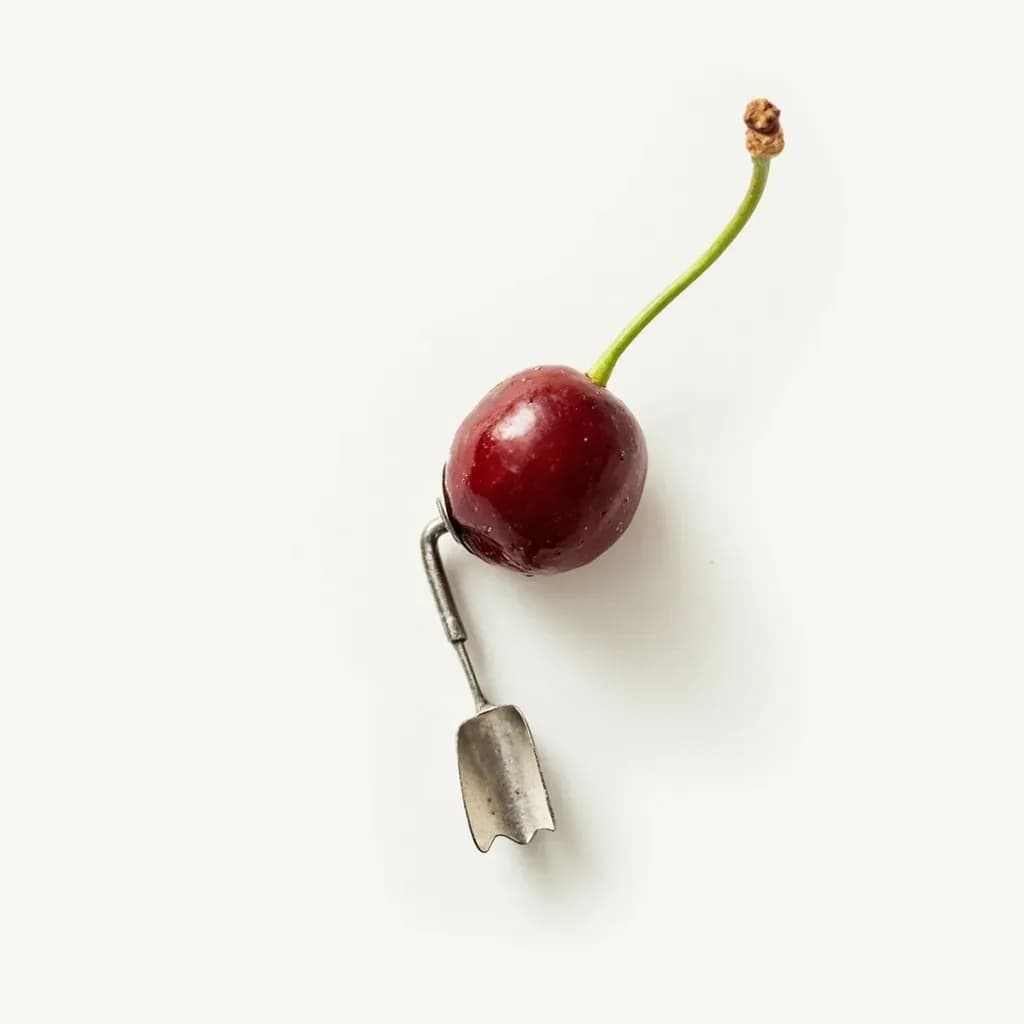
Cherry / Olive Pitter
A spring-loaded gadget that punches the pit out of cherries and olives, leaving the fruit whole.
A cherry pitter is a hand tool that holds a cherry or olive in a cup while a plunger pushes a rod through the center to eject the pit. It saves enormous time and mess when preparing fruit for pies, preserves, and jams, or stuffing olives. Multi-fruit versions feature wider cups or magazines that pit several pieces in rapid succession.
A cherry/olive pitter is a small spring-loaded tool that drives a metal pin or hollow tube through the fruit, pushing the pit out the far side. The basic mechanism is identical whether you are working with a Bing cherry or a Castelvetrano olive: a plunger, thumb- or lever-driven, pushes a pin through the fruit and the pit is ejected — sometimes into a catch cup, more often onto the counter — leaving the flesh whole and ready to use. The earliest commercial models were clamp-and-cup devices made for Michigan and California orchards in the early 1900s; the modern plastic-and-zinc handheld took off in the 1970s and 80s with brands like OXO and Westmark, and the core design has barely changed since.
For cooks who handle stone fruit in any volume, a dedicated pitter is the difference between a 20-minute job and an hour of stained fingers. A single-fruit handheld clears roughly a pound (450 g) of cherries per minute; a 6-cherry model runs four to five times faster. Beyond speed, a good pitter keeps the fruit whole (important for pies, preserves, and martinis), recovers most of the juice for syrups and shrubs, and lets you pit table olives without crushing them. A paring knife will pit in a pinch, but it leaves a slit and loses far more flesh to trimming.
The two design choices that actually matter are pin style and capacity. A hollow tube ejects the pit cleanly with little spray; a solid pin is cheaper but splatters more. Multi-cherry models are a revelation for jam and pie work, but the plunger pins must match the fruit's diameter or they will tear the flesh. For very ripe or soft fruit, a clamp/tong-style pitter pushes the pit out the side without piercing the flesh at all — a small but real advantage when you are working with a fragile variety like Rainier or a delicate Niçoise olive.
Alternatives
Types & varieties
The most common household type; thumb pushes a pin through one cherry at a time; cheap, simple, and easy to clean
A row of plungers pits 2 to 6 cherries simultaneously; the right choice for pies, jams, and preserving batches
Two handles squeeze a pin through the fruit; more leverage and less hand fatigue, often with a catch cup for the pits
Larger plunger unit anchored to the counter with a rubber suction cup; stable for heavy batches and easy on the wrist
Older design with a small cup that holds the cherry; squeezes the pit out the side rather than piercing the flesh, ideal for very ripe fruit
Pushes the pit out through a hollow tube rather than a solid pin; ejects cleanly with less juice spray
Smaller throat and shorter pin sized for table olives (Castelvetrano, Niçoise); many cherry pitters work, but a true olive pitter has a shallower cup
Pre-1950s orchard and home models; very durable but heavy; often require a bowl or clamping surface and are hand-wash only
Choosing the right pitter
Match the tool to the job you do most. A casual cook making the occasional pie is well served by a $10 plunger model; a preserver putting up 20 pounds of sour cherries will regret anything less than a 4- or 6-fruit lever design. Two details to test in the store if possible: the throat size (it should accept your typical cherry with a little room to spare) and whether the pin feels solid or hollow — hollow tubes are worth a small premium for the mess they prevent.
- Solid pin: cheaper, but sprays juice; fine for firm Bing cherries and most olives.
- Hollow tube: cleaner ejection with less spray; worth the small premium for soft or very ripe fruit.
- Multi-cherry (4–6): the sweet spot for jam, pie, and freeze-ahead batches; a 6-fruit model is roughly four to five times faster than a single plunger.
- Clamp/tong style: the best choice for overripe cherries and fragile olives because it removes the pit without piercing the flesh at all.
- Suction-base: helpful for very long sessions; anchors to a smooth, non-porous counter.
Common uses
Tips & pitfalls
- Work over a bowl or rimmed sheet pan to catch ejected pits and juice; cherry juice stains skin, clothing, and wood quickly.
- Chill the fruit for 20 to 30 minutes before pitting; firmer cherries resist crushing and release pits more cleanly.
- Choose ripe-but-firm fruit; overripe cherries collapse around the pin and bleed a lot of juice.
- Wipe the plunger pin clear every 20 to 30 fruits; a buildup of flesh slows the stroke and starts to tear the fruit.
- For very ripe cherries or fragile olives, switch to a clamp/tong-style pitter, which pushes the pit out the side without piercing the flesh.
- Reserve the juice that sprays into the bowl — it carries significant flavor for syrups, shrubs, and pan sauces.
- Do not use a cherry pitter on apricots or large plums; the pin will not reach the pit and will mash the flesh. Use a paring knife or a dedicated plum pitter instead.
- Discard pits in a sealed container, not the sink — they can jam a garbage disposal and are toxic to dogs if chewed.
- If a multi-cherry pitter jams, never pry it open; release the spring or lever and clear the pin to avoid bending it.
- For small olives (Niçoise size), test the fit on one olive first; an undersized throat will split the fruit.
Good to know
- Tool type
- Handheld or countertop pitting device for stone fruit (cherries, olives, small plums)
- Mechanism
- Spring-loaded plunger drives a small metal pin or hollow tube through the fruit to eject the pit
- Capacity per stroke
- Single-fruit pitters pit 1 cherry; multi-pitters handle 2 to 6 per stroke; some lever models manage up to 8
- Pitted yield
- Roughly 1 lb (450 g) of cherries per minute with a single pitter; up to 4–5 lb/min with a 6-cherry model
- Best fruit size
- Cherries 18–25 mm in diameter; olives up to about 20 mm; works poorly on very small olives or overripe, soft fruit
- Common materials
- Die-cast zinc or aluminum alloy, stainless steel, ABS plastic, or combinations; vintage models are often cast iron with wood handles
- Approximate price
- $8–$30 for a basic handheld; $25–$60 for multi-cherry and lever models
- Safety note
- Cherry, apricot, and peach pits contain amygdalin, which releases cyanide compounds when crushed; keep pits away from dogs and children and never blend them into food
Also called
olive pitter · cherry stoner · pitting tool
Related

Peeler
Swift blade for stripping skin off fruit and vegetables

Grater
Sharp-toothed surface for shredding cheese and vegetables

Microplane
Ultra-fine rasp for citrus zest, garlic, and hard cheese

Mixing Bowl
All-purpose bowl for combining, whisking, and tossing

Whisk
Looped wires that beat air into eggs, cream, and sauces

Spatula
Flat blade for flipping, lifting, and scraping

Slotted Spoon
Pierced spoon that lifts solids and drains the liquid behind

Wooden Spoon
Gentle, heat-friendly spoon for stirring anything