Prep Tools
Churchkhela Threading Needle
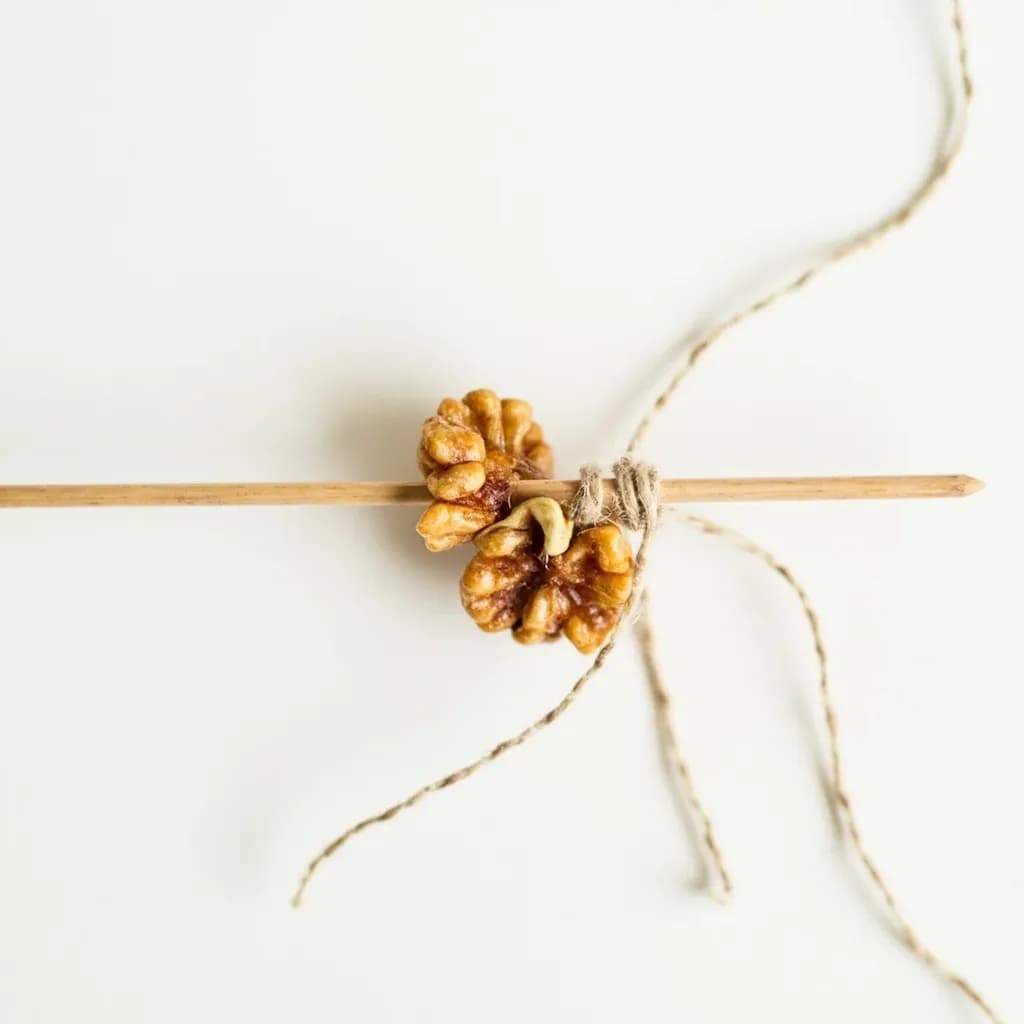
A long needle used to string nuts onto thread before dipping them to make Georgian churchkhela.
A churchkhela threading needle is a long, sturdy needle used in Georgia to thread walnuts or hazelnuts onto a strong string. The nut strands are then dipped repeatedly in thickened grape-juice must, or tatara, and hung to dry into the chewy candy called churchkhela. The needle must be long enough to pass through many nuts at once.
The churchkhela threading needle is a single-purpose tool born from a single-purpose confection: churchkhela, the Georgian candle-shaped candy of nuts strung on heavy cotton thread and repeatedly dipped in thickened, flour-bound grape juice until a leathery, sausage-like shell forms. It looks like an oversized tapestry or darning needle, but every dimension is deliberate. The tip is blunt and rounded because the nut, not the thread, is the workpiece, and any cracking damages both yield and appearance. The eye is oversized so the needle can take doubled or tripled cotton thread thick enough to bear the full wet weight of a hanging churchkhela (often 300–700 g). And the shaft is noticeably longer than a sewing needle, long enough for the whole hand to drive it through a nut in a single, controlled push.
The needle matters because the seam it follows is the seam of the nut. A walnut, threaded through its natural longitudinal groove, parts cleanly along the two halves of the kernel with almost no resistance; the same nut pushed with a sharp sewing point will shatter and shed shell fragments into the finished candy. That single design decision, blunt rather than pointed, is the reason the dedicated tool exists and why a kitchen drawer full of sewing needles is the wrong substitute.
In Georgia the needle is sold at kitchen shops and Kakheti market stalls, and through online Caucasus-food retailers; it is unremarkable there, the kind of implement a home cook buys once and uses every autumn when grape must is on the stove. Outside Georgia it is harder to find, and home cooks reach for tapestry needles, large darning needles, or a wooden skewer with a drilled hole as stand-ins. It is a tool for the patient, repetitive part of churchkhela-making: the building of the string that will spend the next week or two hanging and drying.
Alternatives
Types & varieties
A single piece of stiff wire with a formed eye and rounded tip; the most common and cheapest form sold in Georgian markets and online.
Steel shaft set into a short wooden or plastic handle; easier on the hands when stringing large quantities, and the handle stops the hand from sliding over the eye.
Eye and blunt tip at both ends; used to pull thread back through if a nut is missed, or to build longer strings without re-threading.
Why the design is so specific
Three design choices do the real work, and each is easy to get wrong with a substitute. The blunt tip rides the walnut's natural seam and parts the two kernel halves without crushing them; a pointed needle crushes. The oversized eye accepts thread doubled or tripled for load-bearing strength; a small sewing eye can only take a single strand that snaps under wet tatara. And the long shaft gives the hand room to push through a whole nut in one motion, so the nut does not wobble on the point and split. Any substitute has to satisfy all three, which is why a regular sewing needle fails on every count and a large darning needle is the closest readily available option.
Substitutes when you don't have one
A large blunt darning or tapestry needle, or a wooden skewer with a hole drilled through the thick end, are the usual stand-ins. Each loses something: a darning needle is shorter and tires the hand; a tapestry needle still has a sewing-style tip that is sharper than ideal for walnuts; a drilled skewer is slow because each nut must be threaded individually rather than pushed on. None of these are wrong for a one-off batch, but a cook planning to make churchkhela every autumn will quickly reach for the real tool.
Thread and nuts — what to load the needle with
The needle is only half the equation. Cotton thread, doubled or tripled, grips the nuts and stays put under the heavy weight of wet tatara; slick synthetic thread lets the string slip and nuts slide off mid-dip. Walnuts are the classic choice because their long seam and natural two-halved shape accept the blunt tip perfectly, but hazelnuts and blanched almonds work and are common in regional variants. Keep nut size consistent on one string: mixed sizes trap pockets of moisture and dry unevenly, which can sour the finished churchkhela.
Common uses
Tips & pitfalls
- Always use a blunt tip. A sharp sewing needle will crack walnuts and push shell fragments into the kernel, ruining the bite of the finished churchkhela.
- Insert the needle through the natural longitudinal seam of a walnut — it will pass through the two halves of the kernel with almost no resistance.
- Use doubled or tripled cotton thread, not synthetic. Cotton grips the nuts and stays put under the heavy weight of wet tatara; slick synthetic thread lets nuts slide off.
- Leave 15–20 cm of bare thread at the top of the string for tying to a drying rack, and 5–8 cm at the bottom so the lowest nut is not pinched against the knot.
- Keep nut size consistent on one string. Mixed sizes mean uneven drying and pockets of trapped moisture that can sour the churchkhela.
- If the eye is too tight for your thread, do not force it — re-thread with a thinner gauge or use a needle with a larger eye, or the thread will fray and snap under the weight of dipped nuts.
- Do not soak the needle. Wipe it clean and dry after use; carbon-steel versions will rust and stain the next batch of nuts.
- Tie a small loop or button knot at the bottom end of the thread before you start stringing — it stops the last nut from sliding off while you work.
Good to know
- Origin
- Georgia (Caucasus), tied to the traditional preparation of churchkhela
- Primary function
- Threading whole nuts onto heavy cotton thread to build the 'candle' that is dipped in thickened grape juice (tatara)
- Tip style
- Blunt and rounded, to push through the natural seam of a nut without splitting the kernel
- Eye size
- Oversized, to take doubled or tripled cotton thread or fine kitchen twine
- Shaft length
- Noticeably longer than a standard sewing needle (roughly the length of a small skewer), so the whole hand can drive it through a nut in one motion
- Common materials
- Stainless steel or carbon steel shaft; some versions have a turned wood or plastic handle
- Skill level
- Beginner — the tool exists to make the job easy; technique is more about nut selection and thread tension than needle skill
- Cleaning
- Wipe dry after use; store lightly oiled if carbon steel, to prevent rust between batches
Also called
Churchkhela Needle · Nut Threading Needle
Related

Peeler
Swift blade for stripping skin off fruit and vegetables

Grater
Sharp-toothed surface for shredding cheese and vegetables

Microplane
Ultra-fine rasp for citrus zest, garlic, and hard cheese

Mixing Bowl
All-purpose bowl for combining, whisking, and tossing

Whisk
Looped wires that beat air into eggs, cream, and sauces

Spatula
Flat blade for flipping, lifting, and scraping

Slotted Spoon
Pierced spoon that lifts solids and drains the liquid behind

Wooden Spoon
Gentle, heat-friendly spoon for stirring anything