Prep Tools
Clay Jarro (Coffee / Atole Mug)
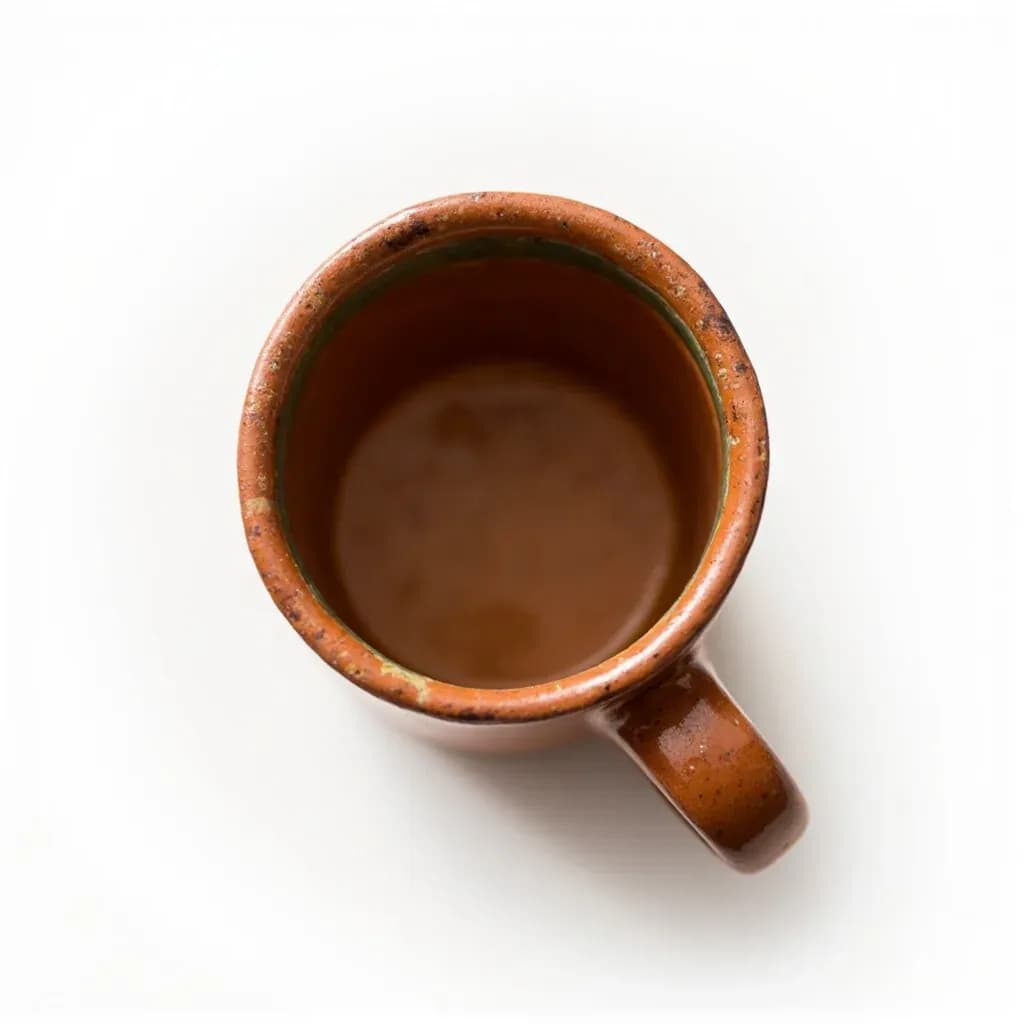
A rustic glazed clay mug used in Mexico to serve coffee de olla, atole and hot drinks.
A clay jarro is a small handled mug of fired, often glazed earthenware used across Mexico to serve café de olla, atole, champurrado and other hot drinks. The porous clay is said to lend a subtle earthy note and to keep drinks hot. It is a fixture at markets, family kitchens and festivals.
The jarro is the small, single-serving glazed clay mug that defines the daily ritual of café de olla across central and western Mexico. In its most recognizable form it is a low-fired earthenware (barro) cup with a thick wall, a wide mouth, a slightly tapered or straight cylindrical body, a flat base, and a single pulled-loop handle. Capacity runs roughly 180–300 ml (6–10 oz), sized for one generous cup of coffee or atole. Strictly speaking, jarro means a small handleless jug, and in parts of Mexico the coffee-mug form is more accurately called a jarrito, but in cookware shops and at market stalls the single-serving clay mug is labeled jarro almost without exception — the terms are interchangeable in use.
The vessel's identity is inseparable from café de olla, the cinnamon- and piloncillo-sweetened coffee that became iconic in the Zapatista camps of the Mexican Revolution, though the mug itself long predates that drink. It is the canonical cup for atole, champurrado, ponche during Las Posadas, and chocolate caliente made from metate-ground cacao, and the same form shows up from Jalisco to Puebla with regional decoration. The earthenware body is noticeably heavier than porcelain, and a pre-warmed jarro holds heat a little longer than a thin porcelain cup — the clay softens the temperature of the drink against the lip, though the warming effect is modest and the mug cools faster than a thick stoneware cup would.
The jarro comes in two practical families that cook differently. Most pieces are glazed, traditionally with a yellow-green or amber mineral glaze that seals the porous body and makes the mug easy to wash. A smaller subset — the jarro bruñido of Dolores Hidalgo and Michoacán — is burnished and unglazed, with a soft sheen from polishing the clay before firing; the porous walls absorb coffee oils and, over weeks, season into something that tastes distinctly earthen. Both forms demand more care than a stoneware mug: no dishwasher, no microwave, no prolonged soak, and an eye toward the glaze's food safety.
Alternatives
Types & varieties
Wheel-thrown jarro from Jalisco, often painted with floral or geometric motifs in colored slips; the most recognizable decorative style.
Plain or minimally decorated clay mug from Michoacán, closely tied to the everyday café de olla tradition.
Burnished, unglazed clay mug from Dolores Hidalgo and Michoacán with a soft sheen from pre-firing polishing; porous, usually reserved for coffee rather than atole.
Small mug common in Puebla and Tlaxcala, typically glazed in green or amber, same form with a regional decorative palette.
Contemporary lead-free glazed version made for export and certified food-safe use; identical shape to traditional pieces.
On Glaze Safety
Lead in traditional Mexican barros is a real and documented concern, not a folk warning. U.S. importers have flagged lead contamination in decorative Mexican clayware since the 1970s, and the FDA has issued guidance on the topic. The risk is highest with older market pieces, brightly colored decorative glazes, and any vessel used for acidic drinks (atole, chocolate, fruit ponche) over time. For everyday food use, look for pieces marked sin plomo (lead-free) from named producers — Tonalá potters exporting through specialty retailers are a reliable source. If you are working with a family piece of unknown provenance, line the interior with a food-safe barrier, reserve it for display or for neutral drinks like plain coffee, or retire it from the kitchen. The jarro's form and feel are worth preserving; the risk is solvable by choosing the right piece.
- Older and brightly painted market pieces are the highest-risk for lead leaching.
- Marked 'sin plomo' pieces from named potters are the safest everyday choice.
- Acidic drinks (chocolate, atole, fruit ponche) accelerate leaching from unsafe glazes.
- A pre-warmed mug is less stressful on traditional glazes than a chilled one filled with hot liquid.
Working with the Jarro in the Kitchen
The jarro is at its best when treated as a small, slow vessel rather than a coffee cup. Brew café de olla directly in it over very low heat if the piece is unglazed and bruñido, or in a separate pot and pour into a pre-warmed glazed jarro for table service. For atole and champurrado, the glazed form is the right call: the thick masa-based drinks cling and stain an unglazed interior, and the glaze makes cleanup straightforward. Always warm the mug with hot water before the first pour; the thermal mass that keeps the drink warm is the same mass that will crack the base if it is hit with a hot liquid while cold. A wooden or plastic stirrer is gentler on traditional glazes than a metal spoon, which can micro-chip the surface over months of daily use.
- Pre-warm with hot water before pouring — prevents thermal shock to the clay base.
- Brew coffee directly in an unglazed bruñido jarro over the lowest possible heat.
- Use the glazed form for atole, champurrado, and chocolate to avoid staining and for easier washing.
- Stir with wood or plastic to protect traditional glazes from metal wear.
- Serve on a plato de barro (clay saucer) — the rim drips cinnamon-piloncillo syrup and the saucer catches it.
Common uses
Tips & pitfalls
- Choose a 'sin plomo' (lead-free) glazed jarro for acidic drinks like atole, chocolate, and ponche; lead leaching from older decorative glazes is a documented concern, especially over repeated use.
- Warm the mug with hot water for a minute before pouring café de olla or atole — a cold jarro hit with boiling liquid is the most common cause of a cracked base.
- Season an unglazed bruñido jarro by filling it once with strong hot coffee and letting it cool in the cup; the porous clay will take on a rounder, earthier flavor over weeks of daily use.
- Never set a chilled jarro directly on a burner or open flame; if reheating in the mug, use very low heat and a diffuser.
- Avoid prolonged soaking. Clay is porous, the body absorbs water, and trapped moisture at the base is what cracks the foot.
- Hand wash with a soft brush and skip the soap inside an unglazed bruñido piece — soap residue taints coffee and is hard to rinse out of the porous body.
- Dry upside down on a rack so the base vents; storing the mug right-side up while still damp is the fastest path to a hairline crack.
- Use a wooden or plastic stirrer rather than a metal spoon — metal micro-chips traditional glazes over months of daily stirring.
Good to know
- Also called
- Jarro de barro, jarrito, café de olla mug
- Origin
- Central and western Mexico; a pre-Hispanic clay-pottery tradition continued by indigenous and mestizo potters
- Primary producing regions
- Tonalá and Tlaquepaque (Jalisco), Michoacán, Puebla, Dolores Hidalgo (Guanajuato), Oaxaca
- Material
- Low-fired earthenware (barro), traditionally coated with a mineral oxide glaze
- Typical capacity
- Roughly 180–300 ml (6–10 oz), single-serving mug scale
- Form
- Cylindrical or slightly tapered body, pulled-loop handle, wide mouth, thick walls, flat base
- Weight
- Noticeably heavier than porcelain or thin ceramic mugs
- Glaze
- Traditional pieces often use leaded oxide glazes (yellow-green, amber); modern production increasingly lead-free ('sin plomo')
- Care
- Hand wash only, air-dry upright, never soak; not microwave- or dishwasher-safe
Also called
Jarro · Clay Mug · Jarrito
Related

Peeler
Swift blade for stripping skin off fruit and vegetables

Grater
Sharp-toothed surface for shredding cheese and vegetables

Microplane
Ultra-fine rasp for citrus zest, garlic, and hard cheese

Mixing Bowl
All-purpose bowl for combining, whisking, and tossing

Whisk
Looped wires that beat air into eggs, cream, and sauces

Spatula
Flat blade for flipping, lifting, and scraping

Slotted Spoon
Pierced spoon that lifts solids and drains the liquid behind

Wooden Spoon
Gentle, heat-friendly spoon for stirring anything