Prep Tools
Coconut Scraper (Kukuran)
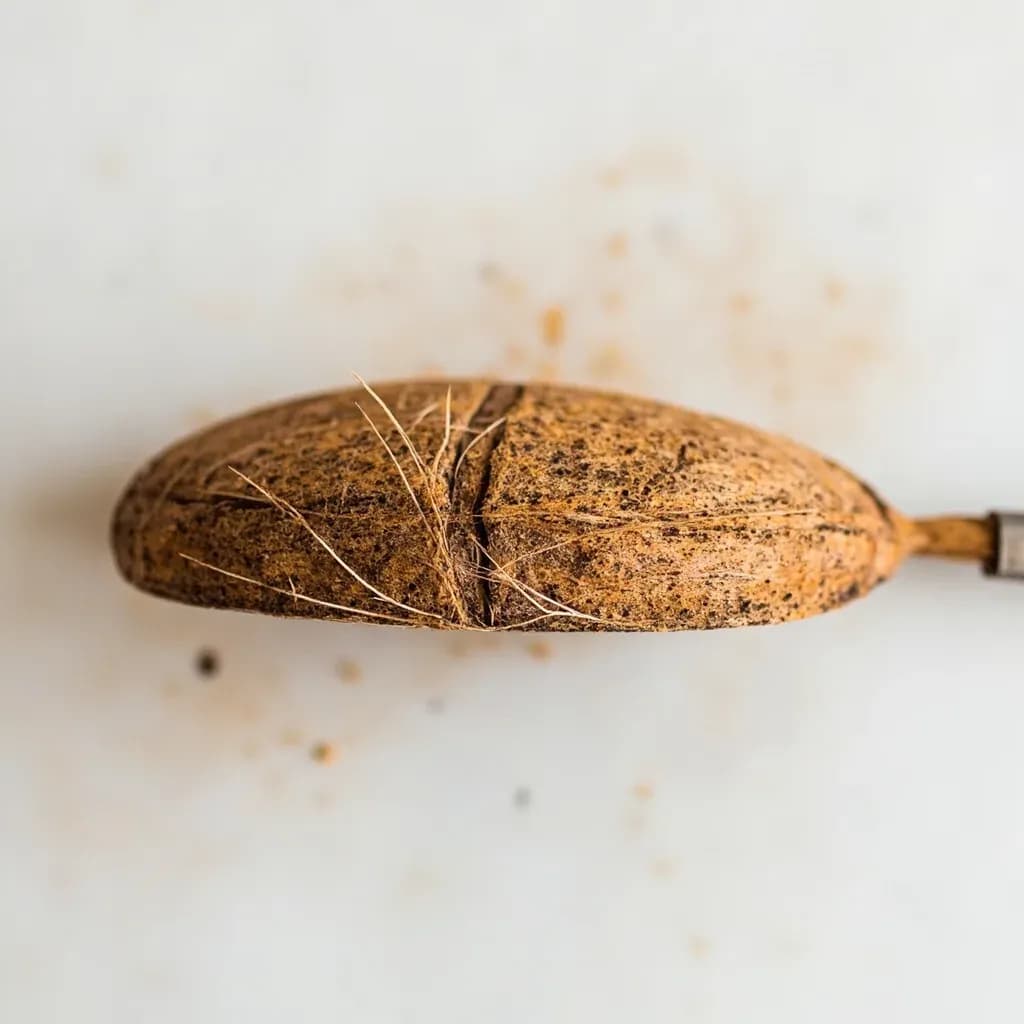
A serrated blade for shredding the white flesh from a halved coconut into fine gratings.
A coconut scraper has a rounded, toothed metal head that you draw the inside of a coconut half against to grate the flesh into fluffy shreds. Common across South and Southeast Asia, it often mounts on a low bench or stool that the cook straddles for leverage. The fresh gratings are used for curries, sweets and to extract coconut milk.
The kukuran is a low wooden stool fitted with a serrated metal blade mounted on a raised block at the front, designed so the user sits on the seat and scrapes halved coconut meat by pushing it across the teeth. It is the traditional answer to a problem every coconut cook knows: turning a tough, waxy half-shell of mature coconut into fine, moist gratings without pulverising them. The blade, traditionally forged from carbon steel or iron, is scalloped rather than smooth, so it shears the flesh into ribbons rather than slicing it cleanly, which keeps more cell structure intact and releases less of the watery liquid trapped inside.
That last point is why a hand-scraped coconut still matters in serious Philippine cooking. Machine graters, food processors, and box graters rupture far more cells per stroke, so the meat comes away wet and milky; this dilutes gata on the first press and costs the cook time in subsequent wringings. A sharp kukuran produces a fluffier, drier grating that yields a cleaner coconut milk and a more fragrant coconut jam or bukayo. In the coconut-producing provinces of Laguna, Quezon, Leyte, and Samar the tool is as much a fixture of the kitchen as the rice pot.
The design is also quietly ergonomic. Sitting lowers the cook's centre of gravity and lets the legs deliver the steady downward force needed for sustained scraping, while the hands only have to manage the angle and rotation of the coconut half. The shell itself becomes a safety guard: the user keeps their fingers behind the rim and presses the meat side down toward the blade, so the hand never crosses the teeth.
Alternatives
Types & varieties
The classic low stool in kamagong, molave, or narra hardwood with a forged iron scalloped blade; still made in Laguna, Quezon, and Leyte.
A stripped-down version clamped to a counter with no seat, useful in modern kitchens where a low stool is impractical.
All-metal or metal-and-wood build sold through Filipino grocery stores abroad; rust-resistant and easier to sanitize.
Lightweight, mass-produced Filipino-made graters; cheaper, but the teeth dull faster than forged steel.
Higher seat and steeper blade angle, suited to large mature coconuts.
Lower seat and gentler blade angle, comfortable for both young buko and mature niyog.
Choosing a kukuran: traditional wood vs. modern metal
For most readers the buying decision comes down to three things: authenticity of result, ease of cleaning, and where the tool will live. Here is how the common options compare.
- Traditional wooden kukuran: gives the driest, most aromatic gratings because forged carbon-steel teeth stay sharp longest and the dense hardwood seat damps vibration; demands the most care (oil the blade, never soak the wood).
- Stainless-steel modern kukuran: nearly identical scraping performance with much easier cleaning and no rust worry; the best choice for humid climates or light commercial use.
- Cast aluminum kukuran: lightest and cheapest, fine for occasional home use; expect to replace or sharpen the blade sooner, and avoid if you process coconuts in volume.
- Bench/tabletop model: pick this if you live in an apartment or share a kitchen where a low wooden stool would be in the way; it clamps to a counter and preserves most of the leverage advantage.
- A note on substitutes: a box grater, Microplane, or food processor will shred coconut, but they all rupture more cells and release more liquid, giving wetter gratings, more dilute first-press gata, and a slightly duller aroma.
Why hand-scraped coconut tastes different
Two technical points explain the gap between kukuran-grated and machine-grated coconut, and both matter in the finished dish.
- Cell rupture: each pass of a serrated blade shears rather than smashes, so fewer oil-bearing parenchyma cells burst; less free water and fat emulsion end up in the bowl.
- First-press yield: drier gratings wring out cleaner coconut milk on the first press, with less water to boil off when making latik, gata, or coconut jam.
- Aroma: the intact cells retain more of the volatile lactones and fatty acids that give fresh coconut its perfume — clearly noticeable in uncooked buko pandan and freshly rendered latik.
Common uses
Tips & pitfalls
- Pick fully mature, brown-husked coconuts — the meat is firm enough to scrape cleanly without crumbling into mush.
- Halve the coconut, drain the water, and let the halves rest 5–10 minutes so the meat pulls slightly from the shell and scraping becomes easier.
- Hold the half with the shell side toward you and the meat side against the blade; push down and toward you in short strokes, rotating the half to expose fresh meat.
- Keep your fingers behind the rim of the shell at all times — the shell protects your hand, not your fingertips.
- Sharpen or replace the blade as soon as gratings start coming out chunky; a dull blade crushes the meat and releases excess water, undoing the very advantage of the tool.
- Work over a wide basin or bilao so the flying shavings don't scatter; the fine gratings can travel surprisingly far with each stroke.
- Wipe and oil the blade with coconut oil after every use; never soak the wooden seat, and re-seat loose mounting screws before continuing — vibration loosens them over time.
- Common mistake: scraping a young, soft buko against a coarse kukuran blade — it tears the meat into pulp rather than clean shreds; reserve young coconut for a finer grater or for fresh salads.
Good to know
- Origin
- Philippines; a long-standing tool of rural kitchens in coconut-producing regions including the Visayas, Southern Luzon, and Mindanao.
- Also called
- Kukuran, kudkuran, pangudkud, or 'coconut grater stool'; the seated stool form is distinct to the Philippines, though the Indian koyta serves a similar function as a handheld single-blade scraper.
- Construction
- A low hardwood stool with a serrated metal blade fixed at an angle on a raised block at the front, sized for a seated user.
- Blade material
- Traditionally forged iron or carbon steel; modern versions in stainless steel. Teeth are scalloped to shred rather than slice.
- Body material
- Dense tropical hardwoods — kamagong (ironwood/ebony), molave, narra, or acacia — chosen to absorb the constant scraping force.
- Typical yield
- A mature niyog yields roughly 250–400 g of grated meat in 3–5 minutes with a sharp blade.
- Skill level
- Beginner-friendly; the seated posture and shell-as-guard design make it safer than it looks.
- Maintenance
- Wipe and dry the blade immediately; traditional iron blades are rubbed with coconut oil to prevent rust.
Also called
coconut-scraper-bench · Kukuran · coconut grater
Related

Peeler
Swift blade for stripping skin off fruit and vegetables

Grater
Sharp-toothed surface for shredding cheese and vegetables

Microplane
Ultra-fine rasp for citrus zest, garlic, and hard cheese

Mixing Bowl
All-purpose bowl for combining, whisking, and tossing

Whisk
Looped wires that beat air into eggs, cream, and sauces

Spatula
Flat blade for flipping, lifting, and scraping

Slotted Spoon
Pierced spoon that lifts solids and drains the liquid behind

Wooden Spoon
Gentle, heat-friendly spoon for stirring anything