Prep Tools
Cold Brew Tower
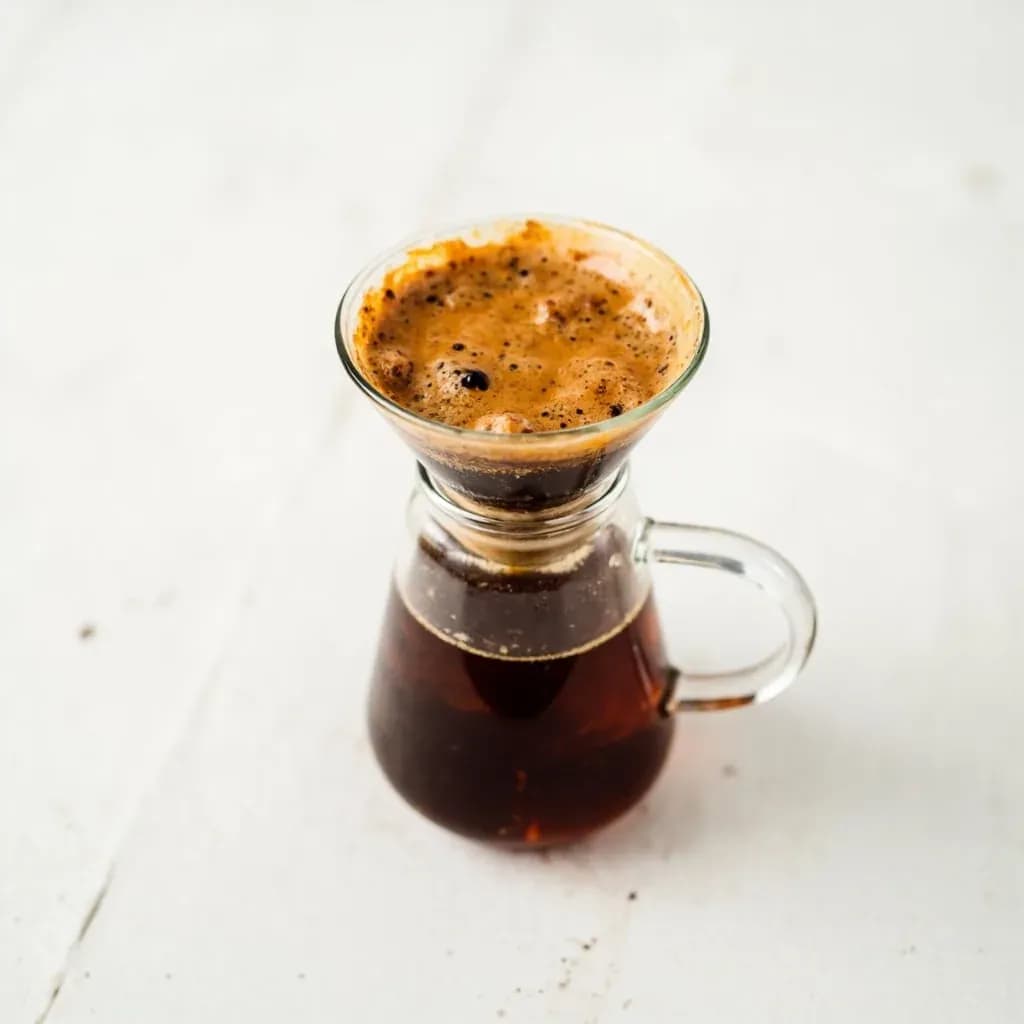
A tall drip rig that slowly trickles cold water through coffee grounds for smooth, low-acid concentrate.
A cold brew tower is a tiered glass apparatus where cold water drips slowly from a top reservoir through a bed of coffee grounds and a filter into a carafe below. The hours-long slow extraction produces a smooth, low-acid, concentrated brew, and a valve sets the drip rate. Simpler immersion toddy makers steep grounds in cold water and filter them instead.
A cold brew tower is a vertical glass-and-metal rig in which cold or room-temperature water is metered by a fine valve, drop by drop, onto a bed of ground coffee and collected below as a smooth, low-acid concentrate. The form descends from Japanese Kyoto-style slow-drip coffee — a twentieth-century commercial revival of an older patience-driven method — and the modern tower adapts that idea into a single self-contained piece of equipment. Because water meets the grounds a single drop at a time and contact times stretch from three to twelve hours, the extraction stays well below the temperature range where chlorogenic acids break down into bitter compounds. The result is a rounder, sweeter cup with more of the bean's aromatic top notes intact than you get from hot brewing or from immersion cold brew in a jar.
What sets a tower apart from a Mason-jar or Toddy-style immersion brewer is precision over the drip rate and the geometry of the grounds bed. A needle valve lets you dial contact time almost minute by minute, and the tall column keeps water moving as it falls, which lifts volatile aromatics that an immersion brew tends to leave behind. Home units sit on a countertop and make roughly 500 mL to 1 L at a time; café towers can be a metre tall, hold several litres, and double as a visual showpiece behind a bar.
Treat the cold brew tower as a specialty coffee tool rather than a general kitchen item. It rewards the same kind of care you would give an espresso machine — calibrated grind, weighed water, clean valves, filtered water — and it has very little tolerance for an unevenly packed bed or a clogged filter. A Hario or Büchi-style dripper can approximate the experience at smaller scale, but a dedicated tower is still the most reliable way to control the variables that actually define the cup.
Alternatives
Types & varieties
The classic tall, multi-chamber glass tower with a needle valve; produces the lightest, most aromatic cold brew.
Compact home version: one glass column with a valve straight into a carafe; simpler to set up and clean.
Two or three stacked grounds chambers fed by a single water reservoir; allows different coffees or progressive extraction.
Oversized display units, often 1 m or taller, with larger reservoirs; built for visual theatre behind a bar.
Needle valves give finer drip control and are preferred for true slow-drip; ball valves are cheaper but less precise.
Why slow-drip tastes different from immersion cold brew
Both methods avoid the heat-driven breakdown of chlorogenic acids that produces the bitterness and bright acidity of hot coffee, but they reach that goal by different routes, and the cup reflects it. In an immersion brew — a Toddy, a French press left overnight, coffee steeped in a Mason jar — the grounds sit in a fixed volume of water for many hours and the soluble compounds leach out into a steadily saturating bath. Sugars and fruity acids dissolve first, then heavier bitter and woody notes as the steep continues, which is why an over-long immersion brew can taste heavy or woody.
A slow-drip tower replaces that static bath with a constant feed of fresh water arriving at the top of the bed and a continuous draw of finished brew leaving the bottom. Each drop sees a fresh portion of coffee rather than a fully saturated bath, so the extraction is closer to a long, cold pour-over than to a steep. The continuous exchange tends to lift volatile aromatic compounds — florals, citrus oils, the top notes of a good washed Ethiopian — that a long immersion can leave muted. The trade-off is that drip towers are slower to set up, fussier about grind and bed geometry, and far less forgiving of a clog or a packed channel.
- Immersion brews saturate a fixed bath over time; slow-drip continuously feeds fresh water and draws off finished brew.
- Drip towers tend to preserve more of a bean's volatile aromatics, giving a brighter, more tea-like cup.
- Immersion brews are more tolerant of grind errors; towers reward a calibrated, even bed.
- A drip tower's flavor profile changes meaningfully with drip rate, while an immersion brew changes mainly with time.
Calibrating a tower for a repeatable cup
Three variables do almost all the work: grind size, drip rate, and water temperature. Once those are dialed in for a given coffee, the tower behaves predictably batch after batch. Most problems — sour, thin, bitter, or stalled cups — trace back to one of them drifting out of range.
- Start at a medium-coarse grind (roughly the texture of coarse sand) and adjust finer if the cup tastes thin, coarser if it tastes harsh or astringent.
- Set the valve for a steady 1-drop-per-second drip before adding water to the bed; re-check it 15 minutes in once the grounds are saturated.
- Use cold (4–10 °C) filtered water for the sweetest, most delicate cup; switch to room-temperature water only when you need to cut brew time to 3–4 hours.
- Weigh coffee and water for the first few batches (1:10 is a sensible starting ratio for concentrate) so you can compare results objectively before going by eye.
Common uses
Tips & pitfalls
- Pre-wet the grounds with a small amount of water and let them bloom for 2–3 minutes before starting the drip; this degasses CO₂ and prevents channeling.
- Calibrate the valve before adding water: aim for a steady 1-drop-per-second drip, not a thin stream, and re-check it 15 minutes into the run.
- Keep the grounds bed level and evenly packed; an uneven bed produces sour, uneven cups because water finds the path of least resistance.
- Use filtered water with moderate hardness (50–100 ppm) — soft distilled water tastes flat, very hard water scales the glass and mutes aromatics.
- Cold (refrigerated) water gives a sweeter, more delicate cup; room-temperature water shortens brew time but yields a slightly more bitter profile.
- Clean all chambers, the valve, and the outlet after every batch; cold-drip rigs are prone to mold and biofilm because the system stays wet for hours.
- Store finished concentrate in a sealed bottle in the refrigerator and use within 7–10 days; flavor peaks around day 2 and fades after that.
- Avoid very dark, oily roasts — they clog the slow drip and turn bitter over a long extraction; medium or light-medium roasts work best.
- If the tower stalls, the bed has compacted or the filter is clogged; stop, remove and re-bed the grounds rather than cranking the valve open.
- Paper filters give a cleaner, brighter cup; cloth filters add body and a touch of mouthfeel but must be rinsed thoroughly between uses.
Good to know
- Origin
- Descended from Japanese Kyoto-style slow-drip coffee, commercially revived in Kyoto cafés in the 20th century; the vertical glass tower is a contemporary adaptation.
- Brew method
- Gravity-fed slow drip: cold or room-temperature water is metered by a valve onto a bed of ground coffee, then drips through into a collection vessel.
- Typical brew time
- 3 to 12 hours depending on tower height, valve setting, and grind; most home and commercial rigs target 4–6 hours.
- Target drip rate
- Roughly 1 drop per second, or about 40–60 mL per minute, to keep the grounds bed evenly saturated without channeling.
- Recommended grind
- Medium-coarse, similar to coarse sand; too fine clogs and over-extracts, too coarse under-extracts.
- Coffee-to-water ratio
- 1:8 to 1:12 by weight for concentrate; finished cold brew is often cut 1:1 with water or milk before drinking.
- Common materials
- Borosilicate glass chambers with stainless steel or aluminium frames; valves are typically stainless needle or ball valves.
- Water temperature
- Cold (4–10 °C) for traditional slow-drip, or room temperature (20 °C) for faster 3–4 hour cycles; both sit well below hot-brewing temperatures.
- Typical heights
- Compact home units 25–40 cm; commercial and café towers 60–100 cm or taller.
- Yield
- Benchtop home units usually produce 500 mL to 1 L of concentrate per batch; café units 2–6 L.
- Filtration
- Most towers use paper or cloth filters in the grounds chamber; some add a secondary fine filter at the outlet.
Also called
Cold Brew Toddy Maker · Cold Brew Tea Jug · slow drip tower · Kyoto-style dripper
Related

Peeler
Swift blade for stripping skin off fruit and vegetables

Grater
Sharp-toothed surface for shredding cheese and vegetables

Microplane
Ultra-fine rasp for citrus zest, garlic, and hard cheese

Mixing Bowl
All-purpose bowl for combining, whisking, and tossing

Whisk
Looped wires that beat air into eggs, cream, and sauces

Spatula
Flat blade for flipping, lifting, and scraping

Slotted Spoon
Pierced spoon that lifts solids and drains the liquid behind

Wooden Spoon
Gentle, heat-friendly spoon for stirring anything