Prep Tools
Compartment Bento Container
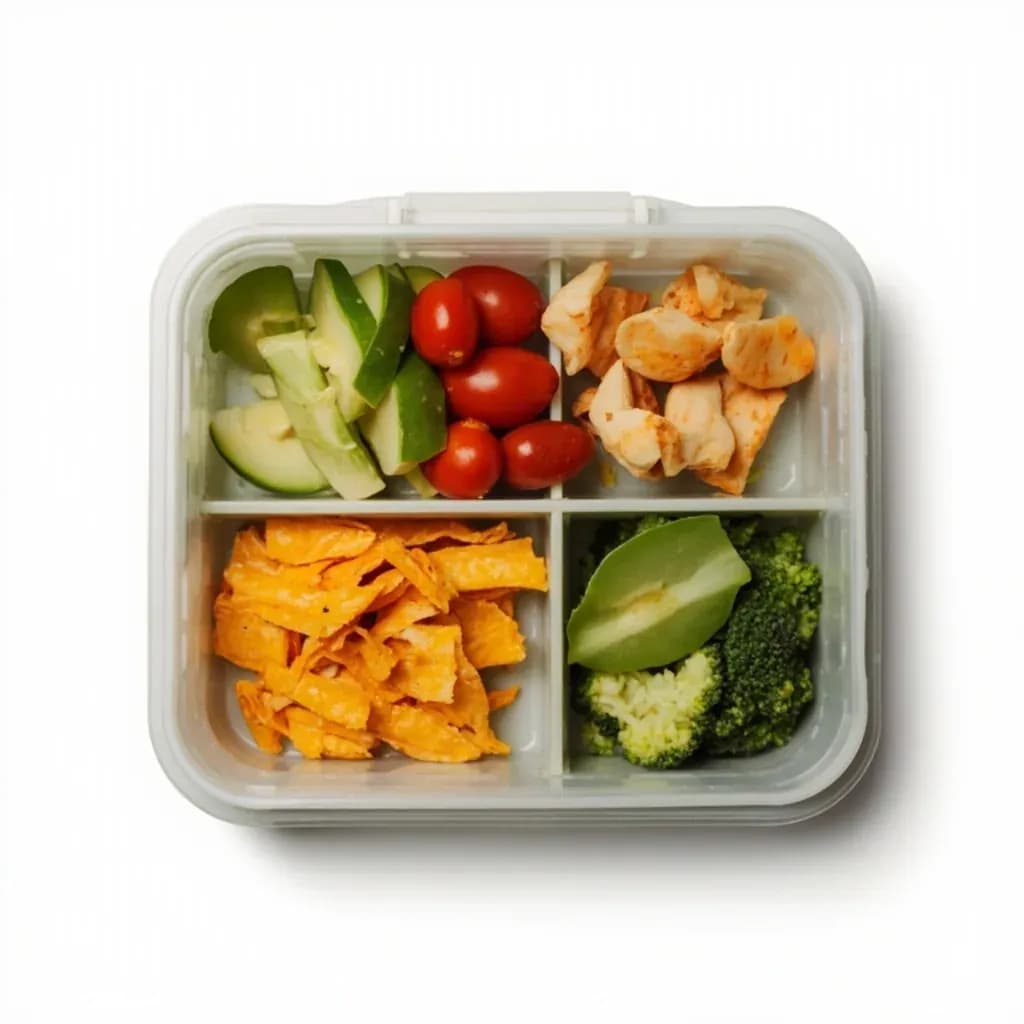
A divided lidded box that keeps portions and dishes separated for packed meals.
A compartment bento container is a sealable box with built-in dividers that keep different foods apart, useful for packed lunches, meal prep, and portion control. The separations stop sauces and sides from mixing and make it easy to balance protein, grain, and vegetables in set amounts. Many are microwave- and dishwasher-safe and stack for batch-prepping a week of meals.
The compartment bento container is a divided, lidded box designed to keep the components of a single meal — rice, a protein, and one or two vegetable sides — physically separated until eaten. The dividers matter because textures and flavors cross-contaminate quickly in a closed space: a tamagoyaki resting against vinegared rice turns soggy, pickled cucumbers bleed brine onto fried chicken, and trapped steam ruins crisp coatings. The layout itself is a quiet teaching device, mirroring the ichijū-sansai principle (one soup, three sides) on a small scale with rice occupying the largest well.
Choosing one comes down to four decisions that work together: material, compartment count, closure, and capacity. Wood (cedar, cypress, or paulownia) breathes and regulates moisture but cannot go in the microwave; polypropylene and Tritan plastic are light and reheating-friendly but stain from turmeric, tomato, and curry; stainless steel is nearly indestructible but adds weight and cannot be microwaved; glass resists stains and odors but is heavy and fragile. Capacity runs roughly 200–400 ml for a child and 500–800 ml for an adult main meal, with the rice well typically holding around 60 percent of the total volume.
Because the lid seals the food in a closed environment for hours, prep habits matter as much as the container. Cooling components to near room temperature before closing prevents condensation that sours rice and slumps fried items. Compartments should be filled loosely — overpacking prevents the lid from sealing and warps plastic dividers over time. Used thoughtfully, a good bento is a portion-control tool, an allergen-segregation vessel, and a meal-prep container rolled into one.
Alternatives
Types & varieties
Two- or three-compartment layout with a large rice well and two smaller wells for a main protein and one or two vegetable sides; mirrors the traditional 'one soup, three sides' meal structure.
Central well for rice surrounded by four small wells for pickles, protein, and two vegetable dishes; the classic school and work style.
Lacquered or plastic layered box with two or three tiers and a lid, derived from traditional ceremonial food boxes; often used for picnic or celebration meals.
Traditional bent-wood box (often Akita cedar) with a single shallow well and a wooden lid; valued for its moisture-regulating grain and subtle aroma.
Lightweight single- or two-compartment metal box once standard in Japanese schools; very durable but not microwave-safe.
Modern alternative with snap-locking clips; resistant to stains and odors and widely used in bento lunch bags.
Smaller, often round or oval compartmentalized box sized for decorative character-themed meals aimed at children.
Single cavity with removable silicone or plastic dividers, allowing the user to reconfigure compartment sizes to suit the meal.
Box with a silicone gasket and locking clips, designed to transport soups, sauces, and dressings without leaking.
Two-piece design combining a compartmentalized tray with a separate insulated soup or hot-food jar.
Choosing by Material
Each material fails in a different way, and matching it to how you actually cook is the single biggest decision you will make.
- Wood and bamboo: breathable and aromatic; ideal for plain rice and dry sides, but cannot be microwaved and will crack if soaked. Hand-wash only, dry open, and refresh monthly with food-grade camellia (tsubaki) oil.
- Polypropylene and Tritan plastic: light, inexpensive, and microwave-safe with the lid off; the trade-off is staining and odor retention from tomato, curry, turmeric, and beetroot.
- Stainless steel: nearly indestructible and stain-proof, but heavier than plastic and never microwaveable; great for kids and rough commutes.
- Glass: the cleanest material — no staining, no odors, no warping — but heavy, breakable, and worth reserving for oven-to-bento reheating or acidic foods that would mark plastic.
- Aluminum: the classic Japanese-school box; light and tough but reactive with acids (tomato, citrus, vinegar) unless anodized, and never microwavable.
Packing for Texture and Temperature
The lid turns a bento into a sealed microclimate for hours. A few habits keep textures intact from kitchen to lunchtime.
- Cool all components to near room temperature before closing the lid; trapped steam condenses on the rice and on fried items, sapping both.
- Pack wet foods (pickles, saucy vegetables, juicy fruit) in their own small silicone cup or a folded piece of plastic wrap so brine does not migrate.
- Tuck a sheet of unbleached paper or a lettuce leaf under rice to absorb excess moisture and keep grains fluffy.
- Keep crisp items (karaage, croquettes, fried tofu) in the largest compartment with room around them so steam can escape rather than pooling against the lid.
- Reserve the driest, saltiest items — furikake, umeboshi, beni shōga — for the smallest wells; a little goes a long way in a closed box.
Common uses
Tips & pitfalls
- Match compartment capacity to the meal: the rice well should hold roughly 60 percent of the total volume, with smaller wells for protein and sides.
- Cool food to near room temperature before closing the lid to prevent condensation that sours rice and slumps fried coatings.
- Grease compartments holding sticky foods (rice, noodles) lightly with sesame oil or line with a lettuce leaf so food releases cleanly.
- Avoid tomato-based, curry, and beet dishes in plastic boxes — the pigments and acids stain the plastic and flavor the next meal; reserve these for glass or stainless steel.
- Hand-wash wood and lacquered bento boxes with mild soap and lukewarm water; never soak them, and air-dry fully with the lid off to prevent mold.
- Fill compartments loosely with the lid on; overpacking prevents the lid from sealing and warps plastic dividers over time.
- Refresh a wood or bamboo bento once a month by rubbing with food-grade camellia oil to prevent drying and cracking at the seams.
- If a plastic lid warps from microwave heat, replace the lid rather than the whole box — most manufacturers sell replacement parts.
Good to know
- Origin
- Japan; compartmentalized bento boxes trace back centuries, with the lacquered jūbako and bent-wood mage-wappa being traditional forms.
- Common Name
- Bento box (弁当箱, bentō-bako)
- Materials
- Plastic (PP, ABS, Tritan), stainless steel, aluminum, wood (cedar, cypress, paulownia), bamboo, glass, silicone, and enamel-coated steel.
- Typical Adult Capacity
- Roughly 500–800 ml (≈150–200 g cooked rice plus sides); child sizes commonly 200–400 ml.
- Compartment Counts
- 1, 2, 3, 4, or 5 compartments, typically with one larger well for rice or grain and smaller wells for sides.
- Standard Dimensions
- Adult rectangles about 18–22 cm long × 10–14 cm wide × 4–6 cm deep; round versions about 14–18 cm diameter.
- Closure Type
- Snap-on or side-clip lid; higher-end versions use silicone gaskets for leak resistance.
- Cultural Note
- The ichijū-sansai (one soup, three sides) eating pattern is the traditional layout inspiration, with rice in the largest section.
Also called
Portion-Control Plate · Bento Box · Divided Meal Container
Related

Peeler
Swift blade for stripping skin off fruit and vegetables

Grater
Sharp-toothed surface for shredding cheese and vegetables

Microplane
Ultra-fine rasp for citrus zest, garlic, and hard cheese

Mixing Bowl
All-purpose bowl for combining, whisking, and tossing

Whisk
Looped wires that beat air into eggs, cream, and sauces

Spatula
Flat blade for flipping, lifting, and scraping

Slotted Spoon
Pierced spoon that lifts solids and drains the liquid behind

Wooden Spoon
Gentle, heat-friendly spoon for stirring anything