Prep Tools
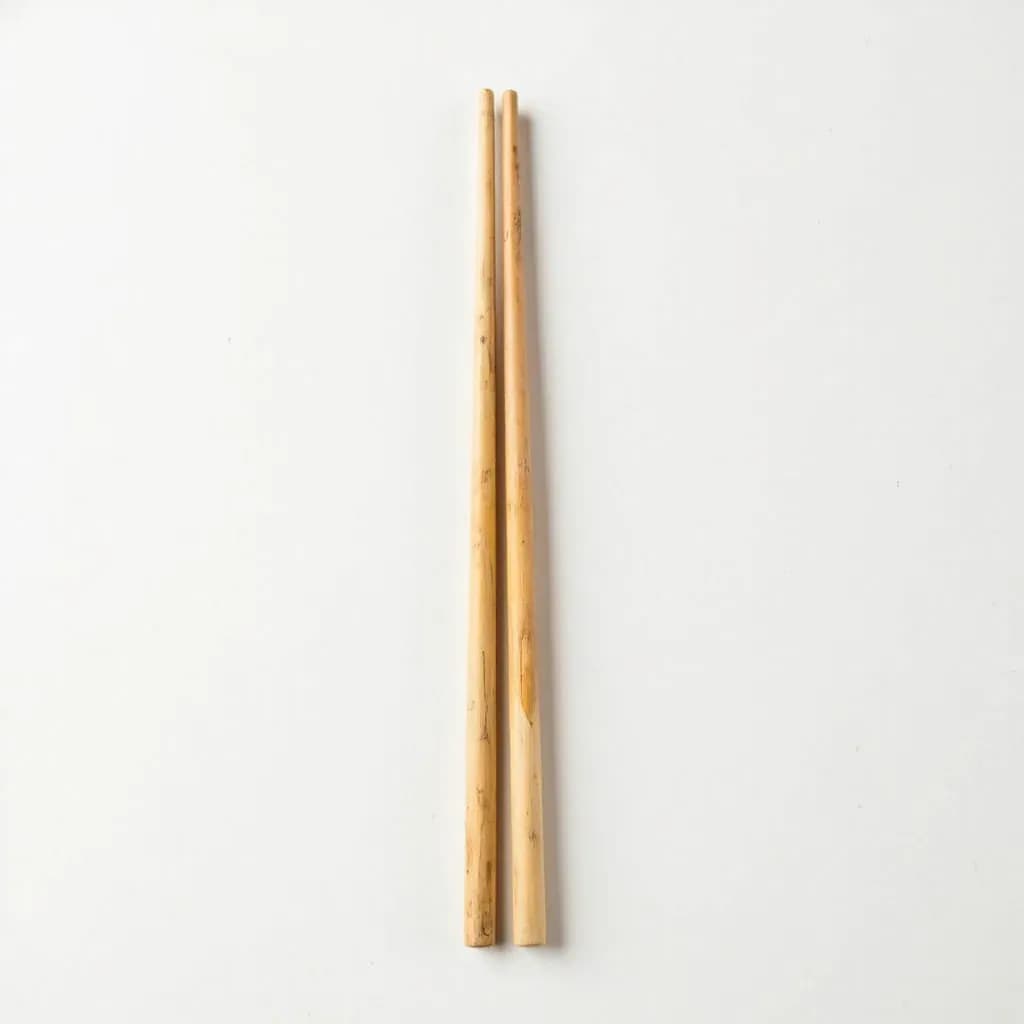
Long Cooking Chopsticks (Saibashi)
Extra-long chopsticks for stirring, flipping, and frying at a safe distance.
Long cooking chopsticks, called saibashi in Japan, are extended chopsticks used to stir, flip, plate, and handle food during cooking. Their length keeps hands away from hot oil and steam, making them ideal for deep-frying, tempura, noodles, and arranging delicate items. Usually made of bamboo or wood, some are joined by a cord to keep the pair together.
Saibashi (菜箸, literally "vegetable chopsticks") are the long chopsticks used at the stove in Japanese cooking, distinguished from eating chopsticks by two features: their length and, in the standard form, a short strip of cloth or paper that joins the two sticks at the top. That hinge is the whole point of the tool. It converts two loose sticks into a spring-loaded grip that can be opened and closed with a single hand — the way a pair of tweezers works, but with reach. A cook can pinch a single piece of tempura, lift it clear of the oil, and let the sticks open just enough for the oil to drip off, all without ever putting a hand near the heat. That is why a Japanese line cook can turn a full basket of shrimp with one hand and an outsider cannot.
Length is chosen by adding the depth of the pot to roughly 15–20 cm of clearance: the tip should reach the bottom of the pot while the hand stays safely above the heat source. The 36 cm bamboo pair is the universal default; anything shorter is really an eating chopstick being pressed into service, and anything much longer (45–50 cm metal) is a specialist fry tool. Material follows temperature — bamboo for almost everything, wood for longevity, metal only when the bamboo would burn. Bamboo scorches above roughly 200 °C / 400 °F, so for sustained high-heat frying the metal version is the right call.
In a Western kitchen saibashi are an underused tool that fills a gap between a spoon (which won't reach the bottom of a narrow pot) and a pair of tongs (which crush delicate items). They are equally good at stirring a stockpot, retrieving a bay leaf from a deep braise, or plating a single shiso leaf without scratching the bowl.
Alternatives
Types & varieties
The default 36 cm bamboo pair, joined at the top with a short cloth or paper strip. Light, springy, inexpensive, and the workhorse of Japanese home and pro kitchens.
Cypress (hinoki) or paulownia versions. More durable than bamboo and can be sanded and re-oiled, but heavier and slightly less springy.
Hollow metal, usually 40–50 cm, used for sustained high-heat work and deep frying where bamboo would scorch. Heavier, no flex, and conducts heat to the hand.
Traditional decorative version; the lacquer protects the wood and is more heat-resistant than bare bamboo, but still not for open flame.
Modern hybrid with silicone ends; gentler on nonstick coatings and easier to grip delicate items like fish or tofu.
Single-strip unjoined bamboo used in sushi rice mixing (shamoji-style) and izakaya prep; technically a paddle, not a chopstick pair.
Longer and heavier stainless pair (often 45–50 cm) purpose-built for agemono work; treated as a sub-category of saibashi in Western retail.
Choosing the right length and material
Match the saibashi to the deepest vessel you regularly work with, then add 15–20 cm of clearance for the hand. For a 20 cm donabe or stockpot, step up to 36–40 cm; for a deep fryer, 45–50 cm metal is the right tool. Material is simpler: bamboo covers the great majority of what a home cook does. Reach for metal only when the oil will sit above 180 °C / 350 °F for more than a few minutes, or when the work involves open flame. Reach for wood (hinoki or paulownia) when you want a pair that will last years rather than months and don't mind the extra weight.
Care and maintenance
Bamboo and wood saibashi should never be soaked. Wipe them clean with a damp cloth, dry them standing upright so air circulates around the tips, and store loose rather than nested. The joined cloth at the top is the weak point of the standard version: when it loosens, the sticks lose their spring and become much harder to control. A drop of food-safe glue or a new cloth strip restores them. Worn, frayed tips can be refreshed with a few passes of fine sandpaper followed by a rub of food-safe mineral oil. Metal saibashi need only a wipe and a wash, but remember they conduct heat — wrap a small cloth around the back end if you're working over a hot pot for any length of time.
Common uses
Tips & pitfalls
- Buy the joined (cloth-hinged) version if you only own one pair — the spring makes flipping tempura and tossing noodles far easier than with loose sticks.
- Hold them near the front third, not at the back; the long front section gives reach and the short back section gives control.
- Keep the tips out of the oil surface when not actively working — bamboo scorches and will split at the tip if left submerged.
- For deep frying, the tips should stay at least 2–3 cm below the oil surface; switch to metal saibashi for anything held above 180 °C / 350 °F sustained.
- Don't soak wooden saibashi in water — they swell and split. Wipe, dry standing upright, and store loose.
- The joined top is the weak point: if the cloth comes loose, the pair becomes much harder to control; a drop of food-safe glue or a new cloth strip restores it.
- Use the closed (joined) position as built-in tongs to grip a single piece of tempura — opening the pair slightly as you lift lets excess oil drip off.
- Avoid using them as a whisk or spatula — the tips are thin and will snap under lateral force.
Good to know
- Japanese name
- 菜箸 (saibashi) — literally "vegetable chopsticks"
- Typical lengths
- 30 cm (12 in) home use; 36–40 cm (14–16 in) standard; 45–50 cm (18–20 in) for deep-fry work
- Standard diameter
- Roughly 5–7 mm at the tip for bamboo; thicker for heavy-duty wood
- Primary material
- Bamboo — light, springy, inexpensive, and the traditional default
- Other materials
- Natural wood (cypress, paulownia), stainless steel, aluminum, silicone-tipped, lacquered bamboo
- Top connection
- A short cloth or paper strip joins the two sticks, acting as a spring hinge for one-handed control
- Heat tolerance
- Bamboo scorches above ~200 °C / 400 °F; stainless steel is used when sustained high heat or open flame is involved
- Origin
- Japan; developed for the depth of donabe, tetsunabe, and agemono (fry) pans over irori and kamado cooking
Also called
cooking-chopsticks · long-chopsticks · saibashi · bamboo-chopsticks · long-cooking-chopsticks
Related

Peeler
Swift blade for stripping skin off fruit and vegetables

Grater
Sharp-toothed surface for shredding cheese and vegetables

Microplane
Ultra-fine rasp for citrus zest, garlic, and hard cheese

Mixing Bowl
All-purpose bowl for combining, whisking, and tossing

Whisk
Looped wires that beat air into eggs, cream, and sauces

Spatula
Flat blade for flipping, lifting, and scraping

Slotted Spoon
Pierced spoon that lifts solids and drains the liquid behind

Wooden Spoon
Gentle, heat-friendly spoon for stirring anything