Prep Tools
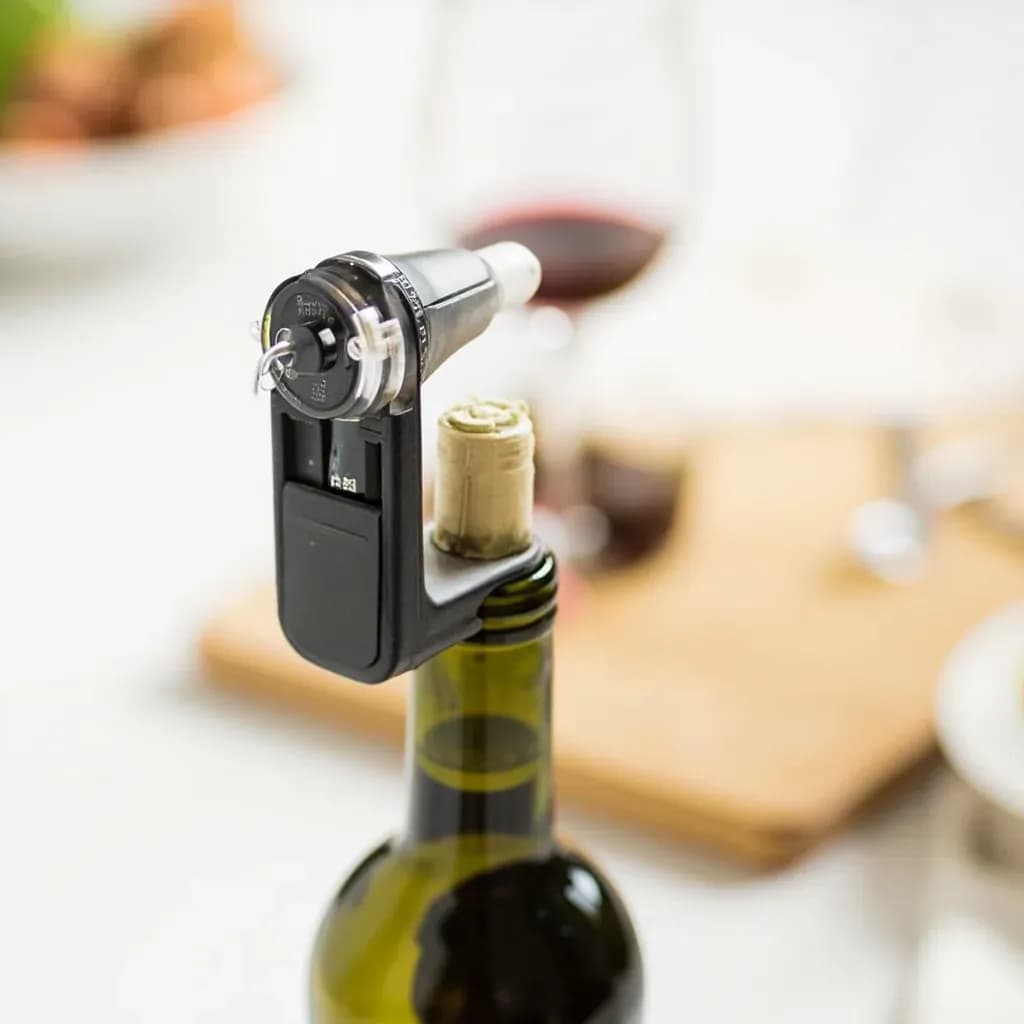
Coravin Wine Preservation System
A device that pours wine through the cork using inert gas, so the bottle keeps without oxidizing.
A Coravin is a wine access system that inserts a thin hollow needle through the cork, pressurizes the bottle with argon gas, and pours wine without ever pulling the cork. The cork reseals as the needle withdraws, letting the remaining wine age normally for weeks or months. It is used in restaurants and homes to serve fine wine by the glass without committing to the whole bottle.
The Coravin is a handheld device that draws wine from a sealed bottle through a hollow needle and replaces each pour with food-grade argon, an inert gas denser than air. Because the cork is never pulled and the headspace fills with argon rather than oxygen, the remaining wine stays essentially unoxidized for weeks or years. Greg Lambrecht, a medical-device engineer, brought the system to market in 2011, and it is now standard in serious home cellars and in restaurant by-the-glass programs that want to offer premium bottles without committing to the whole case.
In the glass, wine poured through a Coravin is indistinguishable from wine poured in the ordinary way; the system is invisible to the drinker. The caveat is mechanical. Every insertion is a small puncture, and a tired or dried-out cork can crumble or leak. For very old or fragile bottles, collectors treat each use as a deliberate decision rather than a casual one. Screw-cap bottles cannot self-seal after a puncture, so they require the separate Pivot system, which uses its own closure rather than piercing the cap.
Alternatives
Types & varieties
Entry-level plastic body with manual needle insertion; the most affordable way into the system
Mid-range with metal accents and a smoother needle action
Improved grip and ergonomics over the Two
Refined finish and added features for frequent users
Premium materials and a sleeker profile
Top-tier build; some versions include a Bluetooth capsule counter
A separate, simpler system for screw-cap bottles; uses its own reusable closure and cartridge rather than a needle through the cap
How It Actually Works
The mechanism is straightforward once you know the physics. A thin stainless-steel needle pierces the cork, and a trigger on the device releases argon from a small capsule. Because the bottle is held at an angle of around 45° during pouring, the needle tip stays submerged in wine while wine flows up through the needle and out the spout; argon enters the bottle at the same time to replace the lost volume, so internal pressure is preserved and the wine never contacts atmospheric air. When the needle is withdrawn, the cork's natural elasticity closes the hole. The argon, being heavier than oxygen, sits on top of the wine as a protective layer until the next pour.
- Argon is chosen over nitrogen because it is denser, so it forms a stable blanket on the wine's surface.
- The standard needle is 18 gauge; finer needles are available for older or more fragile corks.
- Each argon capsule yields roughly fifteen 5 oz pours before replacement.
When to Reach for It (and When to Hold Off)
The Coravin is at its best for expensive bottles, large formats that would otherwise be opened and consumed too quickly, side-by-side tastings of vintages or producers, and restaurant programs that want to sell premium wines by the glass. For a $20 bottle you plan to finish in two nights, it is overkill. For a rare or very old bottle, it is a useful but finite tool: every puncture is a mechanical compromise, and a brittle cork may not survive repeated insertions. Many collectors reserve the device for specific tasting moments rather than casual weeknight use.
- Best value: bottles you want to drink slowly over months rather than days.
- Best for tastings: comparing several wines in one session without opening every bottle.
- Use with care on bottles older than 20 years, where cork is often fragile.
- Not necessary for inexpensive wines you will finish within a week.
Common uses
Tips & pitfalls
- Tilt the bottle at roughly 45° when pouring so the needle stays submerged and argon replaces wine without bubbling through it.
- Hold the bottle upright for a few seconds after removing the needle to let the cork's natural elasticity reseal the puncture cleanly.
- Replace the needle every 30–50 uses; a dull tip tears cork fibers and is the most common cause of leaks and slow drips.
- Keep spare argon capsules on hand. They have a long shelf life and are the only consumable you will run through.
- Store punctured bottles upright and away from heat and light, just as you would any wine; the argon blanket is stable but not invincible.
- For older or fragile corks, use the thinner standard needle and insert it straight down to avoid crumbling the closure.
- Wipe the spout and needle area after each use so dried wine residue does not clog the mechanism.
Good to know
- Inventor
- Greg Lambrecht, an American medical-device engineer
- Company founded
- 2011 (Coravin Inc.)
- Operating gas
- Food-grade argon (inert, denser than air)
- Needle
- Hollow stainless-steel, typically 18 gauge for natural cork
- Capsule life
- Approximately 15 standard 5 oz (150 ml) pours per argon capsule
- Bottle compatibility
- Natural cork on standard models; screw caps require the Pivot system
- Preservation time
- Weeks to years, depending on the wine, storage, and number of punctures
- Needle lifespan
- Replace every 30–50 punctures to avoid tearing the cork
- Power
- Manual, no batteries required
- Approximate price range
- Roughly $100 (entry-level) to $400+ (premium models)
Also called
Coravin · wine preservation system · argon wine pourer
Related

Peeler
Swift blade for stripping skin off fruit and vegetables

Grater
Sharp-toothed surface for shredding cheese and vegetables

Microplane
Ultra-fine rasp for citrus zest, garlic, and hard cheese

Mixing Bowl
All-purpose bowl for combining, whisking, and tossing

Whisk
Looped wires that beat air into eggs, cream, and sauces

Spatula
Flat blade for flipping, lifting, and scraping

Slotted Spoon
Pierced spoon that lifts solids and drains the liquid behind

Wooden Spoon
Gentle, heat-friendly spoon for stirring anything