Knives & Cutting
Curd Knife
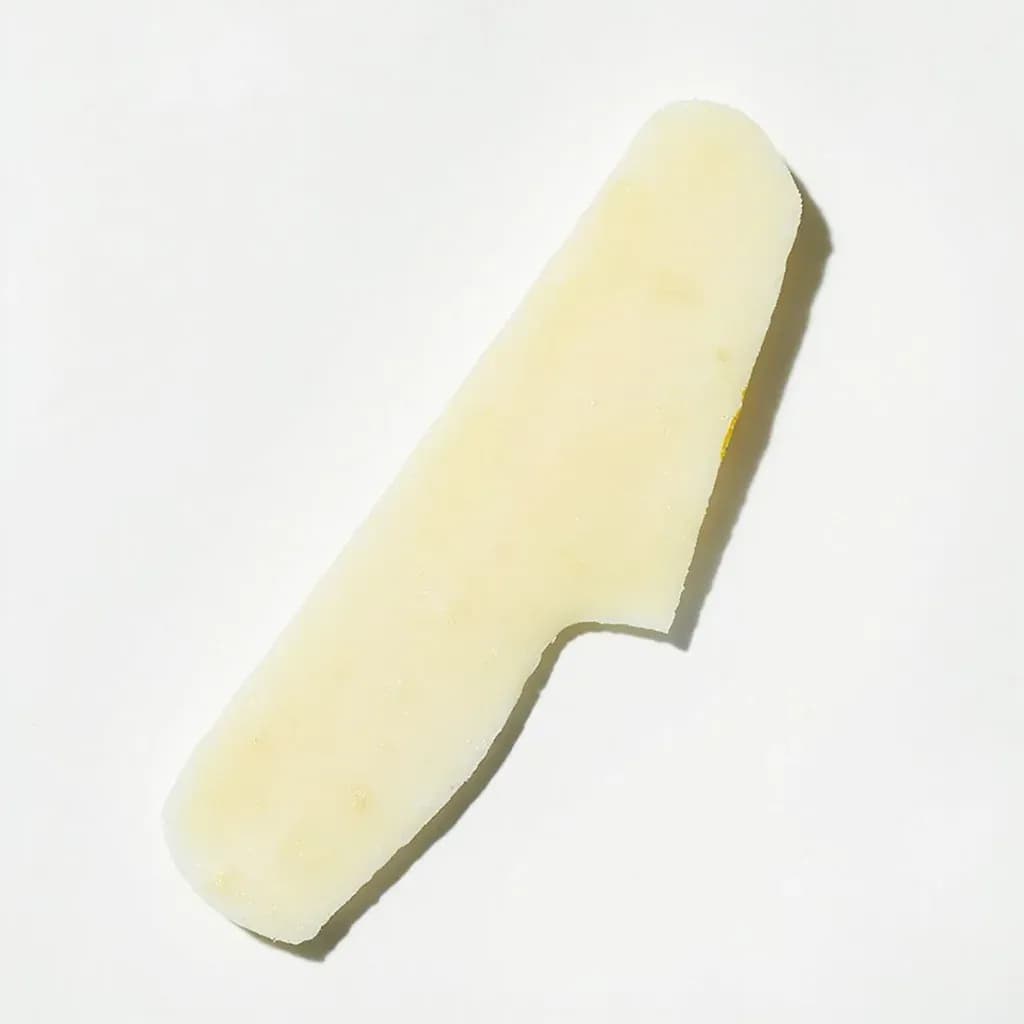
A long wide blade for cutting set milk curd into even pieces during cheesemaking.
A curd knife is a long, broad, often blunt-edged blade used to slice through a vat of coagulated milk, cutting the set curd into uniform cubes. The size of the cut controls how much whey is released and therefore the final moisture and texture of the cheese. Cheesemakers draw it horizontally and vertically through the vat in measured passes.
The curd knife is a long, flat-bladed cheesemaker's tool built for a single job: slicing a soft rennet-set milk gel into uniform cubes so the whey can drain in a controlled, predictable way. Its blade — typically 30–45 cm of thin stainless steel — is long enough to reach the bottom of a small vat in a single stroke, and only minimally sharp, because the goal is a clean slice through a delicate gel rather than a chopping cut. A home cheesemaker holding one for the first time will notice immediately how different it feels from a kitchen knife: the blade is long and thin, the edge only mildly sharp, and the handle is sized for a slow, vertical, top-to-bottom draw.
Cut size is one of the most powerful variables in cheesemaking, second only to milk quality and culture choice, and the curd knife is the tool that sets it. Smaller cubes — rice-grain size for Parmesan-style cheeses — release whey quickly and produce a dry, dense curd; larger cubes of 2–3 cm hold moisture and yield a softer, lactic paste. The blade is meant to glide rather than saw: dragging or sawing shatters the curd into fines, drives fat into the whey, and makes the final cheese grainy. In practice, the curd knife is paired with a curd harp (a wire frame) for very deep or very wide vats, and is used at coagulation temperature (29–39 °C / 85–102 °F) when the gel is firm enough to break cleanly from the side of the pot.
It is not a serving knife and should not be confused with a table cheese knife. The tool is a piece of small-scale cheesemaking equipment, sized to the milk volume in the pot, and is most useful for anyone making pressed, stirred-curd, or lactic cheeses at home from a few litres of milk up to a small creamery batch.
Alternatives
Types & varieties
The classic long-bladed, single-handle knife; held vertically and drawn through the curd in parallel rows
Held parallel to the surface of the milk and slid in from the side; used on shallow, wide vats where vertical reach is awkward
A longer blade with a handle at each end, used like a level to make perfectly horizontal cuts in deep vats
A frame strung with evenly spaced stainless or nylon wires; pushed down through the curd in one motion and then turned 90° for cross-cuts
A simple taut wire on a U-shaped handle for small batches and soft lactic curds in a pot
Standard hobbyist and small-creamery tool, roughly 35 cm blade with a polypropylene handle
Lightweight, inexpensive option for beginners; cuts slightly less cleanly than stainless steel
Cut size by cheese style
Cube size is the cheesemaker's main lever for moisture and texture. The guide below is a rough starting point — many recipes split the difference — but it shows why a single knife is rarely enough on its own and why cut size is worth measuring, not eyeballing.
- Parmesan / Grana-style: rice-grain to small pea size — drives out the most whey and gives a dry, granular, long-aged paste.
- Cheddar and other pressed English styles: roughly 1 cm (½ in) cubes — a balance of moisture retention and acidity development.
- Gouda, Edam, and most Dutch pressed cheeses: 1.5–2 cm cubes — a moister curd that retains some sweetness.
- Soft lactic cheeses (Chaource, young Camembert-style): 2–3 cm cubes, cut very gently — the curd is ladled rather than stirred, and a clean cut preserves the fragile gel.
Knife, harp, or wire?
For a home pot of 4–8 L, a single 30–40 cm vertical curd knife is usually all you need. As batch size grows, a curd harp gets the cut done in two motions (down, then turn 90° and down again) and produces the most uniform cubes with the least curd shatter. A truffle-style wire cutter is the lightest tool in the box and is best reserved for small, soft lactic batches where a heavy blade would tear the curd.
- Choose a knife when batch size is small and you want to feel the gel break beneath the blade.
- Choose a harp when batch size is large, when you need consistent cube size, or when teaching beginners (less technique-dependent).
- Choose a wire cutter for soft lactic curds in a small pot where a long blade feels unwieldy.
Common uses
Tips & pitfalls
- Let the set firm up properly before cutting — a fragile, just-set gel shatters; wait for a clean break from the side of the pot.
- Use long, slow, even strokes; let the weight of the blade do the work rather than sawing, which tears the curd.
- Make the first set of cuts with the knife held perfectly vertical, then rotate 90° and repeat for a clean grid; a third diagonal pass is used for some hard cheeses.
- Match cut size to the cheese: a classic cheddar calls for roughly 1 cm (½ in) cubes; a Gouda around 1.5–2 cm; a Parmesan-style much smaller, almost rice-grain size.
- A curd harp produces the cleanest, most uniform cuts and is the easiest way for a beginner to get consistent cube size.
- Stop just short of the bottom of the vat on each stroke so you do not scrape the base and dull the blade, and so the bottom layer of curd is not pulverized.
- Pause briefly between cuts to let the cut faces firm up before stirring; this reduces curd shatter and fat loss into the whey.
- Do not substitute a chef's knife: it is too short, too thick, and will mangle the gel rather than slice it cleanly.
Good to know
- Tool type
- Long, flat-bladed knife (or wire harp) used in cheesemaking to slice set milk gel into uniform cubes
- Typical blade length
- 30–45 cm (12–18 in) for the long vertical style; shorter 20 cm versions exist for small pots
- Blade material
- Food-grade stainless steel; sometimes food-grade plastic for home use
- Edge
- Thin, mostly straight, and only minimally sharp — designed to slice cleanly through a soft gel, not chop
- Orientation
- Used vertically (handle at top, blade pointing down) to reach through the full depth of a vat of curd
- Typical target cut size
- Cubes of roughly 1–2 cm (about ½ in) for pressed cheeses like cheddar; rice-grain size for harder styles; 2–3 cm for soft lactic styles
- Working temperature
- Used at coagulation temperature, generally 29–39 °C (85–102 °F) depending on cheese style
- Capacity
- Sized to the vat — home cheesemakers typically use 20–40 cm blades for pots holding 4–20 L of milk
- Cleaning
- Hand-wash stainless versions; not normally dishwasher-safe if a wooden handle is fitted
- Related tool
- Curd harp (cheese harp): a frame strung with parallel stainless or nylon wires that drops through the curd in one motion
Also called
Curd-Cutting Knife · Curd-Breaking Knife · Curd Cutter
Related

Knife
The fundamental cutting tool every kitchen is built around

Chef's Knife
The do-everything blade for chopping, slicing, and mincing

Paring Knife
Small, nimble blade for peeling and detailed in-hand work

Serrated Knife
Saw-toothed blade that slices crusty bread without crushing

Cleaver
Heavy broad blade for chopping through bone and bulk prep

Cutting Board
The stable surface every cut starts on

Mandoline
Adjustable blade for paper-thin, perfectly even slices

Kitchen Shears
Heavy-duty scissors for poultry, herbs, and packaging