Prep Tools
Decanter
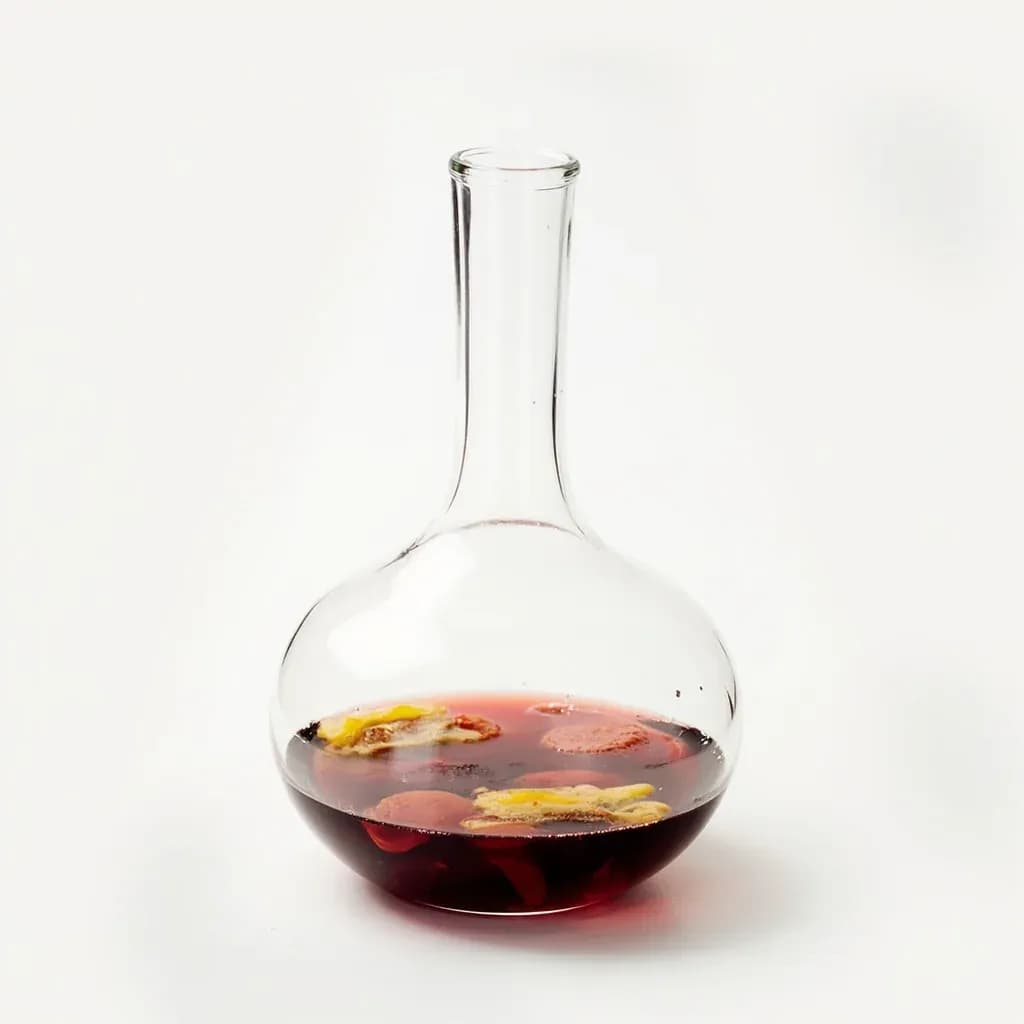
A wide-bottomed glass vessel for aerating wine and separating it from sediment.
A decanter is a glass or crystal vessel into which wine is poured to expose it to air and to leave sediment behind in the bottle. The wide base increases surface area, helping young tannic wines soften and aromas open up before serving. It is also used purely for presentation when serving wine or spirits at the table.
A decanter is a wide-bottomed, narrow-necked vessel, almost always glass or crystal, used to serve wine and spirits with both function and ceremony. Its two jobs at the table are distinct: aeration, which exposes a young, tannic red wine to oxygen so its flavors open up and its harsh edges soften; and sediment separation, which gently lifts a clear, aged wine off the lees that have collected in the bottle over years of cellaring. The shape of the bowl governs how much air the wine meets and how quickly it does so, which is why no single decanter suits every wine.
In practice, the vessel works by spreading the wine across a broad surface so volatile compounds evaporate and the liquid picks up oxygen. A wide, low bowl aerates fast and is best for young, structured reds like Cabernet Sauvignon, Barolo, or Malbec. A taller, narrower shape limits air contact and suits older, more fragile bottlings whose bouquet can vanish in minutes if over-exposed. Most wine decanters hold 750 mL to 1.5 L, a single bottle to a magnum, and the broad base gives sediment room to pool cleanly away from the pour.
Beyond wine, the smaller, stoppered spirits decanter became a fixture of the sideboard by the 18th century, presenting whiskey, brandy, port, and sherry with a controlled pour. In a home kitchen, the same wide glass bowl can pull double duty clarifying stocks or serving infused waters and shrubs, though these secondary uses put the decanter in contact with oils and acids that cloud fine crystal over time.
Alternatives
Types & varieties
Wide, rounded bowl with a narrow neck; maximizes surface area to aerate and lets sediment settle cleanly.
Classic 19th-century shape with a long, low-set bowl and curved neck; the neck keeps wine from sloshing during the pour.
Bulbous body with a distinctive raised glass ring at the neck; traditional English cut-crystal style.
Tall cylindrical body containing a suspended glass ship; usually decorative, for spirits display rather than wine service.
Scottish-form spirits decanter shaped like a grouse; historically associated with Scotch whisky presentation.
Squat, broad-based design with a thumbprint handle cut into the side; common for whisky and brandy.
Decorated with cut or painted harlequin patterns; typically an ornamental spirits piece.
Smaller than wine decanters, sealed with a stopper; used for whiskey, brandy, port, sherry, or other fortified wines.
Decanting Young vs. Aged Wine
Decanting is not one task but two, and confusing them is the single most common mistake at the table. A young red, say a three-year-old Malbec or a Barolo from a tight vintage, wants a wide, flat decanter and 30 minutes to 2 hours of breathing room, because the wine's main problem is locked-in tannins and closed aromatics. An aged red, say a 20-year-old Bordeaux with a thick crust of tartrate sediment at the bottom of the bottle, wants the opposite: a narrow decanter, a slow pour, and service within minutes, because its main problem is fragility, and over-aeration will erase the bouquet faster than you can pour it. The standing rule is to match the decanter's air exposure to the wine's age: wide and slow for the young, narrow and fast for the old.
- Stand an aged bottle upright 24–48 hours before opening so sediment collects cleanly at the base.
- Pour under a low light source—a candle or phone flashlight—so you can stop the moment sediment reaches the neck.
- For young wines, give them a gentle swirl in the decanter to jump-start aeration, then let them rest.
- Aged wines should be served soon after decanting; pour only what will be drunk in 20–30 minutes.
Cleaning and Care
Crystal and fine glass demand more from a cook than a quick rinse, and a decanter that smells of yesterday's Cabernet will ruin tonight's Chardonnay. Hand-washing with warm water, mild unscented detergent, and a long-handled bottle brush is the safest method. Stubborn tannin stains or cloudy film respond to a teaspoon of baking soda or a handful of uncooked rice swirled with warm water; both act as a gentle abrasive without scratching. Avoid heavily scented dish soaps, since their residue masks wine aromas, and never put a leaded crystal or gold-rimmed decanter in the dishwasher, where heat and detergent etch the surface permanently.
- Rinse twice with clear water to remove every trace of detergent.
- Dry upside down on a clean cloth or rack; water spots are hard to buff from crystal and distort the wine's color.
Choosing the Right Shape
Bowl geometry is the decanter's most important feature, and worth choosing deliberately. A low, broad bowl (think duck or swan-neck) exposes a wide surface to air and aerates quickly—ideal for tannic young reds. A taller, narrower shape slows oxygen uptake and is gentler on older wines. Stoppered spirits decanters are a different category: their job is presentation and controlled pouring, not aeration, and they should seal well enough to keep volatile aromatics from evaporating between pours.
- Wide flat bowl: Cabernet Sauvignon, Syrah, Malbec, Barolo, young Bordeaux blends.
- Tall narrow bowl: aged Pinot Noir, older Burgundy, mature claret with delicate aromatics.
- Stoppered spirits decanter: whiskey, brandy, port, sherry, other fortified wines.
- Keep a dedicated decanter for reds—tannin stains ghost into clear whites and rosés served later.
Common uses
Tips & pitfalls
- Stand the bottle upright for 24–48 hours before opening an aged wine so sediment settles at the bottom; skipping this is the most common reason people end up with cloudy, gritty glasses.
- Pour slowly under a low light and stop the moment sediment reaches the neck—rushing is the easiest way to ruin an expensive bottle.
- Don't over-decant old or delicate wines; their bouquet can fade within 15–30 minutes once exposed to air, and you cannot put it back.
- Avoid heavily scented dish soap; residue masks wine aromas. A rinse with baking soda or uncooked rice swirled with warm water scours stubborn tannin film without scratching.
- Dry the inside upside down on a clean cloth or rack; water spots are nearly impossible to remove from crystal and distort the visual of the wine.
- Decanters with gold rims, hand-painted decoration, or thin leaded crystal are not dishwasher-safe—hand wash only, and never subject them to sudden temperature changes.
- Keep a decanter dedicated to reds: tannin stains ghost into clear whites and rosés served later, and the off-flavor is impossible to rinse out.
- Warm the decanter slightly with hands or a lukewarm rinse before pouring very young red wine if the room is cold; a cold decanter mutes aromatics.
Good to know
- Typical material
- Glass or lead crystal; stainless steel and acrylic versions exist for everyday use.
- Standard wine size
- 750 mL to 1.5 L (one to two bottles); larger formats hold magnums and beyond.
- Spirits decanter size
- Usually 750 mL to 1 L, often fitted with a ground glass or cork stopper.
- Etymology
- From Medieval Latin decanthare, meaning "to pour from the edge of a vessel."
- Earliest use
- Glass decanters date to the Roman Empire; they became common tableware by the 18th century.
- Decanting time (young red wine)
- 30 to 60 minutes typically; some tannic wines benefit from up to 2 hours.
- Decanting time (aged red wine)
- Just before serving, often only minutes, to preserve developed aromatics and avoid oxidation.
- Serving temperature (decanted red)
- Around 60–65°F (15–18°C), depending on varietal.
- Cleaning
- Hand-wash with warm water, mild unscented detergent, and a bottle brush; rinse thoroughly and air-dry upside down.
- Storage
- Empty and dry, away from sunlight; spirits decanters keep liquor sealed between pours but are not ideal for multi-year aging.
Also called
wine decanter · carafe
Related

Peeler
Swift blade for stripping skin off fruit and vegetables

Grater
Sharp-toothed surface for shredding cheese and vegetables

Microplane
Ultra-fine rasp for citrus zest, garlic, and hard cheese

Mixing Bowl
All-purpose bowl for combining, whisking, and tossing

Whisk
Looped wires that beat air into eggs, cream, and sauces

Spatula
Flat blade for flipping, lifting, and scraping

Slotted Spoon
Pierced spoon that lifts solids and drains the liquid behind

Wooden Spoon
Gentle, heat-friendly spoon for stirring anything