Cookware
Degchi / Handi (Heavy Cooking Pot)
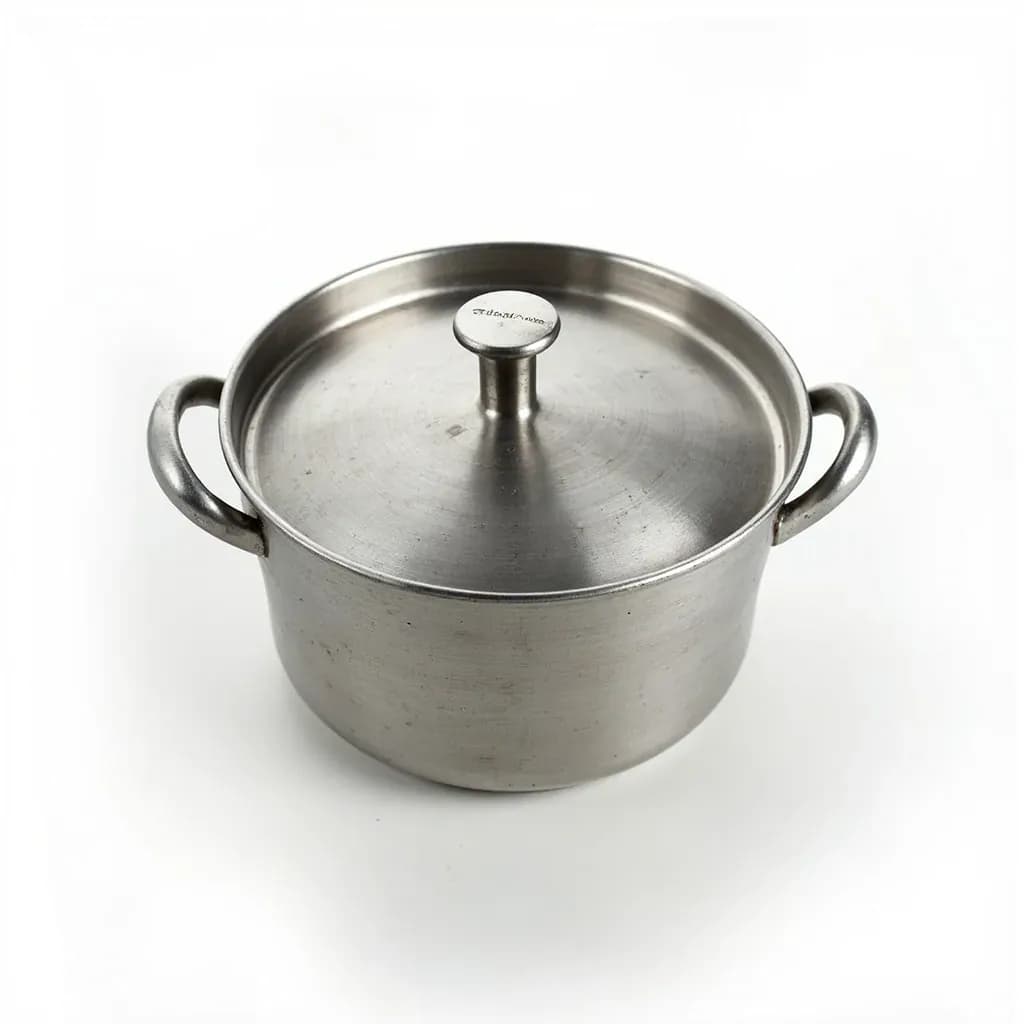
Wide, heavy South Asian pot for biryani, curries, and large-batch stewing.
A degchi (and the rounder, narrow-necked handi) is a wide, heavy-bottomed pot central to South Asian cooking, traditionally made of brass, aluminum, or stainless steel. It is used for slow-cooked curries, biryani, dals, and large-batch dishes, often sealed with a lid and dough for dum cooking. The thick base spreads heat to prevent scorching during long simmers.
The degchi and its belly-shaped cousin, the handi, are the workhorses of South Asian kitchens — heavy, lidded pots built for the long, patient, low-heat cooking that defines the region's great rice dishes and gravies. The word 'deg' is Persian for pot, carried into Mughal-era Hindustani and now embedded in Urdu, Hindi, and Bengali. What sets these vessels apart is the combination of thick walls, a tight-fitting domed lid, and a shape that channels rising steam back down onto the food, mimicking the even, ambient heat of an oven on a stovetop.
They are not stir-fry pans. The heft that makes them so effective at slow braising also means they scorch easily on high flame and respond slowly to temperature changes. Most traditional versions are brass or tinned copper; modern kitchens reach for hard-anodized aluminum, tri-ply stainless, or cast iron, each keeping the same silhouette but with different care requirements. Sizes run from a 1 L household pot to 30–50 L catering handis that feed a wedding, and the same pot is often brought straight to the table so the dish arrives still gently bubbling under its lid.
The defining technique is dum cooking: sealing the lid with a rope of wheat-flour dough so no steam escapes, then leaving the pot over very low heat or buried in embers. Rice steams in its own aromatic vapour, meat collapses into gravy, and the top layer of biryani stays fluffy instead of sodden. Without the right pot, the technique is just a suggestion; with a handi or degchi, a single stovetop burner behaves like a low, even oven, holding a steady temperature for hours.
Alternatives
Types & varieties
Belly-shaped, narrow-necked pot with a domed lid; the classic vessel for dum biryani, nihari, and slow-cooked curries.
Sturdier, straighter-sided pot, often with two small loop handles and a flat lid; workhorse for curries, dals, and large-batch cooking.
Tall, deep ceremonial handi for wedding feasts and slow-braised meats; heavier gauge, traditionally brass or copper.
Shallower, wider member of the same family, closer to a deep kadai; good for frying, halwa, and shallow braises.
Small two-handled handi originally a serving dish; the British 'balti' curry style takes its name from this vessel.
Modern adaptation with the same silhouette; superb heat retention, must be seasoned and towel-dried on the stove after washing.
Lightweight, non-reactive, and tough; the everyday choice in contemporary Indian kitchens.
Induction-compatible and dishwasher-safe; preferred in commercial and modern home kitchens.
Unglazed earthenware for dum cooking where a faint earthy note is welcome; cannot be soaked or scrubbed harshly.
The dum seal and what the lid is for
A handi without its lid is just a saucepan. The whole point of the shape — belly below, narrow mouth, snug dome on top — is to trap steam and cycle it back over the food. In a true dum setup nothing is allowed to escape, so the pot effectively cooks in its own moisture at a constant, gentle temperature.
- Roll a thick rope of plain wheat-flour-and-water dough (no salt, no oil) and press it along the rim before clamping the lid on; it dries into an airtight gasket and peels off cleanly at the end.
- Cook over a tawa or flat griddle on the burner, or sandwich the pot in a bed of hot salt. This spreads the heat from a hot ring into a gentle plate and stops the base scorching.
- Layer rice over gravy (not the other way round) for biryani, so the heavier masala sits at the base where the heat is, then finish with saffron milk and seal.
- After cooking, rest the lidded pot off the flame for 10–15 minutes; the trapped steam finishes the rice or meat and prevents a wet, compressed top layer.
- For a quick approximation without dough, lay a clean tea towel across the rim under the lid to absorb condensation and slow steam loss — not a true seal, but closer than a bare lid.
Common uses
Tips & pitfalls
- Always pre-warm the empty pot on low flame for a minute before adding oil; cold fat hitting a cold handi is the single biggest cause of sticking and uneven frying.
- Never crank a handi to high heat to 'speed things up' — the heavy walls will scorch the base long before the centre catches up. Patience and the right-sized pot beat brute force.
- Wooden or silicone spatulas are the safe choice in tinned or seasoned pots; a metal ladle will strip a kalai lining or seasoning in a few months.
- If you only own thin aluminum, finish long-simmered curries off in a degchi after the initial boil to avoid the metallic, slightly burnt taste that thin metal gives acid-heavy gravies.
- Cast-iron handis must be towel-dried on the stove right after washing; leaving them to drip-dry is the fastest route to a rusted interior.
- To bring an old brass degchi back to a shine, rub with a paste of lemon juice and fine salt, rinse, dry thoroughly, and rub a thin film of oil on the outside.
- Store lids loosely nested or slightly ajar so air circulates; sealed-up damp brass and copper develop verdigris, and cast iron will flash-rust.
- Use the handi as a serving dish. The thick walls and tight lid hold food above 60 °C for 30–45 minutes off the flame, which is why restaurant dal and handi chicken arrive still bubbling.
Good to know
- Origin
- Persian-rooted word 'deg' (pot) carried into Mughal-era Hindustani; handi is the rounded, deeper cousin used across South Asia, the Middle East, and Central Asia.
- Traditional materials
- Brass, tinned copper, aluminum, sometimes bell metal (kansa) or unglazed clay; modern versions in stainless steel, hard-anodized aluminum, or cast iron.
- Lid
- Always paired with a tight-fitting, slightly domed lid; the lid is what makes dum cooking possible.
- Heat range
- Low to medium. Thick walls store heat and scorch food if run hard.
- Home sizes
- Roughly 1 L to 5 L for households; commercial versions run 6 L up to 30–50 L.
- Feeding guide
- A 5 L handi comfortably cooks biryani or curry for 6–8 people; a 15–20 L catering handi feeds 25–40.
- Tinning
- Traditional brass or copper pots are kalai-tinned on the inside to stop the metal reacting with acidic foods like tomatoes, vinegar, and lime.
- Cleaning
- Hand-wash only. No dishwasher for brass, copper, tinned, or clay surfaces. Avoid steel wool on tinned linings.
Also called
degchi · deep-handi · handi · aluminium-handi · patila · stainless-steel-pot · large-stew-pot · large-rice-pot
Related

Steamer
Gentle moist heat that keeps vegetables, fish, and dumplings tender

Frying Pan
Shallow sloped pan for frying, sautéing, and quick sears

Saucepan
Tall, straight-sided pot for sauces, grains, and small batches

Sauté Pan
Wide straight-sided pan with room to brown and braise

Dutch Oven
Heavy lidded pot that turns tough cuts tender over hours

Stock Pot
Tall, roomy pot for stocks, pasta, and big-batch cooking

Wok
High-sided bowl pan built for blistering-hot stir-fries

Griddle
Flat, broad surface for pancakes, smash burgers, and breakfast