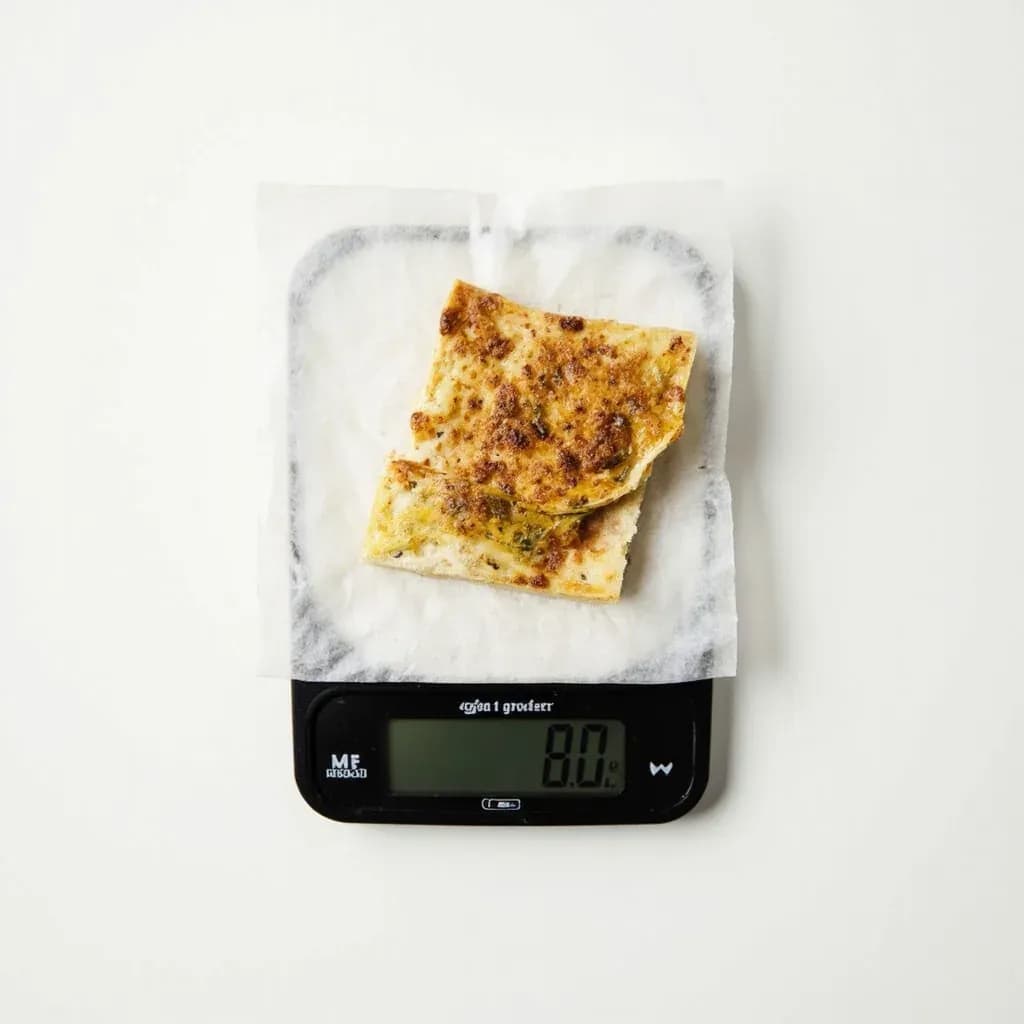
Prep Tools
Digital Gram Scale
A precise electronic scale that weighs small amounts to the gram for coffee, tea, and baking.
A digital gram scale is a compact electronic balance that weighs ingredients accurately, often to a tenth of a gram. It is the backbone of precise coffee dosing, tea brewing, baker's percentages, and portioning spices or additives. A tare function zeros out container weight so each addition can be measured directly into the bowl or cup.
A digital gram scale is an electronic balance that measures the mass of ingredients on a load cell, displaying the weight on a digital readout — usually LCD or LED — within a second or two of placement. Unlike volume measures, which vary with how tightly an ingredient is packed, a scale reads the same flour, salt, or coffee whether the bag was just opened or has settled for a month. For recipes where ratios and proportions matter — bread, pastry, coffee, anything involving small amounts of leavener or hydrocolloid — that consistency is the whole point.
The core piece of technology inside is a load cell: a small metal block wired with strain gauges that change electrical resistance when weight is applied. That change is converted to a number, typically in 1 g steps on general kitchen models and 0.1 g or finer on coffee and pocket scales. Most run on two or three AAA or AA batteries; premium espresso scales increasingly use rechargeable lithium-ion. A tare button zeroes out the weight of whatever vessel is already on the platform, so you can build a recipe into a single bowl without doing any arithmetic in your head.
A good scale pays for itself within a week of regular baking or brewing. A "cup" of all-purpose flour can weigh anywhere from 100 g to 160 g depending on how it was scooped; a "tablespoon" of kosher salt is roughly a coin-flip between Diamond Crystal and Morton. Weighing removes that ambiguity, makes recipes reproducible across kitchens, and lets you scale a recipe up or down without changing the outcome. The features that matter most are a responsive tare, a readout that stabilizes in under a second, and a platform wide enough for the vessels you actually use.
Alternatives
Types & varieties
Larger platform, 3–5 kg capacity, 1 g resolution; the everyday workhorse for baking and meal prep.
Compact, 0.1 g precision, often with a built-in timer and flow-rate display; sized to fit under a portafilter or pour-over dripper.
Tiny — often fits in a hand — with 0.01–0.1 g resolution and 100–500 g capacity; used for spices, salt, and very small quantities.
Connects to a phone app to log brews, scale recipes, and walk you through timer-based pour-overs.
Weighs items suspended from a hook; useful for hanging produce or weighing liquids in a suspended container.
Integrated scoop with a handle display; useful for small amounts of spices, formula, or pet food.
Choosing a scale
The right scale depends on what you weigh most often. A baker who works in pounds of dough at a time wants a wide platform, 3–5 kg capacity, and a quick-stabilizing readout. A coffee drinker needs 0.1 g precision, a small footprint that fits under a portafilter, and a built-in timer. The features that separate a good scale from a frustrating one are smaller than they look: a responsive tare, a backlit display, and a platform big enough for the vessels you actually use.
- A tare button that responds in a single press, not after a long hold.
- A platform wide enough for your most-used mixing bowl, dripper, or portafilter.
- A backlit display readable in dim kitchen light.
- Unit conversion for g, oz, and lb:oz if you read American recipes.
- Rubber feet that grip the counter and stop the scale from sliding while you pour.
Calibration and care
Load cells drift slowly with age and temperature, so a periodic check with a known weight keeps readings honest. Scales that support user calibration typically enter a calibration mode when a button is held with no weight on the platform; you then place a known mass (often 100 g, 200 g, or 500 g) and the unit re-zeros itself. Wipe the platform dry after each use — moisture that seeps under the platform housing can corrode the load cell and permanently shift the reading.
- Check accuracy every few months, or any time the scale has been dropped or moved.
- Wipe with a clean, dry cloth — never submerge the platform or run it under water.
- Replace batteries when the display flickers or stabilizes slowly.
- Store flat on a shelf, not on its side, to protect the load cell from strain.
- If a properly leveled scale on a fresh battery drifts more than 1 g against a known weight, the load cell is likely failing and the unit is at the end of its service life.
Common uses
Tips & pitfalls
- Place the scale on a hard, flat, level surface — soft mats and tilted counters cause drift and inaccurate readings.
- Hit tare with the empty container already on the platform, then add ingredients; taring after adding is the most common home-cook mistake.
- Center the load on the platform; off-center items read lighter on load-cell designs, especially near the edges.
- Don't exceed the listed capacity — overloading a load cell can permanently damage accuracy.
- Replace batteries when the readout starts to flicker or takes longer than a second to stabilize; low voltage is a leading cause of slow, drifting readings.
- Check accuracy every few months with a known weight — a U.S. nickel (5.0 g) or a new quarter (5.67 g) makes a passable field check. Many budget scales are factory-calibrated and not user-adjustable; in that case, a stable reading on a known weight is the best confirmation of accuracy.
- Convert recipes by mass rather than volume: 1 cup of all-purpose flour weighs roughly 120 g but can vary 30+ g depending on how it was scooped.
Good to know
- Function
- Measures the mass of ingredients electronically on a load cell, displaying weight in grams or other units with a tare function to zero out container weight.
- Typical precision
- Standard kitchen models read in 1 g increments; precision coffee and pocket scales read to 0.1 g or 0.01 g.
- Typical capacity
- Standard kitchen scales handle 3–5 kg (7–11 lb); coffee scales cap at 1–3 kg; pocket scales max out at 100–500 g.
- Power
- Battery-powered (2–3 AAA or AA) on most models; rechargeable lithium-ion on premium espresso scales.
- Platform material
- Food-grade stainless steel on most models; tempered glass or plastic on budget units.
- Units
- Most support g, oz, lb:oz, mL (water), and sometimes fl oz or dwt (pennyweight).
- Origin
- Mechanical kitchen balances existed for centuries; affordable electronic load-cell scales reached home cooks in the 1990s; 0.1 g precision scales spread in the 2000s alongside the specialty-coffee movement.
Also called
Tea Scale · Digital Gram Scale (Tea) · coffee scale · pocket scale
Related

Peeler
Swift blade for stripping skin off fruit and vegetables

Grater
Sharp-toothed surface for shredding cheese and vegetables

Microplane
Ultra-fine rasp for citrus zest, garlic, and hard cheese

Mixing Bowl
All-purpose bowl for combining, whisking, and tossing

Whisk
Looped wires that beat air into eggs, cream, and sauces

Spatula
Flat blade for flipping, lifting, and scraping

Slotted Spoon
Pierced spoon that lifts solids and drains the liquid behind

Wooden Spoon
Gentle, heat-friendly spoon for stirring anything