Prep Tools
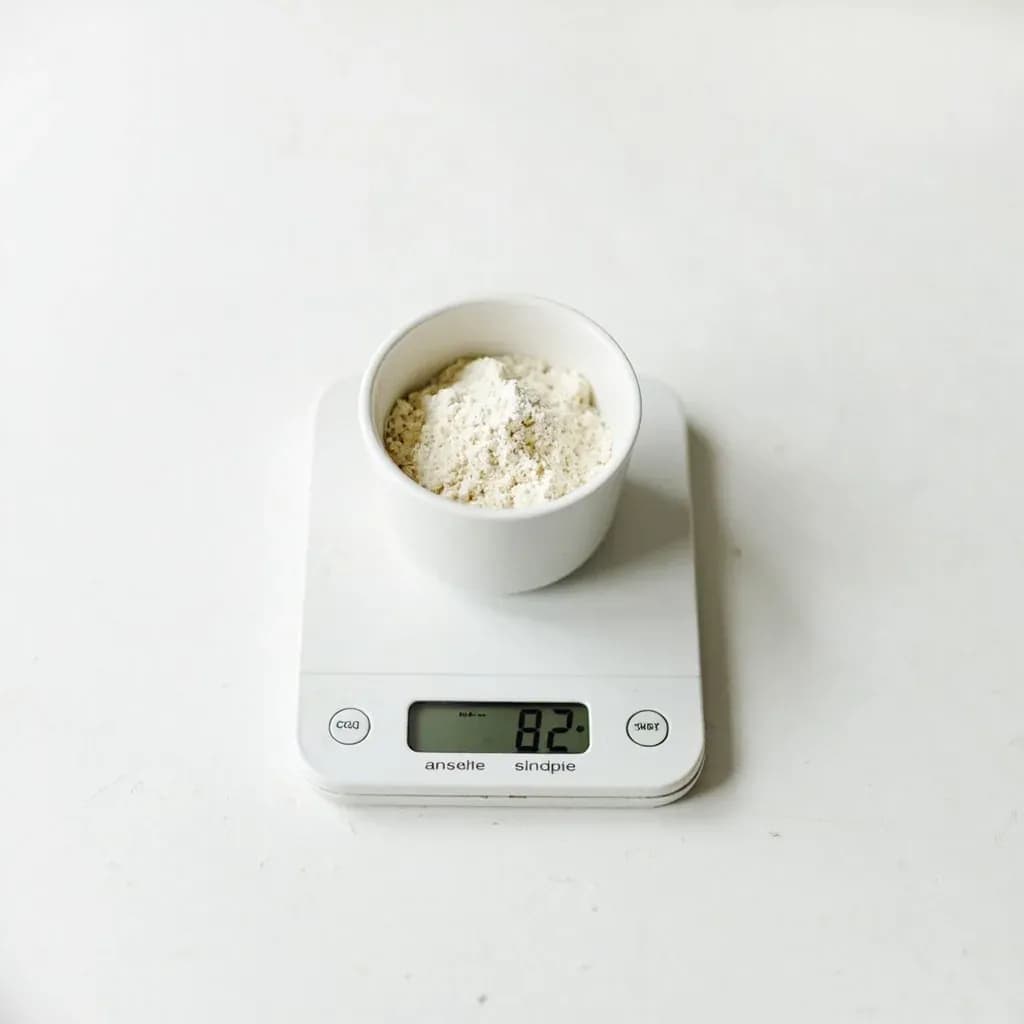
Digital Kitchen Scale
An electronic scale that weighs ingredients to the gram for accurate, repeatable cooking and baking.
A digital kitchen scale measures ingredient weight on an electronic sensor and shows it on a display, usually in grams and ounces. Cooks rely on it for precise baking, portioning, coffee and bread ratios, and any recipe where volume measures are too imprecise. A tare button zeros the bowl's weight so you can add and measure ingredients one after another in the same container.
A digital kitchen scale is a small countertop instrument that uses an internal load cell to measure the weight of ingredients to the gram, or in precision models to the tenth of a gram. A flat platform holds the food or container and an LCD or LED readout shows the result in your choice of grams, ounces, pounds:ounces, fluid ounces, or millilitres. Electronic scales began replacing spring-and-balance designs in home kitchens in the 1980s and 1990s, and today they are the single most useful accuracy tool most home cooks do not yet own.
The case for weighing rather than measuring by volume is straightforward: dry ingredients are unpredictable in a measuring cup. A cup of flour can weigh anywhere from 120 to 150 grams depending on how densely it is scooped, and brown sugar packed firmly versus spooned lightly can differ by 30 percent. Baking is a chemical process built on ratios, so even a 10 percent swing in flour can flatten a cake or toughen a cookie. A scale collapses that variability to a single reliable number, which is why professional bakers have weighed ingredients for decades and most modern cookbooks now print gram equivalents.
In day-to-day use a digital scale is faster and tidier than it sounds. You set a bowl on the platform, press tare to zero it out, add flour, tare again, add sugar, and so on, building a recipe in one vessel with no extra measuring cups to wash. A good scale is sensitive enough to weigh a pinch of salt or a single espresso dose, sturdy enough to hold a five-kilogram pot of stock, and small enough to live in a drawer or hang on a hook.
Alternatives
Types & varieties
The everyday home model — flat tray, often 5 kg capacity, 1 g resolution, runs on AAA batteries
Built-in or detachable mixing bowl with pour spout and handle; convenient for liquids and batters
Display slides out from the base or detaches so weight can be read when a large bowl covers the platform
Used by coffee roasters, chocolatiers, and serious bakers; typically 500 g–2 kg capacity; sensitive to drafts and vibration
A small scoop or sliding tray designed for weighing spices, yeast, or small quantities directly over a pan
Connects to a phone or tablet app for guided recipes, ratio baking, and brew logging
Built-in lithium battery charged by USB; increasingly common in mid- and high-end models
Spring-and-hook design still sold for hanging heavier loads such as sides of meat; less common today
Resolution versus capacity
The two numbers that define a scale's usefulness are its resolution (the smallest increment it can display) and its maximum capacity. A 1 g / 5 kg unit covers virtually all home cooking and baking. A 0.1 g unit is only worth the extra cost and trade-offs if you regularly weigh espresso doses, spices, yeast, or temper chocolate; precision scales also tend to have a lower capacity, often 500 g to 2 kg, and are sensitive to drafts and vibration, so they are not a general-purpose substitute. Pocket scales that read to 0.01 g are designed for letters and jewelry and are neither food-safe nor stable enough for kitchen work.
Calibration and long-term care
Most modern digital scales hold calibration well, but readings drift if the unit is dropped, exposed to a sharp temperature change, or left with a low battery. If your model has a calibration mode, check it every few months with a known calibration weight — coins vary too much to trust. Wipe the platform with a dry or barely damp cloth; never rinse the scale under the tap or submerge it. Replace batteries or recharge before the display begins to dim, because most scales give slow, unstable readings as power drops. Store the scale flat, off the counter edge, and away from the stovetop, where steam and heat shorten sensor life.
Common uses
Tips & pitfalls
- Always tare the scale with the empty bowl, plate, or mat you plan to weigh into before adding ingredients — it saves washing extra containers
- Place the scale on a hard, flat, vibration-free surface; a wobbly counter or soft mat will give drifting readings
- Center the load on the platform — corner placement reduces accuracy on smaller platforms
- Use the tare function repeatedly to weigh multiple ingredients into the same bowl without dirtying extra vessels
- For sticky ingredients like honey, peanut butter, or molasses, spray the bowl with cooking spray or line it with a silicone mat before taring so nothing is left behind
- Wipe the platform with a dry or barely damp cloth; never submerge the scale or run it under water
- Replace batteries or recharge before the display dims — low power causes slow, drifting readings on most models
- 1 g resolution is plenty for everyday cooking; reach for 0.1 g only for baking with yeast or chemical leaveners, chocolate work, espresso, or spices
- Weigh ingredients once when starting from a volume-based recipe to learn their typical gram equivalents — you will bake more consistently afterward
Good to know
- Primary function
- Measures the weight of ingredients and small kitchen items electronically, typically to the gram or 0.1 gram
- Standard capacity (home models)
- 5 kg / 11 lb is most common; precision models cap at 500 g–2 kg; heavy-duty models reach 10–15 kg
- Standard resolution
- 1 g for general-purpose scales; 0.1 g for precision, café, and baking models
- Units
- grams, ounces, pounds:ounces, fluid ounces, millilitres (water-calibrated)
- Tare function
- Resets to zero with a container on the platform so only the contents are weighed; works across the full capacity
- Power source
- Most run on 2–3 AAA batteries; button-cell models exist for ultra-compact units; USB-rechargeable lithium models are now common
- Display and platform
- LCD or LED readout, often backlit; platform is usually stainless steel, with tempered glass and food-grade plastic as alternatives
- Why weight beats volume
- 1 cup of flour can weigh anywhere from 120–150 g depending on how it is scooped; weighing removes that variability
Also called
Digital Food Scale · Kitchen Scale · Electronic Scale
Related

Peeler
Swift blade for stripping skin off fruit and vegetables

Grater
Sharp-toothed surface for shredding cheese and vegetables

Microplane
Ultra-fine rasp for citrus zest, garlic, and hard cheese

Mixing Bowl
All-purpose bowl for combining, whisking, and tossing

Whisk
Looped wires that beat air into eggs, cream, and sauces

Spatula
Flat blade for flipping, lifting, and scraping

Slotted Spoon
Pierced spoon that lifts solids and drains the liquid behind

Wooden Spoon
Gentle, heat-friendly spoon for stirring anything