Cookware
Stone Bowl / Pot (Dolsot / Ttukbaegi)
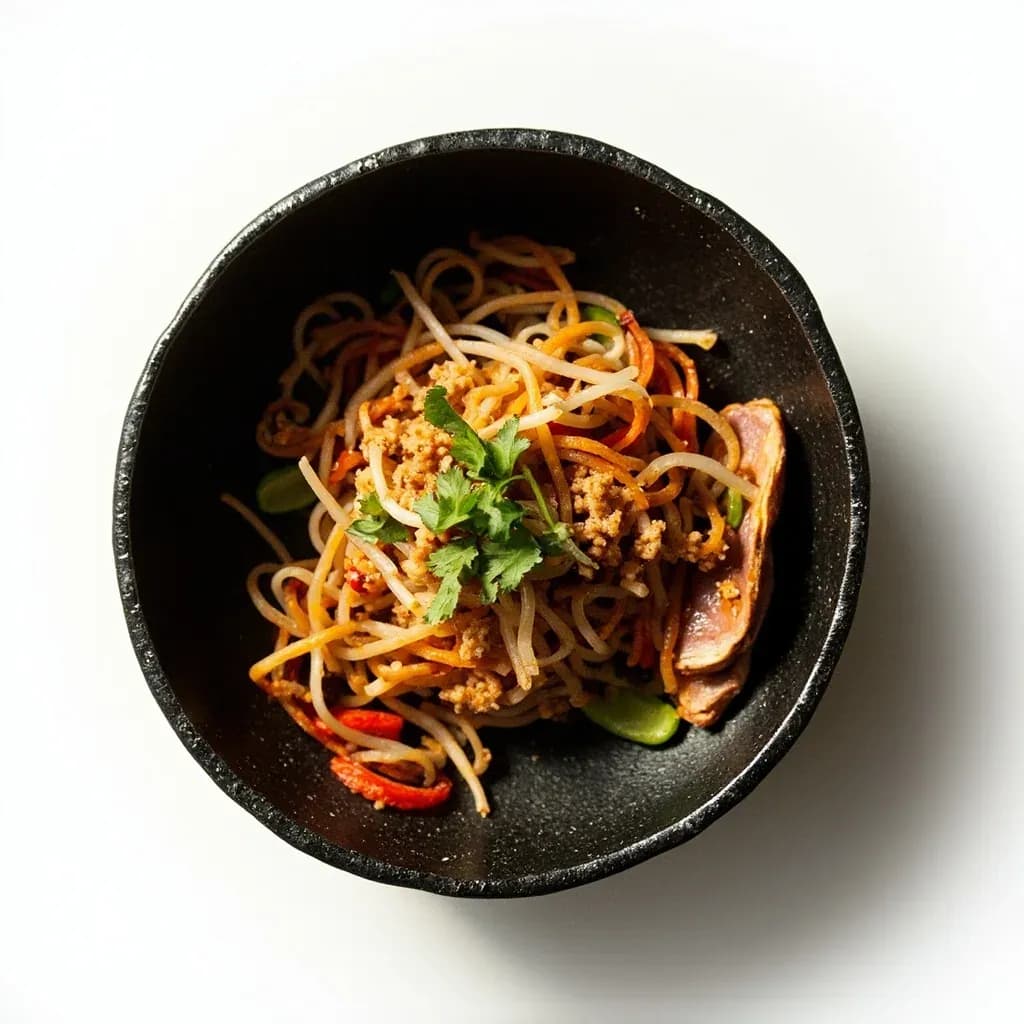
A thick stone or earthenware vessel that retains intense heat to sizzle and finish Korean dishes at the table.
A dolsot is a heavy carved-stone bowl, while a ttukbaegi is a similar glazed earthenware pot; both hold heat fiercely and arrive at the table still bubbling. They are used for dolsot bibimbap, where rice crisps into a golden crust against the hot stone, and for stews like soondubu jjigae that keep cooking after serving. The dense material gives steady, lingering heat that ordinary metal pans cannot match.
The dolsot and ttukbaegi are the two pillars of Korean tabletop cookware, distinguished less by shape than by material and intent. A dolsot (돌솥, literally "stone pot") is carved from dense granite or basalt, with thick walls that act as a thermal battery: preheated dry over a flame, it holds enough radiant heat to sear rice into a golden crust and keep a finished dish audibly sizzling for many minutes after it leaves the stove. A ttukbaegi (뚝배기, literally "small pot") is the lighter, fired-clay cousin — thinner-walled earthenware, often soot-darkened from use, designed to deliver stews and soups to the table still at a rolling boil. Both belong to the broader Korean onggi pottery tradition, and both turn the act of serving into part of the cooking.
What makes these vessels matter is sustained, even heat at the point of eating. A regular ceramic bowl loses its heat within a minute of leaving the burner; a dolsot maintains searing temperatures long enough to crisp rice into nurungji and finish proteins at the table, while a ttukbaegi's clay walls keep jjigae bubbling without further heating. The trade-off is care: stone and unglazed clay are vulnerable to thermal shock, heavy to handle, and indifferent to induction unless paired with a metal disk. Treat them as instruments rather than containers, and they reward you with the signature crackle, crust, and table-side aroma that define a Korean meal.
Alternatives
Types & varieties
Dense, very heavy stone pot preheated dry until extremely hot to sear rice into nurungji and finish dishes at the table with an audible sizzle
Lighter, thinner-walled fired clay used to bring already-cooked stews (jjigae) and soups to the table still boiling
Hybrid stone-bodied pot with an earthenware-glazed interior; retains stone heat but offers an easier-to-clean, sealed cooking surface
Traditional blue-gray glazed earthenware from the Cheongju region, prized for its celadon-like finish and classic stew presentation
The broader Korean earthenware family — larger, often lidded crocks used for fermenting kimchi, doenjang, and long-simmered dishes; ttukbaegi is the small individual member
Modern home adaptation mimicking dolsot heat retention in cast iron; lighter than granite, induction-friendly, but with thinner walls and less radiant heat
Dolsot vs. Ttukbaegi: When to Use Which
The distinction is material and method, not appearance. A dolsot is meant to be heated first — empty, dry, over a flame — until the stone itself becomes the cooking surface. Food is added to that stored heat, which is what produces the nurungji crust on bibimbap or the tabletop sear on bulgogi. A ttukbaegi is the opposite workflow: the stew is cooked on the stovetop, then ladled into the clay pot for the final simmer or for transport to the table, where the vessel's thermal mass keeps it bubbling without a second burner. Use dolsot for dry-frying, crisping, and finishing; use ttukbaegi for brothy, saucy, or simmering dishes.
- Dolsot: preheat dry, add oil, then rice or meat — heat comes from the stone itself.
- Ttukbaegi: bring contents to a boil on the stove first, then transfer — clay keeps it hot, doesn't cook it further.
- Both should be served on a trivet; both will scorch wood or fabric if placed directly on the table.
Caring for Stone and Clay
These vessels last for decades if you respect their limits. The enemy is thermal shock: a sudden temperature change — cold water on a hot pot, a frozen pot on a hot burner — will fracture stone or crack clay along the rim. The second enemy is soap and standing water. Unglazed clay and natural stone are porous, so detergents can flavor future dishes and trapped moisture can weaken the wall over time. A short seasoning simmer and gentle hand-washing are usually enough.
- Hand-wash with hot water and a soft brush; skip dish soap on unglazed interiors.
- Dry thoroughly upside-down before storing; moisture trapped in a closed cabinet invites cracking.
- A cracked ttukbaegi can still serve brothy stews, but retire any pot with a deep or widening crack from dry-heating duty.
- Store with a paper towel or cloth between stacked pots to keep rims from chipping.
Common uses
Tips & pitfalls
- Always preheat a dolsot dry over medium heat for 3–5 minutes before adding oil; a drop of water should skitter across the surface like mercury before you proceed.
- Brush the preheated stone with sesame oil before adding rice — the oil flavors the crust and helps release the nurungji cleanly when you scrape it at the table.
- Never rinse a hot dolsot or ttukbaegi with cold water; thermal shock will crack the stone or craze the clay. Let it cool on the stovetop or a trivet first.
- Season a brand-new ttukbaegi by simmering plain water or rice-rinsing water in it for 10 minutes, then letting it cool inside; this fills the pores and reduces cracking risk over its lifetime.
- Lift, do not slide, a heavy dolsot across a glass cooktop — sliding can scratch or crack the glass and chip the stone's foot.
- Cook on low-to-medium heat. Stone and clay retain so much energy that a high flame scorches food, burns the sesame oil, and can crack the pot.
- Set the pot on a trivet, not directly on a wooden table, and make sure the bottom is dry — a wet dolsot will scorch or stain the wood instantly.
- If the rice crust seizes to the stone, deglaze the dolsot at the table with a splash of warm water or barley tea; the fond loosens and becomes a savory, toasty drink — this is traditional and delicious.
Good to know
- Origin
- Korea; rooted in the Joseon-era and earlier onggi pottery tradition, later adapted into individual serving vessels
- Korean names
- Dolsot (돌솥) = stone pot; Ttukbaegi (뚝배기) = small pot, typically earthenware, often soot-darkened
- Primary materials
- Dolsot: dense natural stone, usually granite or basalt; Ttukbaegi: fired clay/earthenware (tobak)
- Heat retention
- Exceptional; a preheated dolsot keeps food audibly sizzling at the table for many minutes after leaving the heat
- Typical size
- Single-serving, roughly 15–20 cm (6–8 in) across the rim, holding about 500–800 ml
- Pre-heating
- A dolsot must be preheated dry for several minutes before use; this is what crisps the rice crust (nurungji)
- Weight
- A granite dolsot typically weighs 1.5–2.5 kg (3–5 lb); a ttukbaegi is noticeably lighter
- Stovetop compatibility
- Gas and electric work directly; induction requires a ferromagnetic induction disk since most stone is not magnetic
Also called
dolsot · ttukbaegi · stone pot · stone bowl · harradh-stone-bowl
Related

Steamer
Gentle moist heat that keeps vegetables, fish, and dumplings tender

Frying Pan
Shallow sloped pan for frying, sautéing, and quick sears

Saucepan
Tall, straight-sided pot for sauces, grains, and small batches

Sauté Pan
Wide straight-sided pan with room to brown and braise

Dutch Oven
Heavy lidded pot that turns tough cuts tender over hours

Stock Pot
Tall, roomy pot for stocks, pasta, and big-batch cooking

Wok
High-sided bowl pan built for blistering-hot stir-fries

Griddle
Flat, broad surface for pancakes, smash burgers, and breakfast