Baking & Pastry
Dough Board
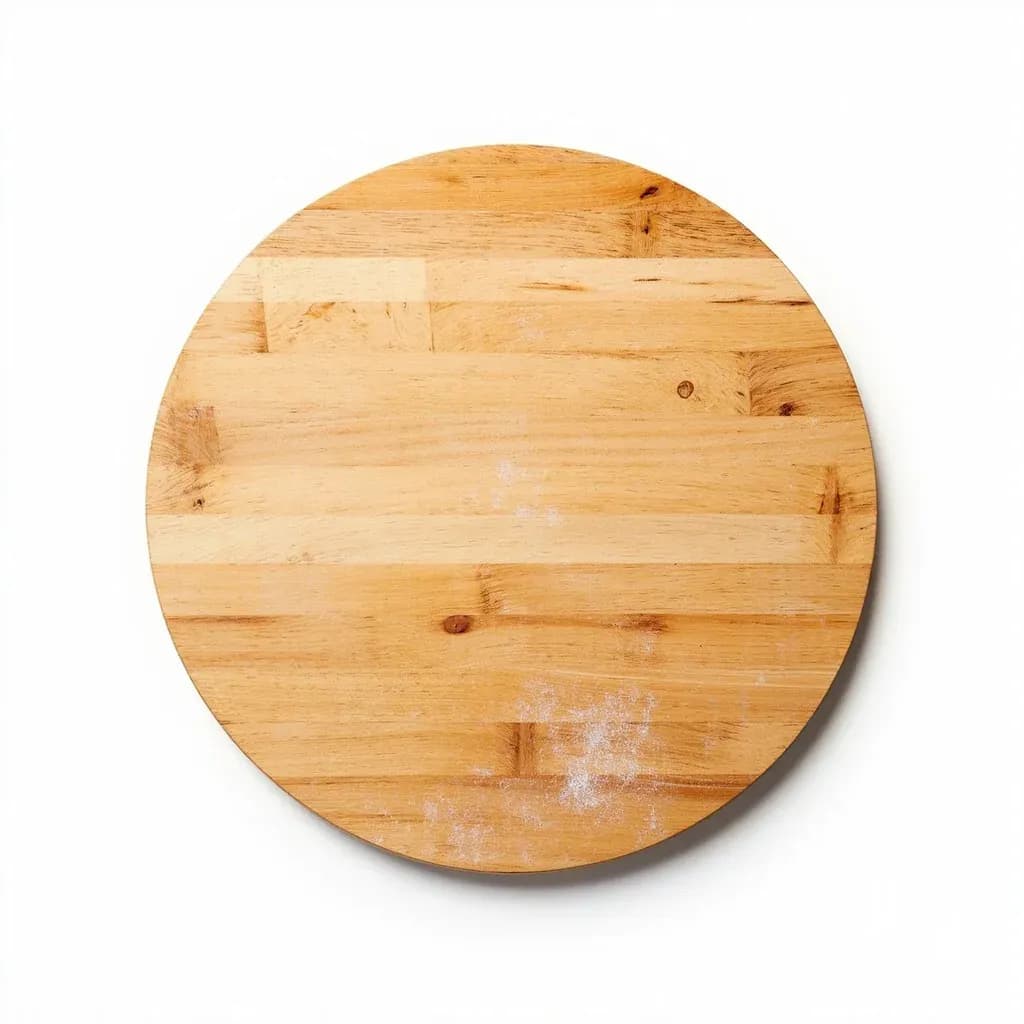
A flat rolling surface, often round, for kneading dough and rolling out flatbreads.
A dough board is a flat work surface, usually wood, marble, or stone, used for kneading, shaping, and rolling out dough. In Indian kitchens the round wooden version (chakla) is paired with a rolling pin (belan) to roll roti and chapati into thin rounds. Its slightly raised, dedicated surface gives a clean, floured space that protects the countertop and grips the dough.
A dough board is a dedicated working surface for kneading, shaping, and rolling out dough — a separate piece of equipment from the cutting board you slice on. Most are made from hardwood (beech, maple, walnut, cherry) or from a cool, dense stone like marble or granite, and they come in both round and rectangular forms. The round wooden version, known in German-speaking countries as a Backbrett, is the iconic shape for bread baking: it pivots easily under the heel of your hand and gives the dough just enough grip to build tension as you work it.
The material matters as much as the shape. Wood has a slightly grippy, absorbent surface that grabs dough just enough to control it during kneading and shaping, and it warms to room temperature, which keeps yeast doughs from being chilled at the moment you want them to rise. Marble and granite are smooth, non-absorbent, and stay cool, which is exactly what you need when rolling laminated doughs — puff, croissant, rough puff — where even a few degrees of warmth can soften the butter and smear the layers. Picking the right board for the dough in front of you is one of the simplest, most underrated upgrades a home baker can make.
Treat a dough board as a working surface, not a cutting board. Knife work nicks and scores the wood, and onion, garlic, or raw-meat residue can flavor or contaminate porous grain. A single board dedicated to bread, pastry, and dry work, paired with a separate board for slicing and chopping, will outlast years of baking and keep flavors clean.
Alternatives
Types & varieties
Traditional Central European baking board, usually beech; gentle on dough and easy to rotate under the hands while kneading.
Larger flat hardwood slab, often maple or walnut, suited to rolling out long pastry sheets and shaped loaves.
Cool, heavy slab — the classic surface for puff pastry, croissant, and other butter-laminated doughs because it keeps fat firm.
Same benefits as marble — cool, very flat, and heavy enough to stay put while rolling firm doughs.
Thin, dishwasher-safe boards made from wood-fiber/resin composites; lightweight, durable, and a good general-purpose option.
Hard, sustainable, and budget-friendly; smoother and less absorbent than hardwood, but harder on knife edges.
Inexpensive, dishwasher-safe, often printed with pastry-circle guides; best as a secondary board.
Printed concentric circles and ruler markings for sizing pie shells, tart dough rounds, and pizza bases.
Stabilize the board on the counter; useful when rolling firm or heavy doughs.
Easier to lift, tilt, and transfer shaped loaves or rolled sheets.
Choosing the right board
Match the board to the kind of baking you do most. If bread and yeasted doughs are your main work, an 18–20 in round beech or maple board is the most versatile choice — large enough to roll out a pizza or turn a loaf, small enough to pivot. If your kitchen runs warm or you make puff pastry, croissants, or other laminated doughs, a marble or granite slab earns its counter space: the cool surface keeps butter firm and gives you a long, perfectly flat runway for a long rolling pin. Many bakers end up with two boards, one of each, and switch between them by recipe.
Wood vs. stone: how they behave under dough
Wood and stone feel almost like two different tools because they interact with dough in opposite ways. Wood grips. The surface has enough tooth that a slack, shaggy dough clings and folds onto itself rather than skating around, and the board warms to room temperature so a cool proofed loaf doesn't lose the rise the moment it touches down. Stone releases. Marble and granite are frictionless and stay noticeably cooler than the room, which is exactly why pastry chefs reach for them when the butter in laminated dough is on the edge of melting; a chilled slab buys you minutes of workable time. The trade-off is that soft, enriched doughs can stick to cold stone, so a light flour dusting or a sheet of parchment is usually called for.
Care and maintenance
A well-kept board will outlast the cook who started using it. Wood wants to stay dry and fed: wipe it with a damp cloth, never let it sit in pooled water, and once a month rub in a thin coat of food-grade mineral oil — a 50/50 blend of beeswax and mineral oil works as well. Light scuffs can be sanded smooth with 220-grit paper before re-oiling. To deodorize without dousing it in water, scatter coarse salt over the surface, scrub with the cut face of half a lemon, and wipe clean. Marble is lower maintenance — wipe, scrub when needed, and reseal occasionally if it darkens with oil — but it is heavy and unforgiving if dropped, so keep it on a stable counter. Store wood upright on edge so air reaches both faces; storing flat while damp invites mildew.
Common uses
Tips & pitfalls
- Match the board to the dough: wood for yeasted and lean doughs, marble or granite for butter-rich and laminated pastry.
- Dust with just enough flour — too much dries the dough's exterior and toughens the crust, especially on bread.
- Use a bench scraper to lift, turn, and portion dough; it protects the board surface and saves your knuckles.
- Move a wooden board to a warm spot when proofing yeast doughs on it — cold wood slows the rise.
- Chill a marble slab in the fridge before rolling puff or croissant dough; the cool surface keeps butter from melting into the dough.
- Never soak a wooden board or run it through the dishwasher — water warps, splits, and raises the grain.
- Condition wooden boards monthly with food-grade mineral oil or a beeswax/mineral-oil blend; let it soak in, then buff dry.
- Disinfect wood with coarse salt and half a lemon rather than harsh chemicals or soaking, which damage the grain.
- Sand out light scuffs with 220-grit sandpaper, then re-oil.
- Stand boards on edge to dry so air circulates on both faces; flat storage of a damp board invites mildew.
- Keep separate boards for sweet pastry and savory/onion-heavy work to avoid flavor and odor transfer on porous wood.
- Anchor the board with a damp tea towel underneath if it slips while you roll.
- Use parchment between marble and dough for very soft or enriched doughs to make cleanup easier without losing the cool-surface benefit.
- Choose a diameter 4–6 in / 10–15 cm larger than your largest rolled item so the rolling pin can pivot freely.
Good to know
- Category
- Baking & Pastry working surface
- Primary materials
- Hardwood (beech, maple, walnut, cherry), marble, granite, bamboo, or food-safe composite/plastic
- Traditional shape
- Round (Central European Backbrett); rectangular pastry boards also common
- Typical diameter (round)
- 14–24 in / 35–60 cm; 18–20 in is a versatile home size
- Surface feel
- Wood has slight grip and absorbs trace moisture; marble is cool, smooth, and non-absorbent
- Best dough match
- Wood for yeasted and lean doughs; marble/stone for laminated and butter-rich pastry
- Cleaning
- Wood: wipe with a damp cloth and dry upright — never soak or dishwash. Marble/composite: wipe or scrub; composite usually dishwasher-safe
- Maintenance
- Condition wood monthly with food-grade mineral oil, or a beeswax/mineral-oil blend
Also called
Rolling Board (Chakla) · Rolling Board · Chakla · Pastry Board
Related

Muffin Pan
Multi-cup pan for muffins, cupcakes, and egg bites

Bundt Pan
Fluted ring mold for showstopping cakes with a center hole

Springform Pan
Latch-release pan that frees delicate cakes without flipping

Pie Dish
Sloped round dish for crisp-bottomed pies and quiches

Tart Pan
Fluted pan with a pop-out base for clean-edged tarts

Rolling Pin
Rolls dough into even sheets for pastry and bread

Pastry Brush
Brushes on egg wash, glaze, butter, and marinades

Bench Scraper
Flat blade that divides dough and clears your work surface