Cookware
Drip Tray
A shallow tray placed under food to catch rendering fat and juices while cooking.
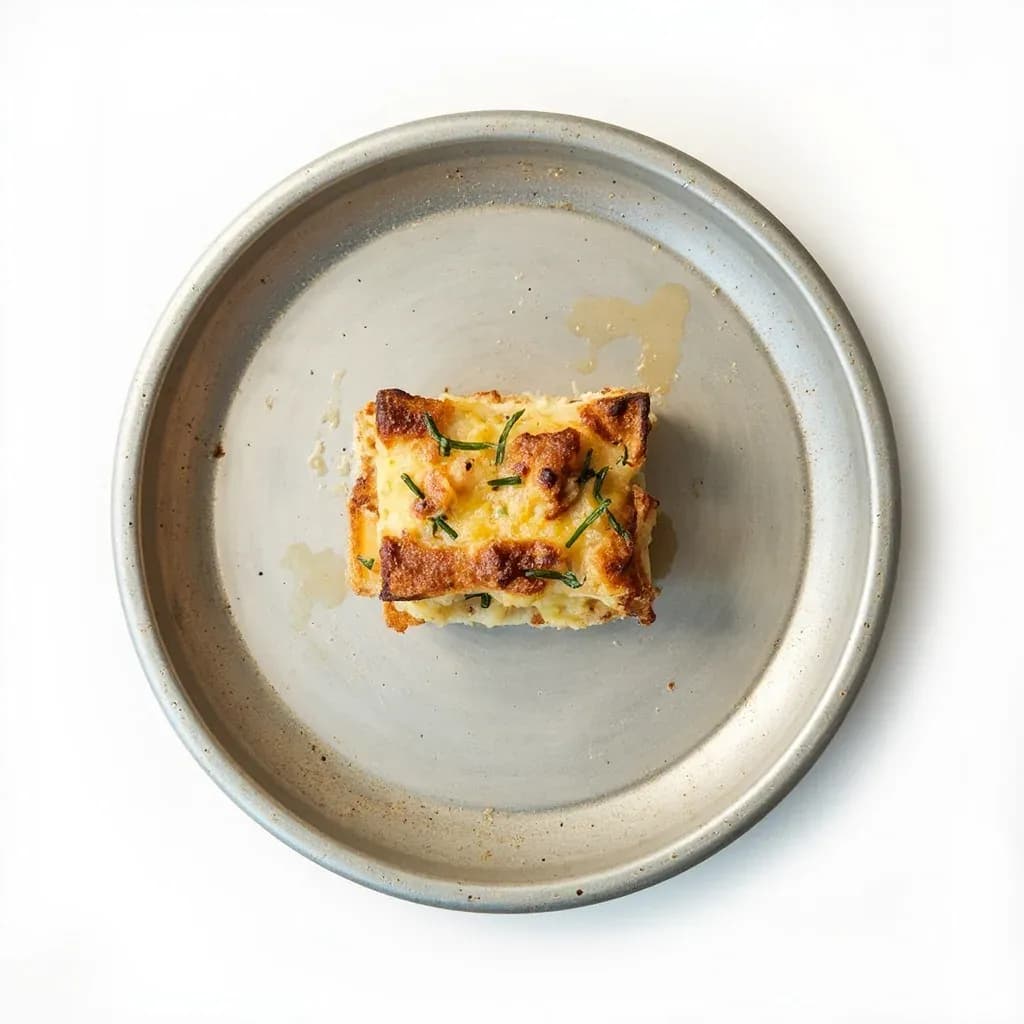
A drip tray is a flat, shallow pan set beneath roasting or grilling food to collect fat and juices that run off. It keeps drippings from flaring up over coals and saves the flavorful liquid for gravies or basting. In rotisserie, smoker and grill setups the tray also helps keep the cooking chamber and burners clean.
The drip tray is the workhorse hidden beneath your food — that shallow pan catching rendered fat, meat juices, and marinades that would otherwise scorch on the oven floor or ignite over an open flame. In practical terms, it does three jobs at once: it protects the heat source and surrounding cookware from carbonized mess, tames flare-ups by giving hot grease somewhere to fall away from the burner, and collects the most flavorful byproduct of roasting — the fond and drippings that become gravy, jus, or a base for rice and beans. A cook who treats the tray as a tool rather than a disposable liner ends up with a cleaner oven, a safer grill, and a head start on sauce.
Most are made of aluminum because the metal spreads heat quickly and tolerates the 400–450°F (200–230°C) range of typical roasting; stainless-clad versions handle broiler and grill heat higher. The cheapest are 0.5–1 mm foil pans, generally single-use; reusable roasting-pan inserts are 1–2 mm thick and built to last decades. Depth varies with the job — a roasting-pan insert runs 1–2 inches (2.5–5 cm) so it can hold serious volumes of fat, while a grill drip pan is often only half an inch (1 cm) deep because it just needs to catch a thin layer before being emptied.
The principle is older than the modern kitchen: lift the food, catch the liquid, control the mess. Restaurants adopted dedicated grease pans in the early 20th century with the rise of gas ranges and broiler units, and the disposable aluminum pan — patented in the 1940s and 1950s — brought the same trick to home cooks. Today the term covers everything from a fifty-cent foil tray to a full-size stainless hotel pan.
Alternatives
Types & varieties
The thin foil tray that slides under a gas or charcoal grill's grate to catch grease and limit flare-ups.
A flat aluminum sheet placed on the oven floor beneath the rack to catch spills and boil-overs.
The lower pan beneath an elevated roasting rack that catches rendered fat and pan juices for gravy.
Two-piece design with a slotted top tray that lets fat drain into a deeper solid pan below.
Reusable, heavier restaurant-style pan, often nested inside a full-size hotel pan.
Small pull-out tray at the base of basket and oven-style air fryers that catches oil and crumbs.
Used as a drip tray beneath bread or pizza stones so steam escapes and the oven floor stays dry.
Placed between heat source and food in offset and bullet smokers; water or juice moderates temperature and adds humidity.
Heavy, long-lasting pan found on built-in ranges and high-end grills.
Turning drippings into sauce
The liquid that pools in a drip tray is the most concentrated flavor of the cook. The technique is straightforward: let the fat settle briefly, then tilt the tray and skim or pour off the clear fat (save it for roasting vegetables or frying eggs), set the tray over low heat on the stovetop, and deglaze with stock, wine, or water while scraping up the fond. Reduce, mount with a little butter if you like, and finish with a pinch of acid.
- Skim the fat while still warm; it solidifies into a cap that lifts off cleanly.
- Use a flat whisk to release fond without scratching stainless surfaces.
- Reduce the deglazed liquid by half to concentrate flavor before mounting.
- A small squeeze of lemon or splash of vinegar brightens the finished sauce.
- Strain through a fine-mesh sieve if the tray picked up carbonized bits.
Common uses
Tips & pitfalls
- Add 1–2 cups of water, stock, or wine to the tray before roasting — the liquid keeps drippings from scorching and gives you a head start on a pan sauce.
- Line disposable grill trays with heavy-duty foil and poke a few small holes so grease still drains instead of boiling under the food.
- Don't let drippings exceed about a quarter to a third of the tray's depth; overflow causes flare-ups, smoke, and a greasy oven.
- Place the tray on the lowest oven rack or directly on the oven floor — never directly over an exposed burner, where thin aluminum can buckle.
- Grease or line a broiler pan's perforated top; the slots are notorious for sticking and enameled steel will rust through if left bare and wet.
- For very fatty birds like duck or goose, empty the tray once it is halfway full so rendered fat does not overflow and ignite.
- Save the drippings every time: strain off the fat and use the fond and juices for gravy, jus, or to start a pot of rice or beans.
- Replace disposable grill pans every 1–3 cooks, or whenever they are warped, holed, or caked with carbonized grease.
- If you only have a sheet pan, set a wire rack inside and use the pan below as a drip tray — the standard home stand-in for a proper roasting rack.
- Never line the bottom of a self-cleaning oven (or one with a hidden bake element) with foil; the trapped heat can damage the element or start a fire.
- For smoker water pans, refill with hot water every 45–60 minutes so pit humidity stays consistent through a long cook.
Good to know
- Also called
- Grease tray, drip pan, catch pan, drippings pan
- Common materials
- Aluminum (often disposable), stainless steel, enameled steel, heavy-gauge aluminized steel
- Typical thickness
- Disposable foil pans roughly 0.5–1 mm; reusable roasting inserts 1–2 mm
- Common sizes
- Disposable grill pans 8–18 in (20–46 cm); oven liners 15–18 in (38–46 cm); roasting-pan inserts fit their parent pans
- Temperature tolerance
- Plain aluminum handles 400–450°F (200–230°C); stainless-clad versions go higher; thin foils can scorch above 500°F (260°C)
- Where it sits
- Under grill grates, on the oven floor, beneath a wire rack inside a roasting pan, or at the base of an air-fryer basket
- Standard fill depth
- 1–2 in (2.5–5 cm) on roasting inserts; about 0.5 in (1 cm) on grill drip pans
- Related cookware
- Broiler pans are essentially perforated drip trays paired with a deeper solid base pan
Also called
drip pan · grease tray
Related

Steamer
Gentle moist heat that keeps vegetables, fish, and dumplings tender

Frying Pan
Shallow sloped pan for frying, sautéing, and quick sears

Saucepan
Tall, straight-sided pot for sauces, grains, and small batches

Sauté Pan
Wide straight-sided pan with room to brown and braise

Dutch Oven
Heavy lidded pot that turns tough cuts tender over hours

Stock Pot
Tall, roomy pot for stocks, pasta, and big-batch cooking

Wok
High-sided bowl pan built for blistering-hot stir-fries

Griddle
Flat, broad surface for pancakes, smash burgers, and breakfast