Cookware
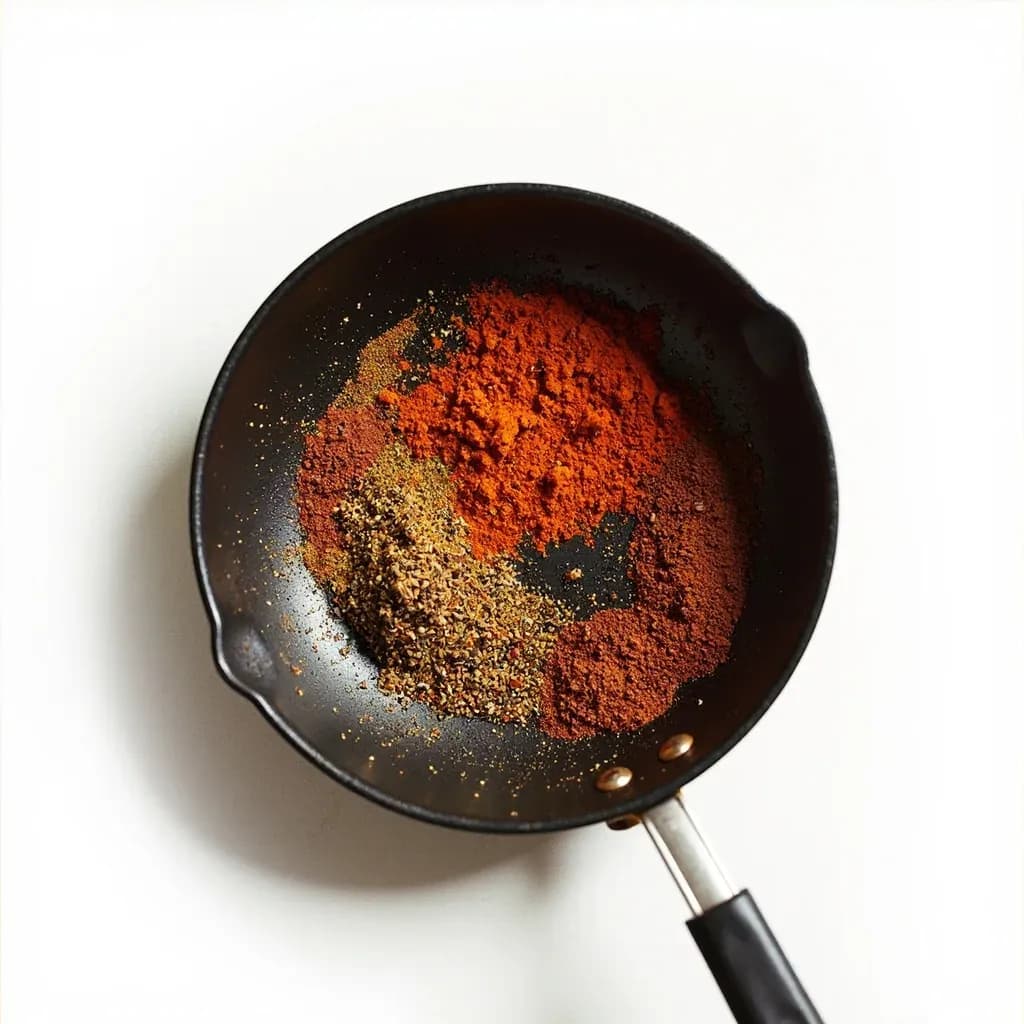
Spice Toasting Skillet
Small dry pan for toasting whole spices until fragrant before grinding.
A small, heavy skillet used dry, without oil, to toast whole spices and seeds until their aromatic oils release. Gently heating cumin, coriander, fennel, or mustard seeds before grinding deepens their flavor and is a foundational step in many Indian and Middle Eastern dishes. A pan with even heat and a light interior makes it easy to watch for the color and aroma that signal doneness.
A spice toasting skillet is a small, dry pan used to wake up whole spices with heat alone — no oil, no moisture, no fuss. The defining traits are size (small enough that a single layer of seeds covers the bottom in one shake), thermal mass (so the pan doesn't lose temperature the moment cool seeds land), and a dry, ungreased cooking surface. In practice it is less a single commercial product than a category of pan defined by use: most cooks reach for a cast-iron or carbon-steel 8-inch skillet, a traditional Indian tava, or a Mexican comal. Stainless works in a pinch but lacks the heat retention that makes cast iron or carbon steel so forgiving.
Why bother? Toasting drives off residual moisture and ruptures the seed coats, releasing the volatile oils that carry cumin's warm bite, coriander's citrus, mustard's pungency, and clove's penetrating sweetness. The difference between a freshly toasted seed and a raw one is the difference between a flat dish and one that fills the room with aroma. Because contact time is so short — usually 60 to 180 seconds — the pan sees some of the lightest work a stovetop can deliver, which is why a dedicated spice pan is often the smallest, oldest, and most heavily seasoned piece in a well-used kitchen.
The technique is deceptively simple and unforgiving in the wrong hands. Whole spices hold heat poorly and scorch once their oil-bearing cells rupture; a few seconds past fragrant and those same oils turn acrid and bitter. The cook's job is to bring the pan up to a steady medium-low, keep the seeds moving, pull the pan at the first waft of aroma, and trust the nose over the eye every single time.
Alternatives
Types & varieties
The workhorse of modern Western kitchens; heavy, holds heat evenly, and develops a seasoned surface that many cooks dedicate permanently to spice work.
Thin, light, heats and cools quickly; the traditional Indian form, often slightly concave and 8–12 inches across.
Traditional Indian serving and toasting vessel; heats fast and evenly, often reserved for spices and dosas.
Pre-Columbian Mexican form; imparts a faint earthy note and gentle radiant heat, best over a gas flame or wood fire.
Mexican and Latin workhorse; a large flat disc used to toast chilies, cumin, and seeds for adobo, recados, and mole.
A 6–8 inch stainless pan stands in well; less thermal mass than cast iron but doesn't season or flavor-shift over time.
Some Indian households keep a small pan used only for dry-roasting whole spices before grinding, the way Western cooks keep a pepper mill.
How to Toast Spices Well
Toasting is a short, hot, dry job — closer to browning butter than to searing meat. The window between fragrant and burnt is often only 10 to 20 seconds, so the technique is more about attention than recipe-following.
- Warm the empty pan over medium-low heat for 2–3 minutes; a cold or barely warm pan steams the seeds and toasts them unevenly.
- Add no more than a single layer — about 2 to 4 tablespoons in an 8-inch pan. Crowding traps steam and steams rather than toasts.
- Stir, swirl, or shake constantly. Seeds in contact with the hot surface for more than a few seconds will scorch.
- Smell before you look. The moment the spice releases its characteristic aroma — cumin becomes nutty, coriander becomes citrusy, mustard becomes popping and sharp — pull the pan off the heat immediately.
- Tip the toasted spices onto a cool plate or into a bowl within 5 seconds. The pan's residual heat will continue cooking anything left in it.
- Cool completely before grinding. Warm spices clump, gum up a grinder's burrs, and release unevenly.
When to Reach for It
Any time a recipe calls for ground spices whose character depends on volatile oils — which is most of them. Whole spices toasted just before grinding are dramatically more aromatic than pre-ground jars, and the difference is most obvious in dishes with few other competing flavors: a dal, a coconut chutney, a berbere, a finishing tadka, a chai blend.
Common uses
Tips & pitfalls
- Use medium-low heat, not medium or high — spices burn long before the pan reads 'hot enough,' and you cannot rescue scorched seeds.
- Add spices to a preheated pan, then stir or swirl constantly; stationary seeds scorch in seconds.
- Toast by smell, not by color — fragrant and just starting to darken is the right point; a few seconds more means burnt.
- Work in small batches in a single, uncrowded layer; moisture trapped under a thick pile steams rather than toasts.
- Pull the pan off the heat the moment spices smell right — residual heat will keep cooking them for 10 to 15 more seconds.
- Transfer toasted spices immediately to a cool plate or bowl; leaving them in the hot pan continues the roast into bitterness.
- Cool fully before grinding — warm spices clump, gum up a grinder, and release unevenly.
- Consider dedicating a small pan to spice work if you do it often; cumulative seasoning can transfer flavor to neutral ingredients.
- For sticky seeds like mustard and fenugreek, a quick wipe of the pan between batches prevents a bitter resin buildup.
- Do not add oil unless you are deliberately making a tadka or tempering — oil lowers the effective working temperature and changes the goal from dry toasting to flavor infusion.
Good to know
- Type
- Small dry skillet or flat pan used to toast whole spices without oil
- Typical diameter
- 6–9 inches (15–23 cm); smaller than a standard sauté pan
- Common materials
- Cast iron, carbon steel, or heavy-gauge aluminum; stainless acceptable but lower heat retention
- Ideal pan depth
- Shallow, roughly 1–1.5 inches — deep enough to toss seeds, shallow enough to evaporate moisture
- Heat range
- Stovetop, medium-low to medium — never medium-high or above
- Toast time per batch
- 1–3 minutes for most whole seeds; up to 5 minutes for large items like cassia bark or dried chilies
- Capacity
- About 2–4 tablespoons of whole spices per batch in an 8-inch pan
- Also called
- Masala pan, tava (Indian), comal (Mexican/Latin American), dry-roasting pan
Also called
Dry Spice Skillet · Spice Pan · Toasting Pan
Related

Steamer
Gentle moist heat that keeps vegetables, fish, and dumplings tender

Frying Pan
Shallow sloped pan for frying, sautéing, and quick sears

Saucepan
Tall, straight-sided pot for sauces, grains, and small batches

Sauté Pan
Wide straight-sided pan with room to brown and braise

Dutch Oven
Heavy lidded pot that turns tough cuts tender over hours

Stock Pot
Tall, roomy pot for stocks, pasta, and big-batch cooking

Wok
High-sided bowl pan built for blistering-hot stir-fries

Griddle
Flat, broad surface for pancakes, smash burgers, and breakfast