Prep Tools
Glazed Earthenware Bowl (Mafaradda)
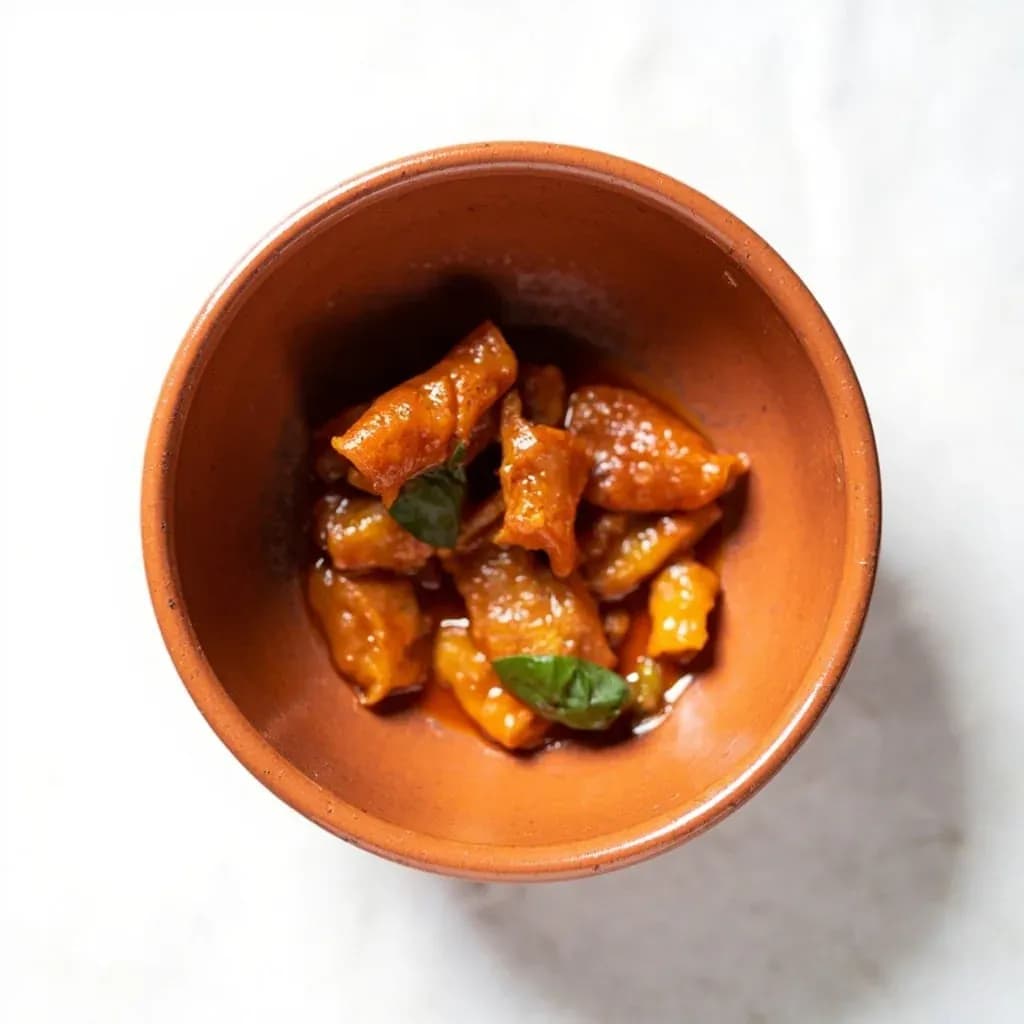
A wide glazed clay bowl used for hand-rolling grains like couscous and for mixing doughs.
A mafaradda is a broad, shallow glazed earthenware bowl traditional to North African and Sicilian kitchens. It is used to roll semolina into couscous by hand, to knead and rest doughs, and to mix and serve. The wide flat base gives plenty of room to work grains with a circular hand motion, and the heavy clay keeps the contents stable.
The mafaradda is the workhorse bowl of the Maghrebi kitchen — a wide, shallow earthenware vessel whose shape is dictated entirely by the gesture of hand-rolling couscous. Its broad opening (typically 30–50 cm across) and gently sloping walls give a cook's two hands room to toss semolina in a rhythmic, scooping arc, while the food-safe interior glaze lets the grains slide freely instead of sticking and clumping. The name itself, from the Arabic root f-r-d meaning "single" or "individual," is a quiet acknowledgment of the tool's purpose: producing couscous grain by grain.
Though its fame is tied to couscous, the mafaradda's curved geometry and inert glazed surface make it useful well beyond the rolling stage. It catches sieved semolina between rounds, accepts small batches of semolina-based dough, and polishes finished grains with a final fine-dust coating. In modern kitchens it has also migrated to the table, where its rustic warmth suits tagines, salads, and fruit — though its primary identity remains that of a working utensil in the traditional kseksou process.
Regional variations are genuine and worth knowing: Moroccan mafaraddas are usually warm terracotta with clear or honey glaze, Tamegroute pieces from southern Morocco carry a distinctive emerald-green drip glaze, and Tunisian and Kabylie versions range from cobalt-decorated to plain unglazed. Antique or imported decorative pieces should be treated as ornamental unless their glaze has been verified lead-free — a real concern, given that authentic food-safe examples are now widely available from named pottery cooperatives.
Alternatives
Types & varieties
The most familiar form: warm terracotta clay with a clear or honey-brown glaze, sometimes with simple slip decoration near the rim.
From the Tamegroute pottery cooperative in southern Morocco; identified by a deep emerald-green glaze with characteristic drip patterns.
Often slightly deeper than Moroccan examples; frequently decorated with hand-painted geometric motifs or cobalt-blue accents.
Frequently unglazed or only lightly slipped; heavier and thicker-walled than Moroccan coastal versions.
Mass-produced in the Safi pottery region; uniform reddish clay, clear glaze, widely exported.
A contemporary adaptation with a white or speckled enamel coating — easier to clean and more dishwasher-tolerant.
The hand-rolling gesture
The mafaradda's shape is dictated by the two-handed tossing motion that defines the rolling stage of couscous-making. A cook works the semolina by cupping both hands, scooping from the bottom of the bowl, and letting the grains cascade through the fingers back into the bowl in a continuous arc. The bowl's wide opening accommodates this gesture fully — the hands can travel from the deepest part of the curve to the rim without obstruction — and the gentle slope lets gravity do most of the work. Pressing or kneading the semolina against the wall is a common beginner's mistake: it crushes the grains into paste rather than rounding them. Between rolling rounds, the semolina is passed through a fine sieve to remove fines and keep grain size uniform; the mafaradda then catches the sieved grains for the next round, which is typically repeated three or more times before the couscous is finally steamed in a couscoussier.
Common uses
Tips & pitfalls
- Keep the bowl slightly damp — not wet — when rolling couscous; a bone-dry surface makes semolina stick and grains clump.
- Use a rhythmic, two-handed tossing motion: gravity and the curved wall do the work. Never press or knead the semolina into the bowl, or you'll crush the grains into paste.
- Work in small batches of 200–400 g of semolina — overcrowding the bowl prevents the tossing motion from aerating each grain and produces paste instead of grains.
- Avoid thermal shock: never put a cold mafaradda into a hot oven or pour boiling liquid into a chilled one, as unglazed earthenware will craze or crack.
- Retire the bowl from food use if the glaze chips or develops hairline cracks (crazing); the porous clay beneath absorbs moisture, oils, and odors.
- Hand-wash only and skip the dishwasher — harsh detergents and prolonged water exposure will dull and degrade traditional glazes over time.
- When buying new, tap the bowl: a clear, ringing tone indicates well-fired, dense earthenware; a dull thud suggests under-firing and excessive porosity.
- Season an unglazed or lightly glazed bowl by rubbing it with a thin film of olive oil, then wiping it dry, before first food use.
Good to know
- Origin
- Maghreb — Morocco, Algeria, Tunisia, Libya
- Material
- Fired earthenware (terracotta) with a food-safe interior glaze; some regional variants unglazed or lightly slipped
- Typical diameter
- 30–50 cm (12–20 in); small household bowls ~25 cm, large family or cooperative bowls up to 60 cm
- Name and meaning
- Arabic mafaradda (also mafarada, mafaradha, mefrada), from the root f-r-d meaning "single" or "individual" — a reference to the discrete grains it helps form
- Primary use
- Hand-rolling couscous semolina into individual grains during the multi-stage kseksou process
- Traditional production centers
- Safi and Tamegroute (Morocco), Tunis and Nabeul (Tunisia), Kabylie (Algeria)
- Paired tool
- The gsaa — a wooden or tin bowl used in later polishing rounds of couscous preparation
- Lead-safety note
- Old or imported decorative pieces may carry unsafe glazes; use only verified food-safe examples for cooking
Also called
mafaradda · couscous bowl · glazed clay bowl
Related

Peeler
Swift blade for stripping skin off fruit and vegetables

Grater
Sharp-toothed surface for shredding cheese and vegetables

Microplane
Ultra-fine rasp for citrus zest, garlic, and hard cheese

Mixing Bowl
All-purpose bowl for combining, whisking, and tossing

Whisk
Looped wires that beat air into eggs, cream, and sauces

Spatula
Flat blade for flipping, lifting, and scraping

Slotted Spoon
Pierced spoon that lifts solids and drains the liquid behind

Wooden Spoon
Gentle, heat-friendly spoon for stirring anything