Prep Tools
Enamel Plate
A steel plate coated in fused glass enamel, durable for prep, serving, and camp use.
An enamel plate is made of steel or iron coated with a fused layer of vitreous enamel, giving a smooth, non-reactive, chip-resistant surface. Cooks use it as a sturdy serving and prep dish that withstands rough handling, common in rustic, market, and outdoor kitchens. The glassy coating won't react with acidic foods, though a dropped plate can chip the enamel and expose the metal.
An enamel plate is a low-carbon steel disc — sometimes cast iron or aluminum — sheathed in a thin layer of vitreous (glass) porcelain enamel fused to the metal at roughly 750–850 °C / 1380–1560 °F. That single construction choice explains nearly every property of the object: the steel gives it strength and a thin, light profile (a 25 cm dinner plate weighs 350–500 g, lighter than cast iron, sturdier at the rim than most porcelain), while the glass skin seals the metal underneath, making the surface non-porous, non-reactive, and food-safe. It is essentially a hybrid that sits between ceramic tableware and bare metal — tougher than china, lighter than cast iron, and far more heat-tolerant than plastic.
In the kitchen, an enamel plate behaves like a piece of cookware that moonlights as tableware. The glass surface will not absorb tomato, citrus, vinegar, or wine, so it is safe for acidic foods that would pit tin or aluminum. It tolerates oven heat to about 250 °C / 480 °F, which makes it useful for baking and resting, but it is not stovetop-safe and never microwave-safe because the steel core will arc against the magnetron. The non-stick quality is modest — well-buttered pastry releases cleanly, and roasted nuts slide off — but it is not a release surface, and metal utensils will eventually chip the brittle glaze.
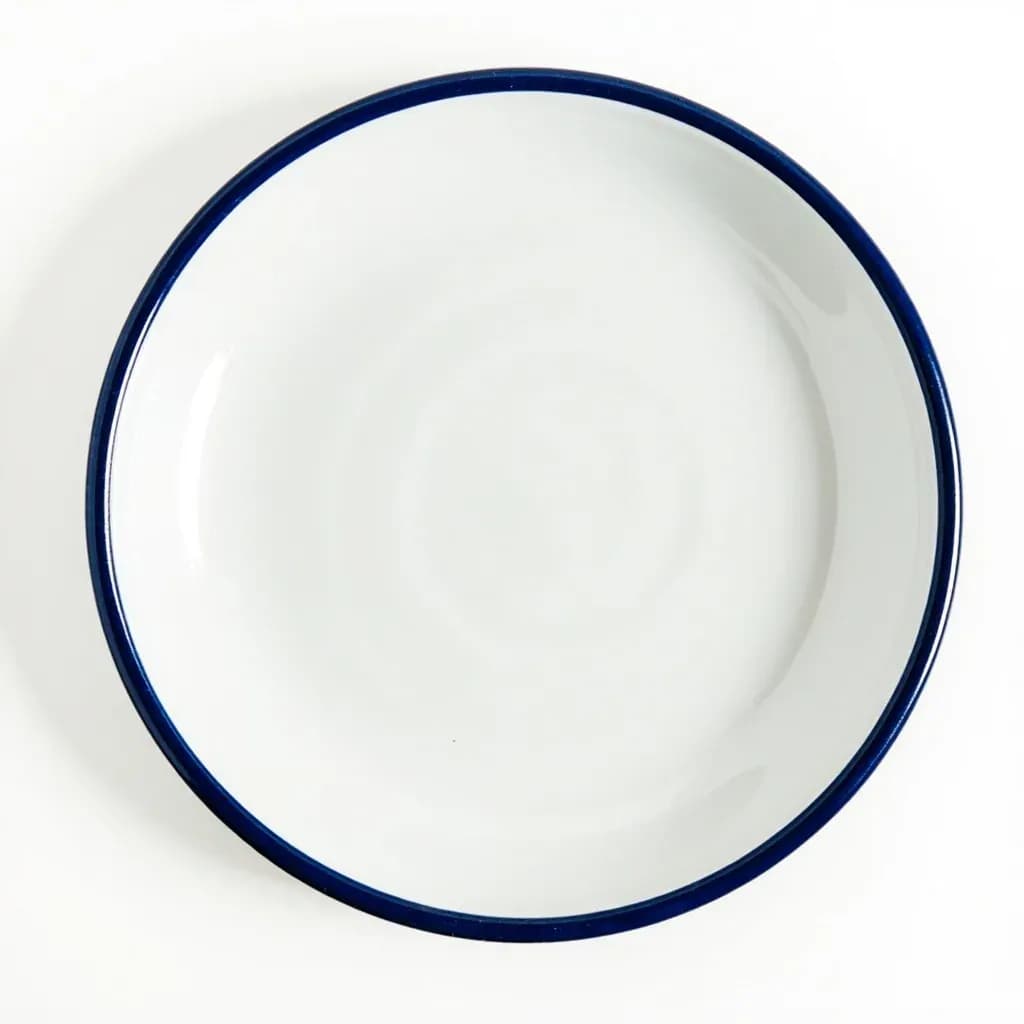
The trade-off is that glass, however tough, is brittle. A hard drop on stone or a rim-to-rim clash with another plate can chip the coating, and once the steel beneath is exposed it will oxidize if left wet. With ordinary care — no thermal shock, no metal tools, prompt drying of any chips — an enamel plate will outlast its owner, which is why 1920s–1950s Falcon-style pieces still turn up in European kitchens and why the white-with-blue-rim pattern is the visual default most people picture when they hear "enamelware."
Alternatives
Types & varieties
The classic Falcon-style pattern; the visual reference most people mean by "enamelware," equally at home in a diner, a farmhouse, or a campsite.
Traditional granite-ware look with dark specks over a cream or gray base; common on vintage camping and farmhouse plates.
Crisp single-color pieces from brands like Crow Canyon Home, Marimekko, and Muurla; used as design-led serveware rather than utility ware.
Shallow fluted or flat-rimmed enamel plate sized 23–25 cm, sold specifically as an enamel pie pan; the dark surface browns pastry well.
Rimmed (rolled) edge for stacking, slightly deeper well, ~22–24 cm; built to survive transport and field washing.
Heavy specialty piece cast in iron and vitreously coated; mostly a grill or griddle plate rather than a dining plate.
Smaller portioned plate with two or three compartments, popular for toddlers and trail meals.
Care and longevity
An enamel plate is forgiving in daily use but unforgiving of three things: thermal shock, abrasive cleaning, and impact. Wash by hand when you can; most modern pieces are dishwasher-safe, but the detergent and jostling slowly dull the gloss. Use a baking-soda paste for tea, coffee, beet, or turmeric stains rather than chlorine bleach, which can haze the surface over time. Dry chips immediately and consider a food-safe enamel repair fluid (Mastapotti or similar) to stop rust creep under the glaze. Stack plates with a square of parchment or a cloth napkin between them to keep rims from kissing in storage.
- Hand-wash when practical; the dishwasher is fine occasionally but dulls the gloss over years.
- Lift, do not slide, across stone or glass counters — the underside glaze chips easily.
- For stubborn stains, soak in warm water with an oxygen-bleach tablet or rub with a baking-soda paste.
Buying and evaluating
When shopping, run a fingertip along the rim and the foot: rough, flaky, or rusty edges mean the glass coat has been breached and the piece is no longer fully food-safe. Slight color variation on hand-decorated modern pieces (Crow Canyon, Marimekko, Muurla) is normal and not a defect. For kitchen work, a 23–25 cm pie plate is the single most useful size — it bakes, roasts vegetables, holds a mise en place, and serves a tart. The classic white-with-blue-rim dinner plate is the most versatile pattern because it photographs well, hides nothing on the plate, and matches any table.
- Run a finger along rim and foot — flakes or rust mean the glaze is compromised.
- Expect and accept small color variation on hand-decorated modern pieces.
- A 23–25 cm pie plate is the most versatile size: baking, roasting small portions, and prep.
Common uses
Tips & pitfalls
- Avoid sudden temperature shocks — moving a cold enamel plate into a very hot oven (or vice versa) can craze or crack the glass; pre-warm it on the rack first.
- Use wooden, silicone, or nylon utensils; metal whisks and knives will eventually chip the rim and the food-contact surface.
- Never put an enamel plate in the microwave — the steel core will arc against the magnetron and can damage the oven.
- Dry chipped spots thoroughly and consider a food-safe enamel repair fluid to halt rust creep under the glaze.
- Remove tea, coffee, beet, or turmeric stains with a baking-soda paste; chlorine bleach dulls the gloss over time.
- When buying vintage, run a fingertip along the rim and foot — rough or flaky edges mean the piece is no longer food-safe.
- Stack plates with a sheet of parchment or a cloth napkin between them to prevent rim-to-rim chipping in storage.
Good to know
- Core material
- Low-carbon (enamel-grade) steel, occasionally cast iron or aluminum.
- Coating
- Vitreous (glass) porcelain enamel, non-porous and food-safe, fused to the metal at 750–850 °C / 1380–1560 °F.
- Typical sizes
- Dinner plates ~25–28 cm (10–11 in); salad/dessert plates ~18–20 cm (7–8 in); pie plates ~23–25 cm (9–10 in).
- Weight
- A 25 cm dinner plate weighs roughly 350–500 g, depending on gauge and rim profile.
- Heat tolerance
- Oven-safe to about 250 °C / 480 °F; not stovetop-safe; not microwave-safe (steel core arcs).
- Reactivity
- Non-reactive with acidic foods — tomato, citrus, vinegar, and wine do not interact with the glass layer.
- Failure mode
- Hard impacts chip the brittle glass; exposed steel underneath oxidizes, so chips should be dried promptly and sealed with food-safe enamel repair fluid.
- Iconic pattern
- White body with a single blue (sometimes red or green) rim — the Falcon Enamelware look established in 1920s Birmingham, England.
Also called
Enamelware Plate · Enamel Dish
Related

Peeler
Swift blade for stripping skin off fruit and vegetables

Grater
Sharp-toothed surface for shredding cheese and vegetables

Microplane
Ultra-fine rasp for citrus zest, garlic, and hard cheese

Mixing Bowl
All-purpose bowl for combining, whisking, and tossing

Whisk
Looped wires that beat air into eggs, cream, and sauces

Spatula
Flat blade for flipping, lifting, and scraping

Slotted Spoon
Pierced spoon that lifts solids and drains the liquid behind

Wooden Spoon
Gentle, heat-friendly spoon for stirring anything