Prep Tools
Enamel Tray
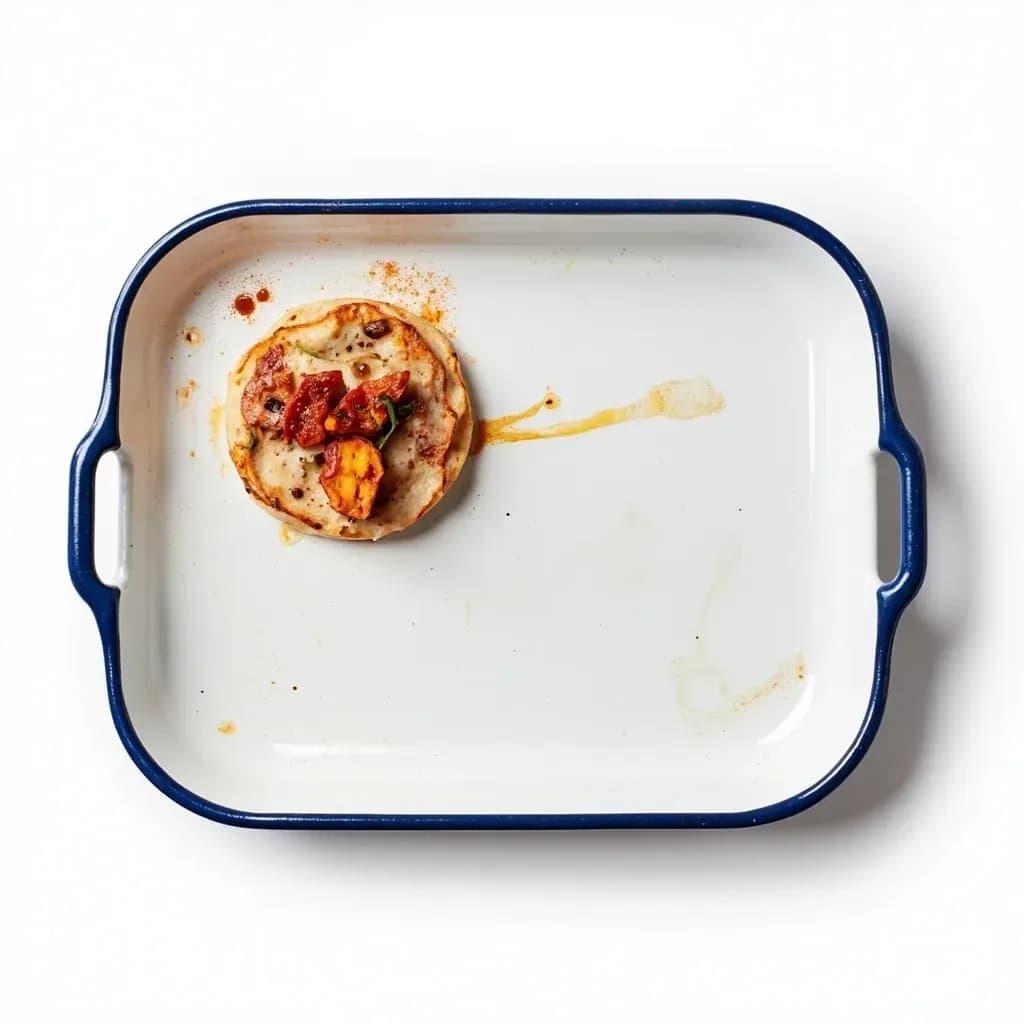
A lightweight enameled-steel tray for prepping, organizing, and serving food.
An enamel tray is a steel tray coated in fused glass enamel, giving a smooth, non-reactive, easy-clean surface. Cooks use them to organize mise en place, hold breaded items, marinate, and serve, and the non-reactive coating is safe for acidic foods. Durable and lightweight, they resist staining though the enamel can chip if dropped.
An enamel tray is a metal tray — most commonly sheet steel, occasionally cast iron — coated with porcelain enamel, a glass frit fused to the metal at roughly 750–850°C. The result is a hard, glossy, non-porous surface chemically bonded to the substrate that will not react with acidic ingredients the way raw aluminum, copper, or carbon steel will. It is the workhorse sheet of European boulangeries and pâtisseries, and the same chemistry underlies the colorful pressed-steel trays sold for farmhouse-style serving.
The appeal in a working kitchen is twofold. A thin-gauge enameled-steel sheet heats fast, transfers heat directly to the food, and recovers temperature quickly when cold dough hits it — exactly the behavior pastry chefs want for croissants, puff pastry, and shortbread. A heavy enameled cast-iron tray, by contrast, holds and radiates heat, making it well suited to roasting joints and gratins. The smooth enamel is also a hygienic prep surface: it wipes clean, will not absorb odors, and tolerates citrus, tomato, wine, and vinegar during marinating and organizing.
The trade is durability. The enamel layer cannot be repaired, and once it chips the exposed steel will eventually rust. Treat the tray as a precision tool — line it, stack it carefully, and avoid thermal shock — and it will outlast aluminum trays of the same gauge.
Alternatives
Types & varieties
Lightweight mottled blue or cream enamel over steel — the classic American farmhouse tray and the dominant commercial bakery sheet in Europe. Inexpensive, durable, ubiquitous in pro pastry kitchens.
Heavy roaster with porcelain enamel inside and out (Le Creuset, Staub). Doubles as a stovetop-to-oven-to-table piece with superior heat retention.
Falcon, Crow Canyon, and similar lines of glossy single-color trays and pie plates for rustic table service.
Rimmed flat tray in standard bakery dimensions; thin-gauge steel chosen for fast, even browning and rapid heat recovery.
Shallow rectangular or oval dish with a wide flat surface, in enameled cast iron or heavy steel, optimized for browning.
Narrow enameled pans for whole fish (fish kettle) or asparagus, common in European cookware lines.
Heavier enamel finish on pressed steel (GSI, QAVA) suited to open fire and rough handling.
Why pastry chefs reach for thin-gauge enamel
In a boulangerie, the standard plaque à pâtisserie is a thin, rimmed enameled-steel sheet for a reason. Thin metal heats fast in a deck oven, delivers heat directly to the bottom of the dough, and — critically — recovers temperature quickly when a cold tray of laminated dough enters the chamber. A thicker aluminum tray of the same dimensions acts as a heat sink and can leave the base of croissants and puff pastry undercooked. When buying, gauge matters more than brand: a 1 mm commercial plaque will outperform a 0.6 mm consumer tray for laminated doughs. Heavier-gauge enameled steel is the better choice for roasting, where warping resistance and even heat retention are the priority.
When the enamel chips
A chip is permanent — the glass layer cannot be refilled, and the exposed steel core will oxidize if left wet. For a commercial sheet pan, a chip usually means retirement to a prep or drip-tray role. For an enameled cast-iron roaster, the exposed iron can be used for non-acidic dishes and treated like raw cast iron: towel-dried after washing, lightly oiled, and never soaked. Small chips along the rim are cosmetic and rarely affect function; chips on the cooking surface of a baking sheet will catch and stain, and are usually a sign to replace the tray.
Common uses
Tips & pitfalls
- Avoid metal utensils and metal-on-metal stacking — chips expose the steel core and lead to rust.
- Don't preheat an empty enameled-steel tray at maximum oven temperature; bring it up with the oven to prevent thermal shock.
- Line with parchment or a silicone mat for delicate bakes; enamel is smoother than raw steel but is not truly non-stick.
- Hand wash with warm soapy water and a soft sponge — steel wool and abrasives will scratch the gloss.
- Lift brown stains with a paste of baking soda and water, or a brief simmer of water with a spoonful of white vinegar.
- Store with a cloth or paper liner between stacked trays to prevent scuffing.
- Choose heavy-gauge enameled steel for roasting (less warping) and thin-gauge for baking (faster, crisper bases).
- A chipped enameled cast-iron roaster can keep working for non-acidic dishes if you oil it like bare cast iron — but never soak it.
Good to know
- Material
- Porcelain enamel (fused glass frit) over sheet steel for bakery pans and pressed trays; over cast iron for roasters and gratins.
- Heat tolerance
- Enameled steel is safe to about 230–260°C (450–500°F); enameled cast iron tolerates higher oven temperatures and direct stovetop use.
- Reactivity
- Non-reactive with tomatoes, citrus, wine, and vinegar — unlike raw aluminum, copper, or carbon steel.
- Standard sizes
- European full sheet ~60×40 cm (the standard bakery 'plaque'); US full sheet 18×26 in; quarter sheet and baguette pans are also common.
- Weight
- Enameled-steel sheets weigh 1–2 kg; enameled cast-iron trays 3–6 kg depending on size.
- Induction
- Enameled cast iron works on induction; flat enameled-steel trays generally do not unless fitted with a ferromagnetic base.
- Thermal shock
- Avoid plunging a hot tray into cold water — the enamel can craze or chip. Most tolerate freezer-to-oven moves when warmed gradually.
- Cleaning
- Hand wash only; prolonged dishwasher cycles dull the gloss and attack any chipped edges.
Also called
enamel tray · enamelware tray
Related

Peeler
Swift blade for stripping skin off fruit and vegetables

Grater
Sharp-toothed surface for shredding cheese and vegetables

Microplane
Ultra-fine rasp for citrus zest, garlic, and hard cheese

Mixing Bowl
All-purpose bowl for combining, whisking, and tossing

Whisk
Looped wires that beat air into eggs, cream, and sauces

Spatula
Flat blade for flipping, lifting, and scraping

Slotted Spoon
Pierced spoon that lifts solids and drains the liquid behind

Wooden Spoon
Gentle, heat-friendly spoon for stirring anything