Prep Tools
Fermentation Weight
A glass or ceramic weight that holds vegetables submerged under brine during fermentation.
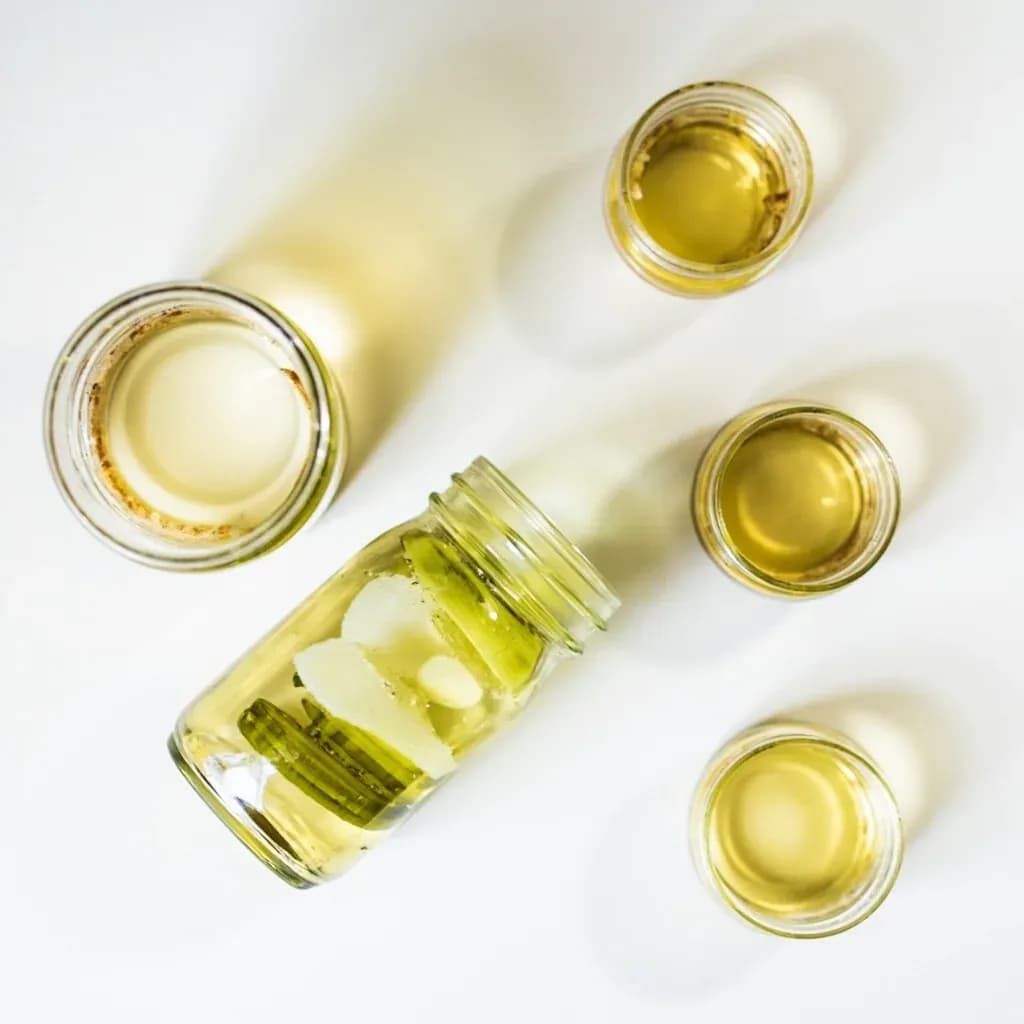
A fermentation weight is a heavy, food-safe disc, usually glass or glazed ceramic, that sits inside a jar to keep vegetables pressed beneath the brine. Keeping the ferment under liquid blocks oxygen and the mold and spoilage it invites, so sauerkraut, kimchi, and pickles cure cleanly. The smooth weight fits inside the jar mouth and is easy to sanitize between batches.
A fermentation weight is a small, heavy disc or pebble-shaped object—usually tempered glass, glazed ceramic, or food-grade stainless steel—designed to sit inside a fermentation vessel and press the vegetables down beneath the brine. Its job is deceptively simple but critical: keep every solid bit of food submerged so that anaerobic lactic acid bacteria can do their work uncontested by the oxygen-loving molds, kahm yeasts, and surface scum that would otherwise colonize anything poking above the liquid line. In practice, this single piece of equipment eliminates the most common failure mode of home fermentation.
The principle behind the tool is centuries old. Traditional European sauerkraut crocks relied on heavy wooden lids loaded with cleaned river stones, while Korean onggi pots used layered cabbage leaves pressed down by stone weights. The modern glass or ceramic disc is the same idea refined for wide-mouth Mason jars and small stoneware crocks—calibrated in size, easy to sanitize, and consistent across batches.
What separates a good weight from a bad one comes down to three things: mass enough to overcome the buoyancy of fermenting vegetables, a non-porous surface that won't harbor bacteria between batches, and a diameter small enough to leave a gap around the rim so carbon dioxide can escape. Get those right and the weight becomes the quiet workhorse of a fermentation setup, doing its job without much attention.
Alternatives
Types & varieties
Tempered glass with a small knob or stem on top; non-porous, easy to sanitize, and the most common modern style.
Small pebble-shaped tempered glass weights sized to nestle inside wide-mouth Mason jars; usually sold in sets of four.
Heavier than glass, traditionally styled; the glaze keeps them non-porous and easy to clean.
Larger, often unglazed on the bottom for grip, designed to fit traditional German and American sauerkraut crocks.
Durable and non-reactive but less common; can scratch glass or glazed ceramic vessels over time.
The Science of Submersion
Lacto-fermentation depends on a population shift: you want salt-tolerant Lactobacillus species to dominate while aerobic spoilage organisms get shut out. The weight's role is to create and maintain that anaerobic environment by physical force. Cabbage, cucumbers, carrots, and radish are all buoyant enough to lift themselves right back to the surface within hours of being packed, so the weight has to actively hold them down. Once food breaks the surface, oxygen returns, pH climbs locally, and opportunistic molds and yeasts get their foothold.
Kahm yeast—the white, filmy bloom that sometimes appears on fermenting brine—is not dangerous, but it raises pH at the surface and signals that something is exposed. Blue, black, pink, or fuzzy growth is a different story and means the seal has failed. A properly fitted weight prevents both scenarios by making submersion automatic rather than something the cook has to monitor daily.
- Lactobacillus species thrive in oxygen-free, salty, acidic conditions—exactly what a submerged ferment provides.
- A 1/2-inch buffer of brine above the weight is the standard margin of safety for most ferments.
- Weights that seal the rim trap CO2 and risk overflow; an intentional gap is essential.
Pairing Weights with Airlocks and Crocks
A weight works best as part of a system. In Mason jars, it pairs naturally with a silicone airlock lid that vents CO2 while blocking oxygen. In stoneware fermentation crocks, the weight sits below a half-moon lid that rests in a water-filled rim moat, creating a true anaerobic seal. The weight keeps the food pressed down; the lid manages gas exchange. Neither works alone as well as both work together, and beginner kits almost always bundle them as a matched set.
- Mason jar weights plus an airlock lid form the standard home-kitchen ferment setup.
- Crock weights plus a water-seal moat lid are the traditional sauerkraut method, suited to longer ferments.
- Glass pebbles and ceramic discs are interchangeable across systems as long as the diameter fits.
Common uses
Tips & pitfalls
- Sanitize the weight in hot water before each batch; residue from a previous ferment can contaminate the next.
- Choose a weight noticeably smaller than the vessel opening so it does not seal the top, which can trap gas and cause overflow.
- Glass or glazed ceramic is the safest choice—avoid cast iron, copper, and bare aluminum, which react with acidic brine.
- Keep the brine at least 1/2 inch above the top of the weight; food that pokes above the brine invites mold and kahm yeast.
- For long ferments in crocks, pair the weight with a water-seal lid that fills the rim moat to create a true anaerobic environment.
- Skip porous weights such as unglazed clay or rough sandstone; they absorb brine and host bacteria across batches.
- If you do not have a weight, a small food-grade zip-top bag filled with brine and sealed works as a flexible substitute that conforms to the jar.
- For wide-mouth jars, leave a headspace of 1–2 inches between the weight and the lid so fermentation gases do not push liquid out.
Good to know
- Function
- Holds fermenting vegetables below the surface of the brine to prevent exposure to air, which discourages mold, kahm yeast, and surface scum.
- Common Materials
- Tempered glass, glazed ceramic/stoneware, food-grade stainless steel.
- Typical Diameter
- Roughly 2–2.5 in (5–6 cm) for wide-mouth Mason jar weights; 4–6 in (10–15 cm) for half-gallon and gallon crock weights; larger for German-style kraut crocks.
- Weight
- A few ounces for small jar pebbles; 1–2 lb (450–900 g) for full-size crock discs.
- Designed For
- Lacto-fermentation in wide-mouth Mason jars, fido/swing-top jars, and stoneware fermentation crocks.
- Cleaning
- Hot water and a soft brush; avoid scented dish soap residue that can inhibit or flavor fermentation.
- Avoid
- Reactive metals (cast iron, copper, bare aluminum) and porous materials (unglazed clay, unsealed stone) that can harbor spoilage organisms.
- Fit Principle
- Should sit comfortably below the rim with a gap around the edges so CO2 can escape while food stays submerged.
Also called
Fermentation Weight (Glass) · Pressing Weights · Pickle Weight · Glass Fermentation Weight
Related

Peeler
Swift blade for stripping skin off fruit and vegetables

Grater
Sharp-toothed surface for shredding cheese and vegetables

Microplane
Ultra-fine rasp for citrus zest, garlic, and hard cheese

Mixing Bowl
All-purpose bowl for combining, whisking, and tossing

Whisk
Looped wires that beat air into eggs, cream, and sauces

Spatula
Flat blade for flipping, lifting, and scraping

Slotted Spoon
Pierced spoon that lifts solids and drains the liquid behind

Wooden Spoon
Gentle, heat-friendly spoon for stirring anything