Prep Tools
Stainless Fish Display Tray
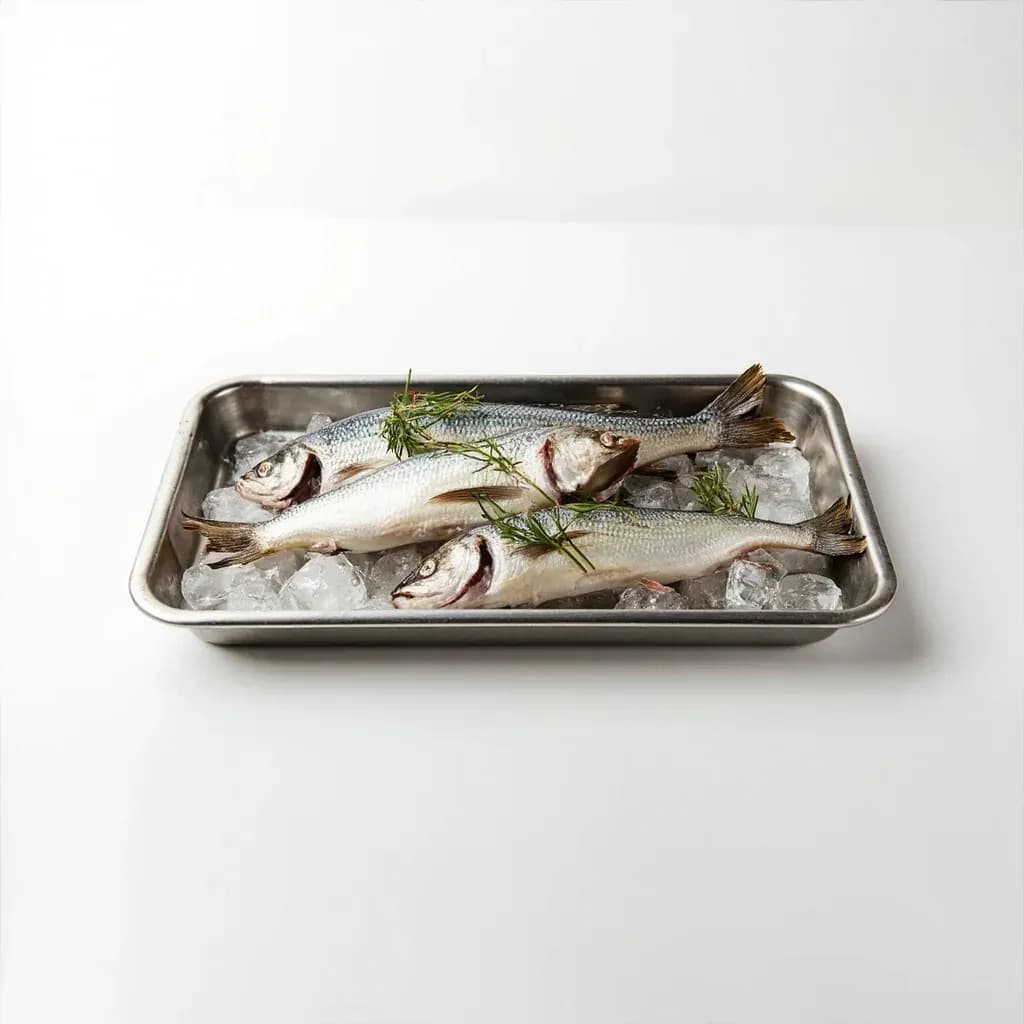
A sloped stainless tray that holds whole fish on ice for fresh display and prep.
A stainless fish display tray is an angled, drainable metal tray used to present whole fish and seafood on a bed of ice at markets and behind sushi counters. The slope and drain keep meltwater away from the fish, preserving freshness and appearance. Cooks also use it as a chilled staging surface during fish butchery.
A stainless fish display tray is a sloped, drained, perforated bed designed to keep whole fish, fillets, and shellfish properly chilled while presenting them cleanly. The geometry is the whole point: a shallow basin angled one or two degrees toward a drain spout holds a bed of crushed ice, and a perforated stainless insert sits above it so the fish rests on ice rather than in melt water. As the ice melts — and it will, quickly under a load of cold fish — the water runs downhill, exits through the drain, and the product stays dry, visible, and chilled from beneath and around.
The two engineering choices that matter most are contact chill and drainage. Crushed or flaked ice makes full surface contact with the fish and pulls heat out far faster than cubed ice, which bridges and leaves insulating air gaps. The sloped bed then carries melt water away from the product; pooled water beneath fish is the fastest way to lose texture, leach flavor, and accelerate bacterial growth. Held correctly, the surface of the fish sits at 32–34°F — below the freezing point of water so the ice holds, but above the freezing point of the flesh itself, so the product stays properly chilled without freezing, weeping, or turning glassy on the plate.
The standard build is 18-8 (304) stainless steel, chosen for corrosion resistance, easy sanitation, and a finish that tolerates daily washdowns. Marine-grade 316 appears in high-salt seafood service, where brine accelerates pitting in lesser alloys. Heavier-gauge models live at the prep station, taking abuse from knives and gutting work; lighter gauges are common at the retail counter, where appearance matters more than brute strength. The design has changed little since the mid-20th century because the requirements — drainage, contact chill, corrosion resistance, and easy sanitation — are non-negotiable in a food-safety context.
Alternatives
Types & varieties
Front-of-house unit with sloped bed, perforated insert, and front drain; often sold with a tempered glass sneeze guard for retail fish counters
Heavier-gauge, deeper basin used at the cleaning and portioning station; large enough to gut whole salmon or tuna
Insulated cabinet with a chilled false bottom and ice bed; used where long hold times are required without constant ice replenishment
Flat stainless sheet with holes; a less expensive option that still lifts fish off melt water when nested over a hotel pan
Smaller tray (12″ × 18″ to 18″ × 24″) sized for portioned fillets and presentation on the raw bar
Setting the ice bed
A well-iced tray is a working surface, not just a display — the way the ice is laid determines how evenly the fish chills, how long the bed holds, and how clean the presentation stays. Build the bed in two passes: an insulating base layer, then a contact layer the fish actually rests on. Keep the bed shallow enough that you can read the slope visually, and replace ice the moment it loses its dry, opaque character.
- Bed crushed or flaked ice 1–2 inches deep across the perforated insert; the fish should never sit lower than the top of the ice, and never touch the perforated metal directly
- Lay fish in a single layer with bellies down for whole fish, skin side down for fillets; stagger them so melt water runs between the pieces, not under them
- Pack ice against the sides and into corners — these are the first spots to lose chill and the last spots water pools
- Refresh when the ice shifts from dry and opaque to glossy and slushy; once the crystals round off, the latent heat of fusion is gone and the bed is just cold water
- Pat fish skin dry with a clean towel before icing; a wet surface freezes to the ice and tears on removal
Common uses
Tips & pitfalls
- Use crushed or flaked ice, not cubes — cubes bridge and leave insulating air gaps that chill unevenly
- Confirm the tray slopes toward the drain before each service; a level tray pools melt water and accelerates bacterial growth
- Replace ice the moment it shifts from dry, opaque white to slushy — that means it has lost its chill capacity
- Sanitize the tray between species, especially when moving from raw shellfish to finfish, to prevent cross-contamination
- Clean with a dedicated stainless cleaner or vinegar; chlorine bleach and chloride-rich detergents cause pitting and rust spots
- Polish with the grain of the steel, not across it, to keep the finish uniform
- Never stack heavy fish directly on the perforated insert — use a liner or smaller rack to spread the load and prevent denting
- Keep a drip tray beneath the front drain so the floor stays dry and the station stays inspection-ready
Good to know
- Material
- 18-8 (304) stainless steel is standard; 316 marine-grade appears in high-salt seafood service for added corrosion resistance
- Construction
- Sloped bed (1–2°) with a perforated false bottom or grating that holds fish above the melt-water reservoir
- Standard sizes
- Countertop models run roughly 18″ × 24″ up to 36″ × 60″; full retail display cases reach 4–6 ft
- Weight
- An empty 24″ × 36″ tray weighs 8–12 lb depending on gauge
- Ice type
- Paired with crushed or flaked ice; cubed ice bridges and leaves insulating air gaps that chill unevenly
- Holding temperature
- Properly iced, maintains fish at 32–34°F (0–1°C) at the product surface
- Drainage
- Front or side drain spout directs melt water to a catch bucket, floor drain, or sink; some models have a built-in reservoir
- Sneeze protection
- Retail versions often include a tempered glass sneeze guard above the ice bed
- Certification
- NSF/ANSI 2 listed units are the commercial benchmark
- Cleaning
- Wash with stainless-safe detergent and hot water; avoid chlorine bleach and steel wool, which pit the surface
Also called
fish ice tray · seafood display tray
Related

Peeler
Swift blade for stripping skin off fruit and vegetables

Grater
Sharp-toothed surface for shredding cheese and vegetables

Microplane
Ultra-fine rasp for citrus zest, garlic, and hard cheese

Mixing Bowl
All-purpose bowl for combining, whisking, and tossing

Whisk
Looped wires that beat air into eggs, cream, and sauces

Spatula
Flat blade for flipping, lifting, and scraping

Slotted Spoon
Pierced spoon that lifts solids and drains the liquid behind

Wooden Spoon
Gentle, heat-friendly spoon for stirring anything