Knives & Cutting
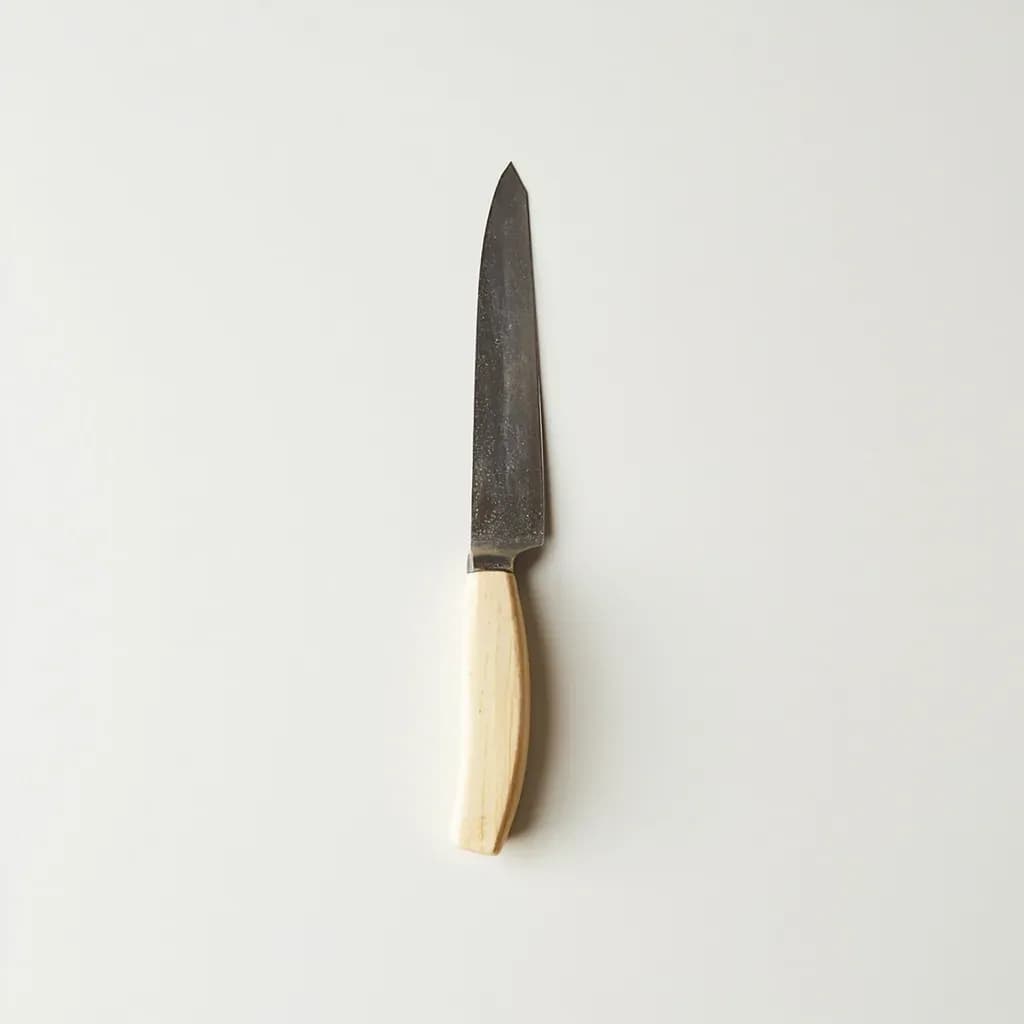
Fish Filleting Knife
Thin, flexible blade for filleting fish and removing skin in clean strokes.
A fish filleting knife has a long, thin, highly flexible blade that bends along a fish's spine and ribs to lift clean fillets and remove skin with minimal waste. Its flexibility lets the blade hug bones and contours that a stiff knife cannot follow. It is the specialist tool for breaking down whole fish, where a flexible boning knife can substitute.
A fish filleting knife is a specialized boning knife built around a long, narrow, thinly ground blade that can follow the curves of a fish's skeleton without tearing the flesh. Where a chef's knife is a generalist, the fillet knife is a scalpel: it has the length to clear a side of salmon in one pass, the flexibility to ride the ribcage and lift meat off the bones, and an acute edge (typically 12–17° per side) that parts soft protein cleanly rather than crushing it. That combination is what separates a tidy fillet with intact belly flaps from a ragged pile of meat left on the carcass.
The defining trait is flex. A truly flexible fillet knife will bend along its spine so the belly of the blade stays in contact with the skin or the bones, letting the cook work by feel rather than sight. Stiffer versions sacrifice that bend for power when breaking down large, firm fish. Most fishmongers and serious home cooks end up owning both: a 7-inch flexible for skinning and boning, and a 6-inch stiffer model for the first pass down the backbone. The thin profile is also why the knife cannot do the work of heavier blades — it is built for flesh, not impact, and using it on bone or frozen fish chips the edge in a stroke.
The filleting tradition is not one tradition. Western European fishmongers (France, Germany, Scandinavia) developed the long, narrow, double-bevel fillet knife we picture most often, while Japanese cooks arrived independently at the heavy single-bevel deba for breaking down whole fish and the long, thin yanagiba for the final portioning. The two families answer the same problem differently, and serious fish kitchens often draw from both.
Alternatives
Types & varieties
The classic 'bends along the spine' style, 7–9 in; best for lifting fillets off rib bones and skinning.
Same profile but rigid spine; preferred for the first pass down the backbone of larger, firmer fish like salmon, tuna, or walleye.
4–6 in blade for panfish, trout, and small whole fish; easier to control on small work.
9–11 in blade, often with a slightly upturned tip and Scandinavian grind; favored for whole salmon and cod.
Heavy, single-bevel knife used to behead and break down whole fish before switching to a finer blade for filleting.
Long, very thin, single-bevel slicer used for sashimi and final portioning of fillets, not for bone work.
Western-handle Japanese slicer; long, thin, double-bevel — useful for slicing smoked salmon and large fillets paper-thin.
Two oscillating serrated blades (corded or cordless); favored by anglers processing many fish at the cleaning station; gives a coarser finish than a sharp hand knife.
Long, thin, granton-edge blade with a blunt or rounded tip, designed to slice cured fish without tearing.
Fillet knife vs. boning knife vs. chef's knife
A fillet knife is a lengthened, thinner version of a boning knife — same idea of following contours, scaled up to clear a side of fish in one motion. A chef's knife is a poor substitute: the wide, rigid blade cannot ride the spine without leaving meat on the bones, and its heavier edge crushes soft flesh, releasing more albumin and giving a ragged plate appearance. For sashimi and paper-thin cured fish, a Japanese slicer (yanagiba, takohiki, or sujihiki) is a better tool than a flexible Western fillet knife, which is built for proximity to bone rather than for clean, gliding slices. For the heavy first cuts on a large fish — behind the head, through the belly, around the fins — a deba is the traditional first knife before the fillet knife takes over.
- Boning knife: short, stiff, for red meat and poultry; fillet knife: long, thin, often flexible, for fish.
- Chef's knife: generalist; wrong tool for filleting, acceptable only in a pinch for small, soft fish.
- Sujihiki/yanagiba: better for thin slicing once the fillet is off the bone.
- Deba: better for head, fins, and the first backbone pass on large fish.
Choosing a fillet knife
Match the knife to the size of fish you actually cook. A 6-inch stiff blade is the right starting point for whole salmon, sea bass, and similarly sized round fish, while a 7–9-inch flexible is the everyday workhorse for skinning, deboning, and portioning smaller fish. Blade material is a real choice: high-carbon stainless holds an edge longer than ordinary stainless, and carbon steel sharpens finer still but demands immediate drying after use. Handle length is often overlooked: a longer handle balances the long blade and keeps knuckles off the board, which matters more on a fillet knife than on almost any other kitchen knife.
Common uses
Tips & pitfalls
- Sharpen before every serious session — a dull fillet knife is the single biggest cause of torn flesh and wasted meat. A 1000/4000 whetstone pair or a quality rod hone will reset a 12–17° edge quickly.
- Hone with a fine ceramic rod between fish, not just at the end; the soft protein builds up on the edge and a few light passes keep it cutting cleanly.
- Use long, smooth draw cuts toward you, with the blade tilted slightly so the bevel faces the flesh. Sawing crushes fibers and leaves ragged edges.
- For skinning, lay the fillet skin-side down, grip the tail, and slide the blade flat along the board with the edge angled just up toward the flesh — let the knife do the work, don't chase skin with the tip.
- Start the back cut behind the pectoral fin and run the tip along the backbone, not into it; let the bones guide the blade. Switch to a stiffer knife (or deba) for the head end on large fish.
- Keep the blade wet and wipe it between cuts; fish slime creates drag and dulls the edge faster.
- Flex the blade with the spine, not the tip — bending from the tip is the usual way a fillet knife snaps.
- Never use it on bone, frozen fish, or coconut. The thin edge is meant for flesh, not impact. Wash by hand, dry immediately, and store in a guard or on a magnetic strip.
Good to know
- Type
- Specialty boning/filleting knife with a narrow, thin, flexible blade
- Typical blade length
- 15–25 cm (6–9 in); 18 cm (7 in) is the most common professional size
- Blade shape
- Long, narrow, taper-ground to an acute point; spine is thin and often slightly arched
- Edge geometry
- Symmetrically ground to roughly 12–17° per side — more acute than a chef's knife, for a cleaner cut through soft flesh
- Flex profile
- Ranges from stiff (for breaking down whole fish off the bone) to very flexible (for skinning and boning); many cooks keep both
- Common blade materials
- Stainless steel (most common), high-carbon stainless (e.g. X50CrMoV15, VG-10), or carbon steel (traditional, sharper but rust-prone)
- Handle
- Riveted or molded polymer/wood, often longer than the grip would suggest, to balance the long blade and keep knuckles clear of the board
- Origin
- European butchery/fishmongering tradition (France, Germany, Scandinavia) and parallel Japanese tradition (deba, yanagiba) developed independently
- Dishwasher safe
- No — detergents and heat corrode the edge and damage handles
- Storage
- Blade guard, magnetic strip, or knife block slot; never loose in a drawer
Also called
fish-filleting-knife · filleting-knife · fish-fillet-knife · fish-knife
Related

Knife
The fundamental cutting tool every kitchen is built around

Chef's Knife
The do-everything blade for chopping, slicing, and mincing

Paring Knife
Small, nimble blade for peeling and detailed in-hand work

Serrated Knife
Saw-toothed blade that slices crusty bread without crushing

Cleaver
Heavy broad blade for chopping through bone and bulk prep

Cutting Board
The stable surface every cut starts on

Mandoline
Adjustable blade for paper-thin, perfectly even slices

Kitchen Shears
Heavy-duty scissors for poultry, herbs, and packaging