Prep Tools
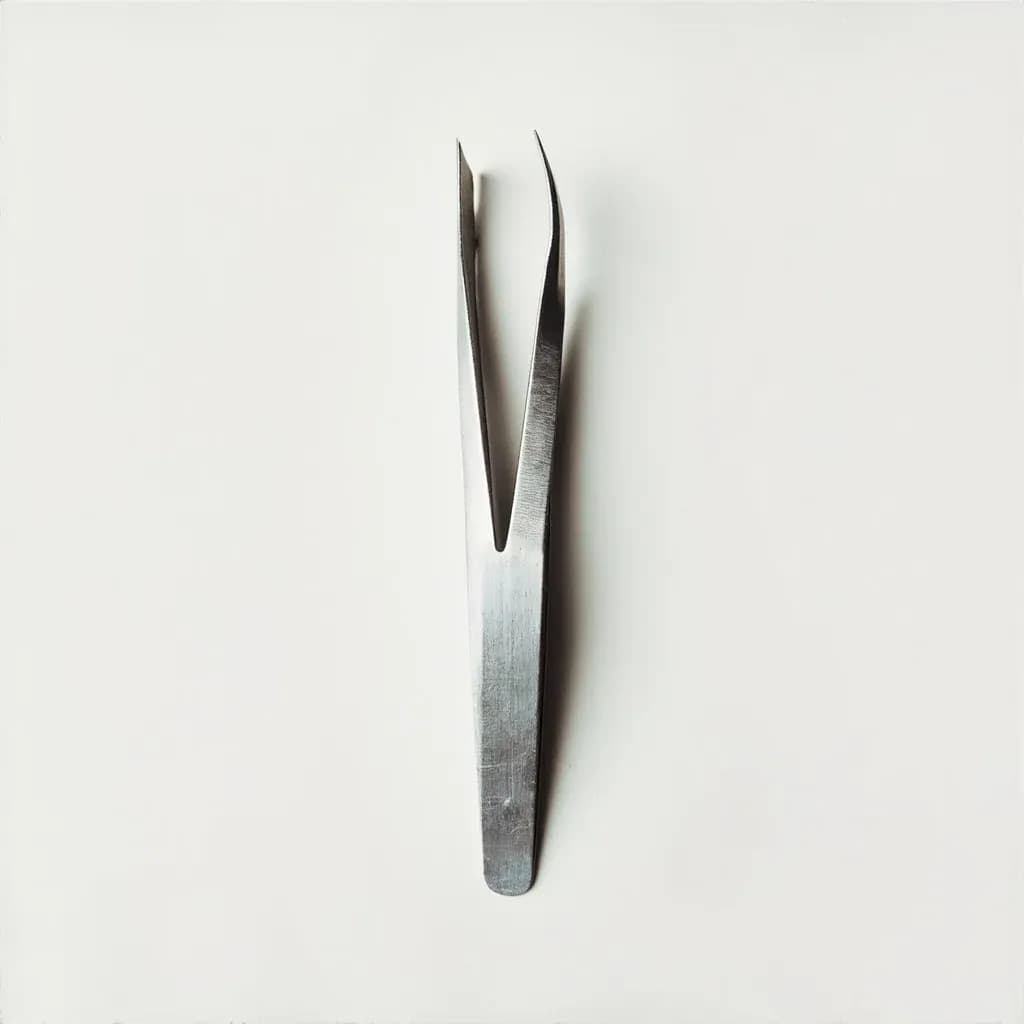
Fish Bone Tweezers
Wide, strong tweezers for pulling pin bones out of fish fillets without tearing the flesh.
Fish bone tweezers are heavy-duty tweezers with a broad, grippy tip designed to grasp and pull the tiny pin bones embedded along a fillet. Cooks run a finger along the flesh to find each bone, then pull it out in the direction it lies to avoid ripping the meat. The wide flat tips give a firm grip on slippery, slick bones that regular tweezers slide off.
Fish bone tweezers are a small, purpose-built prep tool designed for one job: lifting the fine pin bones that run through fillets of salmon, trout, sea bass, pike, and similar boned fish. Unlike cosmetic tweezers, their jaws are wide, flat, and rigid enough to clamp a slippery bone without flexing or snapping, and they usually sit at a slight angle so the cook's hand stays out of the line of sight. They are a near-essential item in any kitchen that breaks down whole fish regularly, and a worthwhile one for anyone who buys fillets and wants to serve them bone-free.
The tool matters because pin bones are easy to miss with a knife but immediately obvious to anyone biting down on a fillet. A pair of dedicated tweezers lets you pull each bone along the direction it lies, so the flesh closes back on itself rather than tearing. In practice they are quick, quiet, and far more controlled than improvised substitutes such as needle-nose pliers, which can crush delicate flesh, or fingers alone, which leave you working blind.
Good tweezers feel balanced in the hand, with tips that meet flush and a spring tension light enough to use all afternoon without fatigue. The jaws are typically stainless steel, so they tolerate hot soapy water and the occasional trip through a dishwasher, and the better designs include a small lock so the tips stay aligned in a drawer.
Alternatives
Types & varieties
The most common style; angled jaws keep the hand clear of the flesh for better visibility while pulling.
Simpler design, easier to control for fine work on small fillets, though the hand can obscure the view.
Longer, very fine tips, often with a sliding lock; favored in professional sushi kitchens for precise bone and sinew removal.
Textured inner faces that hold slippery bones more securely; useful on small or slick pin bones.
A ring or collar that locks the jaws closed so the tool stores safely without dulling or misaligning the tips.
Larger, plier-style tool with a squeeze handle, sized for very firm bones in bigger game fish or smoked whole sides.
Working the pin bone line
The first few times you debone a fillet, lay it skin-side down on a damp dish towel so it does not skate around, then run a fingertip lightly against the grain. The bones announce themselves as a row of small, firm nubs running roughly down the center of the fillet, angled toward the head. Grip each one as close to its base as you can, angle the tweezers almost flat against the flesh, and pull in the same direction the bone is pointing. A steady, deliberate motion lifts the bone out cleanly and leaves a small slit that closes back up. Yanking upward, or pulling across the bone, is what tears the muscle and leaves an obvious row of craters in an otherwise smooth fillet.
- Start at the thickest end of the fillet (closer to the head) where bones are longest and easiest to grip.
- Pull in the direction the bone lies, never straight up.
- If a bone snaps, work from the tail end toward the break; the stub will usually slide out as you push against it.
- A light pass of the fingertip after each pull confirms whether the line is clean.
Common uses
Tips & pitfalls
- Run a fingertip flat against the grain of the fillet to feel the bones before you start; they sit in a predictable line down the center of each fillet.
- Grip each bone as close to its base as possible and pull steadily in the same direction the bone lies — yanking at an angle tears the flesh.
- Angle the tweezers low and almost flat to the fillet so you lift the bone out rather than dig into the muscle.
- Pat the tips dry or use a lightly damp paper towel to improve grip if the tweezers or the flesh are slippery.
- Keep the two tips aligned; bent or misaligned jaws will slip or pinch the flesh instead of clamping the bone.
- Sanitize between fish and especially between raw and ready-to-eat fish (for example gravlax or ceviche) to avoid cross-contamination.
- Do not substitute cosmetic or eyebrow tweezers — their tips are too narrow and will bend or snap on larger pin bones.
- Use needle-nose pliers in a pinch for very firm bones, but never kitchen shears, which will cut through the bone and leave fragments in the flesh.
Good to know
- Also known as
- Fish bone pliers, pin bone tweezers, deboning tweezers
- Typical material
- Stainless steel (often dishwasher-safe)
- Typical length
- Around 11–13 cm (4.5–5 in)
- Tip style
- Wider, flat, often offset jaws; sometimes serrated for grip
- Compared with regular tweezers
- Much sturdier with broader tips that won't bend or snap on larger pin bones
- Used on
- Pin bones in fillets of salmon, trout, Arctic char, pike, walleye, sea bass, and other boned species
- Sanitation
- Wipe with a damp cloth between fish; wash in hot soapy water; sanitize when switching between raw and ready-to-eat fish
- Storage
- Small drawer or magnetic strip; keep tips protected so they stay aligned
Also called
Fish Bone Tweezers · Pin Bone Tweezers · Fish Tweezers
Related

Peeler
Swift blade for stripping skin off fruit and vegetables

Grater
Sharp-toothed surface for shredding cheese and vegetables

Microplane
Ultra-fine rasp for citrus zest, garlic, and hard cheese

Mixing Bowl
All-purpose bowl for combining, whisking, and tossing

Whisk
Looped wires that beat air into eggs, cream, and sauces

Spatula
Flat blade for flipping, lifting, and scraping

Slotted Spoon
Pierced spoon that lifts solids and drains the liquid behind

Wooden Spoon
Gentle, heat-friendly spoon for stirring anything