Prep Tools
Foil Cutter
A small handheld tool that cleanly slices the foil capsule off a wine bottle neck.
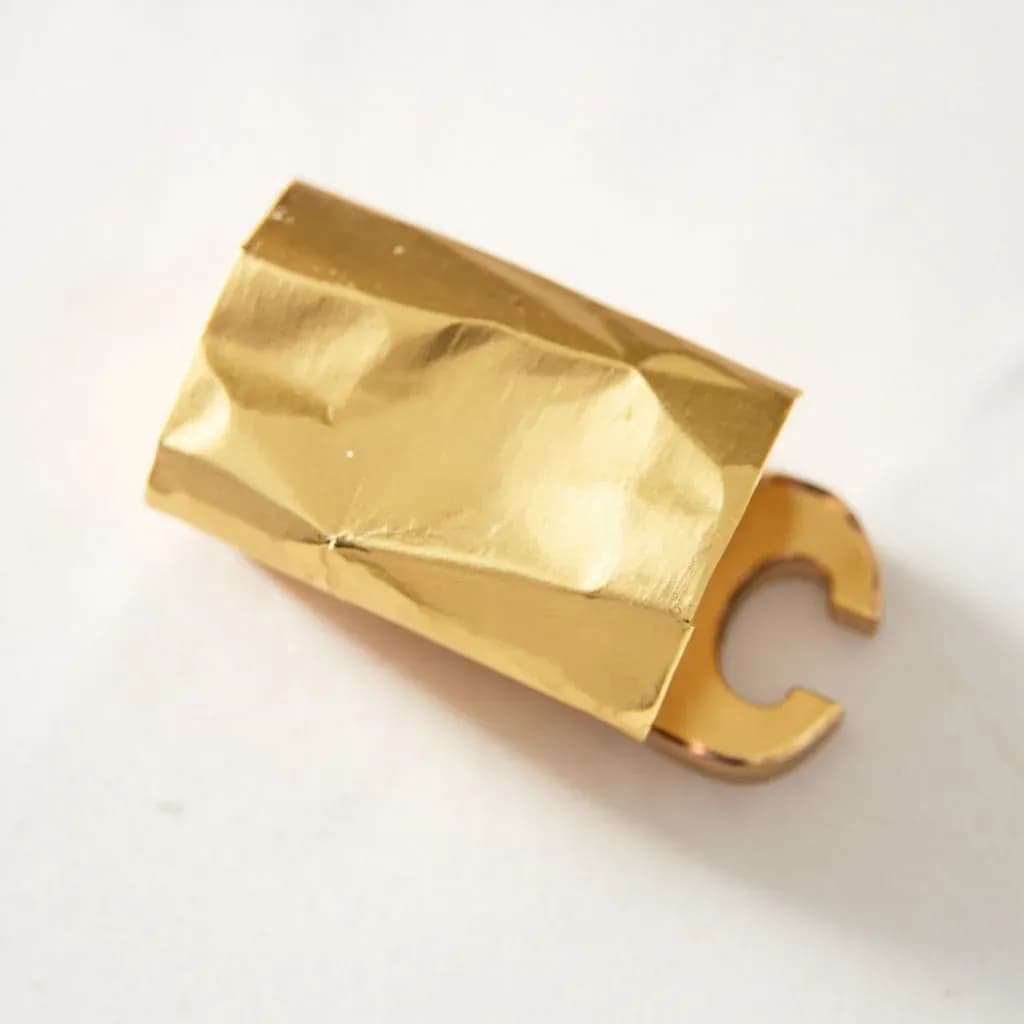
A foil cutter is a compact tool with small rotating wheels that score and remove the foil capsule covering a wine bottle's cork. Squeezing it around the neck and twisting leaves a clean cut below the lip, ready for the corkscrew. It is a quick, tidy alternative to hacking the foil off with a knife.
A foil cutter is a small, pocket-sized tool — usually 5 to 8 cm long — designed to score and remove the metal foil or polylaminate (polyfoil) capsule that seals the neck of a wine bottle. In practice, it works by drawing a ring of small toothed wheels, or a single pivoting blade, around the capsule just below the bottle's lip ring, slicing cleanly through the metal so the top can be lifted off before the cork is drawn. The dedicated tool exists because a clean, low cut matters: a torn, ragged capsule looks sloppy at the table, sheds flakes into the wine, and forfeits the small foil collar that sommeliers traditionally leave in place for presentation.
Foil capsules became standard on wine bottles in the 19th century as a seal over the cork to deter cork moth and taint, but the foil cutter itself is a 20th-century innovation tied to the rise of restaurant wine service. The four-wheel "circlet" design — credited to the Spanish brand Pulltex in the late 1970s — turned a fiddly knife trick into a one-handed, foolproof motion and is now the de facto standard in bars and home wine kits. Whether built into a sommelier knife or carried as a standalone pocket tool, the foil cutter's job is the same: produce a uniform cut so the cork comes out cleanly and the bottle looks the part.
For the cook or server, the tool earns its place by being quick, predictable, and gentle on older bottles. Unlike working the capsule off with a paring knife, a foil cutter gives a clean, even score, keeps shards out of the wine, and leaves a neat collar you can grip with a thumb to lift the cap off in one piece.
Alternatives
Types & varieties
A small ring with four toothed wheels; slipped over the neck, pressed down, and rotated. The most popular style and the one that gives the cleanest, most uniform cut.
Pivoting jaws with a cutting edge on one side and a gripper on the other; squeezing cuts the foil and clamps it for removal in one motion.
A short handled blade with a small hook or guard; the user rotates the bottle (or the tool) by hand. The oldest, most traditional style, still common in classic service kits.
A small serrated notch on a waiter's friend / sommelier knife that punches through the capsule and is rotated to score it.
A press-down design used in high-volume service that scores and removes the capsule in a single stroke.
A foil cutter integrated into the handle or lever of a corkscrew, as found on Pulltap's and Laguiole-style tools.
Where to cut, and why the low cut matters
On most traditional bottles — Port, Champagne, fine Burgundy, classically styled reds — the lower portion of the capsule is meant to remain on the bottle as a neat collar after the cap is lifted. To produce that look, place the cutter just below the raised lip ring (the glass ridge where the capsule meets the bottle mouth), not halfway up the foil. A low cut leaves a small flange of foil you can pinch with your thumb to lift off the cap in one piece; a high, mid-capsule cut tears raggedly and leaves nothing to grip.
- Cut below the lip ring, not on the body of the capsule.
- Leave a 2–3 mm flange of foil to pinch and lift.
- Rotate the tool, not the bottle, to keep sediment settled in older reds.
Working with polyfoil and wax seals
Modern capsules are often polylaminate — a foil-plastic laminate that's tougher than pure foil and tends to tear rather than slice cleanly. For thicker polyfoil, score twice (once high, once low) and peel the band off in one strip rather than trying to lift the cap. On wax-sealed bottles, the foil cutter alone won't do the job: warm the neck with a heated knife or even a hairdryer until the wax softens, peel off the bulk by hand, then run the foil cutter around any remaining foil collar for a tidy finish.
- Polyfoil: score twice, peel as a band.
- Wax seals: soften first with heat, then use the cutter as a finishing tool.
- For brittle, cracking capsules on aged bottles, cut slowly to avoid dropping shards into the wine.
Care and longevity
A foil cutter is mostly stainless steel and will outlast the drawer it lives in if treated simply. Wipe the wheels and pivot dry after each use to prevent wine residue from dulling the teeth or staining cheaper plated finishes. On lever-style and scissor cutters, a single drop of food-grade mineral oil at the pivot every few months keeps the action smooth. There's no sharpening to do — when the wheels stop biting cleanly, replace the tool; they're inexpensive enough that a fresh one beats a worn one every time.
- Wipe wheels and pivot dry after service.
- Oil pivots on lever/scissor models a few times a year.
- Replace when wheels stop biting cleanly rather than sharpening.
Common uses
Tips & pitfalls
- Cut below the lip ring: aim for the glass ridge where the capsule meets the bottle mouth, not the body of the foil, so a small flange remains to grip and lift.
- Press firmly so the wheels actually bite — a light touch only scratches the surface and leaves a ragged tear; the wheels need firm contact to cut through cleanly.
- Rotate the tool, not the bottle, to avoid swirling sediment in older reds and to keep more control over the score.
- On thicker polyfoil capsules, score twice (a high cut and a low cut) so you can peel the band off in one strip instead of fighting a single deep cut.
- Cut slowly on aged, brittle capsules — older foils crack rather than slice, and slow rotation keeps shards out of the wine and lets you lift the cap by hand once scored.
- Don't use a foil cutter on screw-cap bottles; Stelvin and similar closures have no foil, and the wheels will skate on the cap and risk slipping.
- Keep the cut edge away from your supporting hand — the freshly cut foil lip is sharper than it looks.
- Wipe the wheels dry after use to clear wine residue and prevent staining on cheaper plated finishes.
Good to know
- Category
- Barware / wine-service prep tool
- Primary function
- Slices the foil or polyfoil capsule from a wine bottle neck before uncorking
- Other names
- Capsule cutter, foil slitter, polyfoil cutter
- Typical size
- Pocket-sized, roughly 5–8 cm (2–3 in) long
- Common materials
- Stainless steel blades with stainless steel, plastic, or wooden bodies; some all-metal
- Mechanism
- Toothed wheels or pivoting blades that score the capsule so the cap can be lifted off
- Origin note
- Pulltex (Spain) is widely credited with introducing the dedicated four-wheel foil cutter in the late 1970s
- Pairing tool
- Frequently integrated into sommelier knives / waiter's friends
- Maintenance
- Wipe dry after use; oil pivot points on lever-style models occasionally
- Not suitable for
- Screw-cap (Stelvin) closures, which have no foil capsule to cut
Also called
wine foil cutter · capsule cutter
Related

Peeler
Swift blade for stripping skin off fruit and vegetables

Grater
Sharp-toothed surface for shredding cheese and vegetables

Microplane
Ultra-fine rasp for citrus zest, garlic, and hard cheese

Mixing Bowl
All-purpose bowl for combining, whisking, and tossing

Whisk
Looped wires that beat air into eggs, cream, and sauces

Spatula
Flat blade for flipping, lifting, and scraping

Slotted Spoon
Pierced spoon that lifts solids and drains the liquid behind

Wooden Spoon
Gentle, heat-friendly spoon for stirring anything