Prep Tools
Food Flask
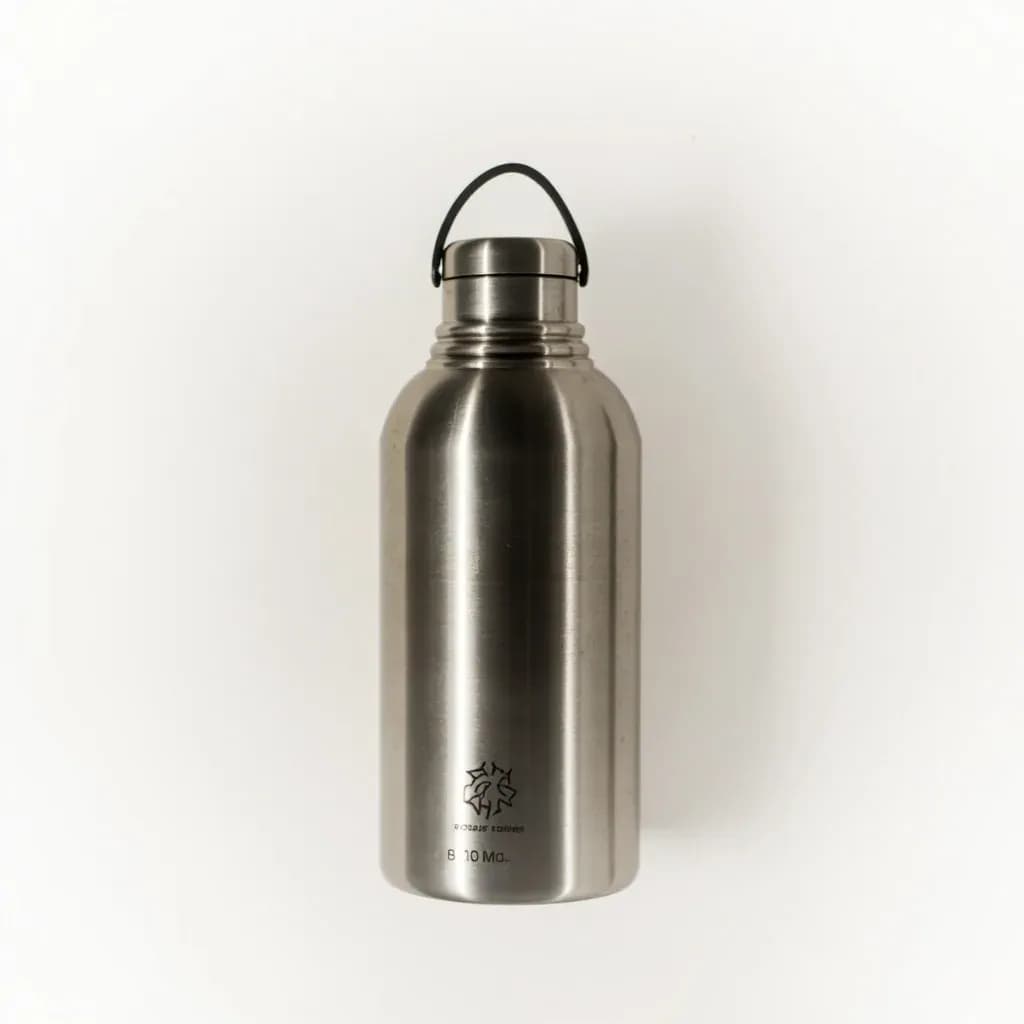
An insulated wide-mouth flask that keeps soups, stews, and porridge hot or cold for hours on the go.
A food flask is a vacuum-insulated wide-mouth container designed to hold hot or cold meals rather than just drinks. It keeps soups, stews, curries, and porridge steaming for lunch away from a kitchen, and can also carry chilled foods. Pre-warming or pre-chilling the flask with water before filling extends how long it holds temperature.
A food flask is a vacuum-insulated, wide-mouthed container built to keep cooked food at serving temperature for several hours after it leaves the stove. The construction borrows the same double-wall, evacuated design Sir James Dewar invented in 1892 and that the Thermos company popularised for liquids in the early twentieth century — but with a noticeably wider opening (usually 6–9 cm) so that chunky stews, noodles, dumplings, and porridge can be spooned in and out rather than poured through a narrow neck.
The sealed vacuum between two walls of 18/8 stainless steel eliminates conductive and convective heat transfer, while a polished inner surface limits radiant loss. In practice, a properly preheated flask loaded with food at 75 °C or above will hold above 60 °C — the safe hot-holding line for most cooked foods — for 5–8 hours, and above 50 °C for 8–12 hours; chilled foods stay below 8 °C for up to 24 hours. Real-world results hinge on three variables the marketing rarely mentions: how full the flask is, how hot the food was when it went in, and whether the flask was preheated.
It is not cookware, not microwave-safe, and not a substitute for refrigeration on a multi-day trip — but for a commute, a school lunch, a hike, or a long day away from a kitchen, it is one of the most practical pieces of kit a home cook can own. On many models the lid doubles as a small serving bowl, and a folding spoon may tuck into the cap, so a hot meal needs nothing more than the flask and a hand to eat it.
Alternatives
Types & varieties
All-metal 18/8 body with screw cap; the most common type — durable, odour-neutral, and the safest choice for strong-flavoured foods
Stainless inner liner inside a polypropylene or ABS outer shell; lighter and cheaper but less rugged than the all-steel version
Borosilicate glass liner inside a metal casing; the most taste-neutral option but heavier and breakable if dropped; rare today
Lid holds an integrated folding or telescopic stainless spoon; convenient for one-handed eating on a commute
Opening of 8–10 cm for chunky stews, pasta, or noodles; trades a little thermal retention for easier filling and eating
Flexible silicone body with a snap lid; not vacuum-insulated — gives up thermal performance for packability
Smaller (300–400 ml), often with handles, character designs, or straw lids; same vacuum technology in a junior size
Battery- or 12 V-powered warmer; not a true vacuum flask but serves a similar role — useful off-grid but heavier and with limited run time
Often grouped with food flasks but uses only an air gap, not a vacuum; keeps food warm for 1–2 hours and is lighter and cheaper
Packing for maximum hold time
Three small habits make the difference between a 60 °C lunch and a lukewarm one. None of them have anything to do with the brand you bought.
- Preheat the empty flask for 5–10 minutes with boiling water (or pre-chill with iced water for cold foods) and discard before filling. This alone adds 1–2 hours of hold time at target temperature.
- Fill to at least 90% of capacity. Air at the top is the fastest path for heat to escape, so pack in the largest flask your meal will fit, or top up with extra hot stock, rice, or bread.
- Pack food while it is still above 75 °C. Food that has already cooled to 50 °C will be cool by mid-morning; piping-hot food lands in the 60 °C+ zone hours later.
- Screw the lid on firmly but do not over-torque — stripped threads and bent lid tabs are one of the most common failure points on otherwise good flasks.
- Carry the flask upright in a bag so the seal stays dry and the lid cannot unscrew against a laptop or a book.
Care and long life
The vacuum does most of the work; the silicone gasket does the rest. Look after both and a good flask will outlast its warranty by years.
- Hand-wash lids and remove the silicone gasket weekly; trapped food residue is the leading cause of leaks and lingering odours.
- Soak the body overnight with bicarbonate of soda dissolved in warm water to lift curry, tomato, garlic, or coffee smells from the steel.
- Top-rack dishwasher use is usually fine for the steel body, but the high heat and detergent shorten gasket life — hand-washing is the safer default.
- Replace the gasket as soon as the flask starts to leak, fail to hold temperature, or smell persistently; a $3 gasket restores a $70 flask.
- Never put the flask in a microwave, on a hob, or in an oven — the metal and the vacuum seal cannot take direct heat.
Common uses
Tips & pitfalls
- Preheat the flask for 5–10 minutes with boiling water (or pre-chill with iced water) before filling — skipping this is the single most common reason a 'useless' flask goes cold by lunchtime.
- Fill the flask as full as you can; air space at the top accelerates heat loss more than any other factor.
- Pack food while it is still above 75 °C so it lands in the safe 60 °C+ holding zone hours later — lukewarm in, lukewarm out.
- Remove and hand-wash the silicone gasket regularly; trapped residue causes both leaks and stubborn smells.
- Avoid packing foods containing raw eggs, raw seafood, or cream-based sauces and leaving them for the full 6+ hours — the cooling curve still passes through the food-safety danger zone.
- Do not pack carbonated drinks or actively fermenting foods (live miso, kefir, sourdough starter); pressure build-up can force the lid open or blow the gasket.
- Transport the flask upright in a bag so the seal stays dry and the lid cannot shift against hard objects.
- Bicarbonate of soda dissolved in warm water, left overnight, removes curry, tomato, and coffee smells from the steel.
Good to know
- Also known as
- Vacuum food jar, thermos food container, insulated food flask, hot food flask
- Core technology
- Double-wall construction with a vacuum between the walls, blocking conductive and convective heat transfer; a polished inner surface limits radiant loss
- Typical capacities
- 350 ml, 470 ml, 500 ml, 750 ml, 1000 ml; 200–300 ml sizes are common for kids and snacks
- Common materials
- 18/8 (304) stainless steel inner and outer walls; some models use BPA-free plastic outer shells or PP lids; older or premium lines may use glass liners
- Heat retention
- Most keep food above 60 °C for 5–8 hours and above 50 °C for 8–12 hours; cold foods stay below 8 °C for up to 24 hours (manufacturer claims tested at 20 °C ambient)
- Microwave safe
- No — the metal body and vacuum seal make microwave use unsafe
- Dishwasher safe
- Body usually top-rack safe; lids and seals typically hand-wash only to preserve gaskets and the vacuum seal
- Food safety limit
- Pack perishable food within an hour of cooking and eat within 4–6 hours in the flask; the 4-hour/8 °C rule applies once served
Also called
thermal food jar · insulated food container · soup flask
Related

Peeler
Swift blade for stripping skin off fruit and vegetables

Grater
Sharp-toothed surface for shredding cheese and vegetables

Microplane
Ultra-fine rasp for citrus zest, garlic, and hard cheese

Mixing Bowl
All-purpose bowl for combining, whisking, and tossing

Whisk
Looped wires that beat air into eggs, cream, and sauces

Spatula
Flat blade for flipping, lifting, and scraping

Slotted Spoon
Pierced spoon that lifts solids and drains the liquid behind

Wooden Spoon
Gentle, heat-friendly spoon for stirring anything