Prep Tools
Gaiwan
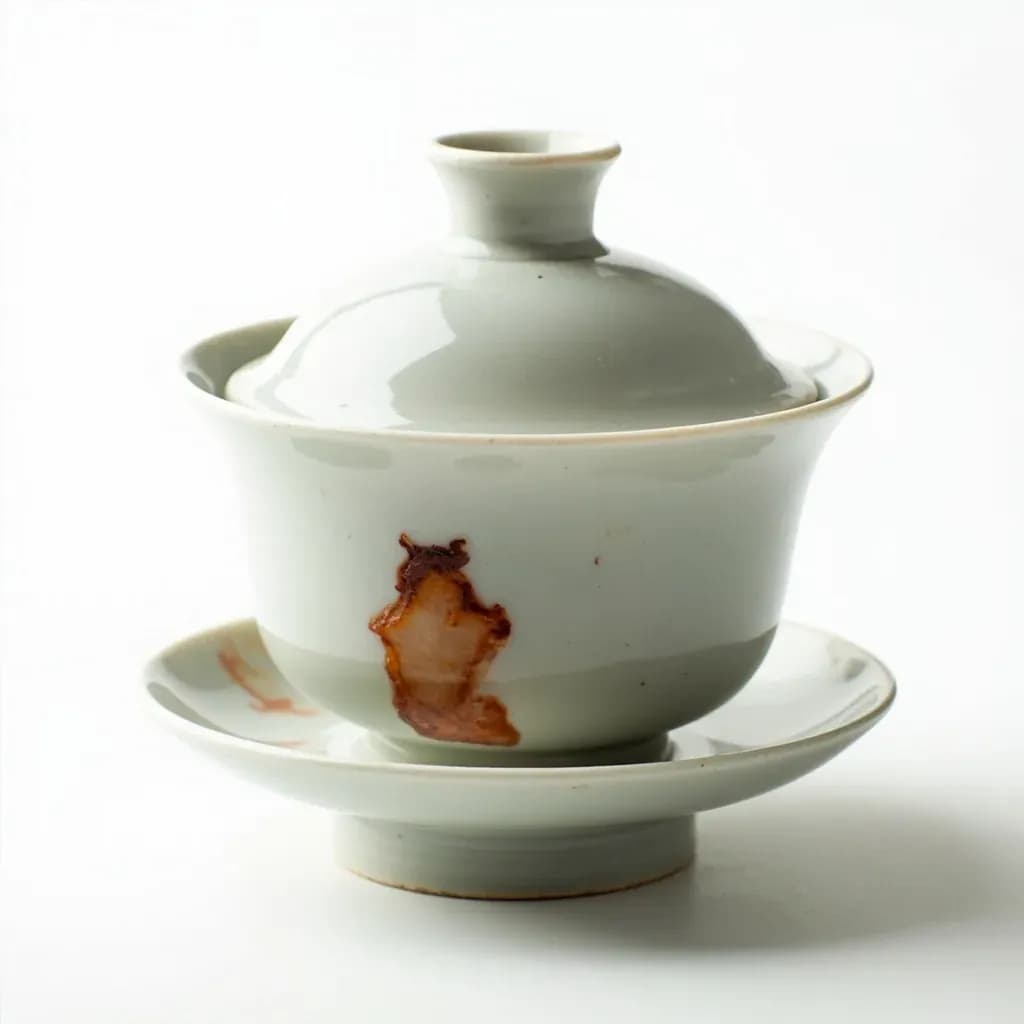
A lidded Chinese brewing bowl used to steep and pour loose-leaf tea.
A gaiwan is a small Chinese vessel of bowl, lid, and saucer used to brew loose-leaf tea. Leaves steep directly in the bowl, and the lid is tilted to hold them back while pouring the infusion into cups, making it ideal for short, repeated steeps of fine teas. It is the classic tool of gongfu-style tea brewing.
A gaiwan is a small lidded Chinese brewing bowl, almost always sold as a set of three nested parts: a deep cup-shaped bowl, a domed lid with a small knob or rim, and a shallow saucer that the bowl sits on. The lidded-cup form predates the word itself, but the term 蓋碗 (gàiwǎn) was first recorded in the Ming Dynasty, and the familiar three-piece set became standard in the Qing Dynasty. In tea culture it is also called 三才杯 (sāncáibēi), or "three-heavens cup," because the lid stands for heaven, the bowl for humanity, and the saucer for earth.
What makes a gaiwan a gaiwan — and not a teacup or a small teapot — is the way the lid does double duty as a strainer. After the leaves have steeped, the drinker tilts the lid a few millimeters off the rim of the bowl; the narrow gap between lid and lip holds the leaves back while the liquor runs freely into a pitcher or cup. The same tilt also controls the speed of the pour: a small gap gives a slow, clean stream, a wider one drains faster but lets fragments escape. The thumb-and-middle-finger grip on the rim, with the index finger lightly bracing the lid, keeps the hand away from the hot body and is the signature gesture of gongfu cha, the concentrated Chinese style of repeated short infusions.
For most home cooks, a gaiwan is one of the simplest and most honest brewing vessels available. White porcelain adds nothing to the flavor, so the tea tastes exactly as it should, and the pale walls show the true color of the liquor — which is why tasting-grade sets are always white. It also does a useful second job as a small pouring or serving vessel at the table, useful for a splash of sauce, a soy-and-vinegar dip, or a drizzle of broth over noodles or a finished dish.
Alternatives
Types & varieties
Bowl, lid, and saucer — the classic form used in gongfu service. The saucer protects the hand from heat and catches drips.
Bowl and lid only, no saucer; easier to hold, often chosen for travel or by drinkers who grip the rim with two fingers.
Thin-walled white porcelain from Jiangxi; the benchmark for tasting because it adds no flavor and shows the true color of the liquor.
Warm white, ivory-toned porcelain from Fujian, slightly thicker and more forgiving of clumsy grips than Jingdezhen ware.
Porous Yixing-style clay; absorbs tea oils over time and is usually dedicated to one tea type (oolong, pu-erh, or yancha). Less common than zisha teapots.
Opaque, often colored or crackle-glazed; more decorative than tasting-grade but durable and good for everyday brewing.
Borosilicate or soda-lime glass; used to watch leaves unfurl, mostly for green, white, or blooming teas.
Pale jade-green glaze over gray stoneware in the Longquan tradition; prized as much for looks as for brewing.
Carved nephrite or similar hardstone; expensive and decorative, with thick walls that change how the tea steeps — not a working brewer's tool.
Anatomy and the Lid-as-Strainer Mechanic
Every gaiwan is built around the same trick: the lid is a strainer, a spout, and a flow-control valve in one piece. To pour, the drinker holds the lid in place with the index finger and slides it a few millimeters off the rim of the bowl. Liquor flows out through the gap; leaves stay trapped behind. A small gap produces a slow, clean stream good for filling a small pitcher; a wider gap drains fast but lets leaf fragments through.
- The lid knob is sized to be pressed by the index finger; the rest of the lid floats on the tea and pivots with a light nudge.
- A lightly tilted lid can also be used to push floating stems or chaff aside before pouring, though its main job is straining and flow control.
- If the lid slides too easily, the glaze may be worn; a slightly roughened lid is normal and actually helps it stay in place.
Choosing the Right Material
Material changes what a gaiwan does to the tea. Pick by purpose, not by looks.
- White porcelain (Jingdezhen or Dehua): the default for tasting and everyday gongfu. Neutral flavor, pale walls show liquor color, easy to clean with hot water only.
- Unglazed zisha or other porous clay: absorbs oils and gradually seasons to one tea family — usually roasted oolong, yancha, or pu-erh. Never use soap; dedicate the vessel once seasoned.
- Glazed stoneware and celadon: durable and decorative, slightly thicker walls that retain heat longer. Good for daily brewing when flavor neutrality matters less.
- Glass: borosilicate for thermal shock resistance. Choose it to watch leaves unfurl in green, white, or blooming teas; expect faster heat loss and a shorter window for pouring.
Sizing and Dosing
A gaiwan's stated capacity is measured to the brim, but in practice it is filled to roughly 80% so the leaves have room to swell. A '100 ml' gaiwan therefore steeps about 80 ml of water plus a generous mound of leaf — usually 4 to 8 grams depending on the tea.
- 60–100 ml: the everyday gongfu range; pairs naturally with a 50–150 ml fairness pitcher and 30–50 ml tasting cups.
- 150 ml and up: a more relaxed single-cup pace, or a small two-person session with longer infusions.
- Match the pitcher to the gaiwan: a fairness pitcher slightly larger than the gaiwan catches the full pour without overflow.
Common uses
Tips & pitfalls
- Always pre-warm the empty gaiwan with hot water for 10–15 seconds, then decant, before adding leaves; a cold vessel drops the brewing temperature noticeably.
- Hold it with the classic three-finger grip: thumb and middle finger pinching the rim, index finger pressing lightly on the lid knob. Fingers stay off the hot body and the lid cannot slide loose.
- Tilt the lid a few millimeters to open a pouring gap; the steeper the tilt, the faster the pour and the more leaf fragments can escape. A 2–3 mm gap is plenty for most teas.
- For serious tasting or judging a new tea, use white porcelain; reserve colored, painted, or unglazed vessels for casual brewing so the clay or glaze does not color the liquor.
- Short, repeated infusions beat one long steep — drain the gaiwan fully each time so the leaves do not keep extracting between rounds.
- Never use dish soap on an unglazed clay gaiwan; rinse with hot water and, if needed, scrub gently with a pinch of coarse salt and a soft cloth.
- Pour boiling water into a room-temperature gaiwan, not a chilled one, to avoid thermal shock and cracking the porcelain.
- Skip brightly painted novelty gaiwans for daily brewing unless they are certified food-safe; low-fired exterior paints and colored glazes can leach.
Good to know
- Origin
- China; lidded tea cups predate the term, but 蓋碗 (gàiwǎn) was first recorded during the Ming Dynasty (1368–1644) and the three-piece set became standard in the Qing Dynasty (1644–1912).
- Chinese name
- 蓋碗 (gàiwǎn), literally 'lidded bowl'; also called 三才杯 (sāncáibēi), the 'three-heavens cup,' for lid-sky, bowl-human, saucer-earth.
- Components
- Three parts: a bowl (碗), a domed lid (蓋), and a saucer (托 or 茶托); two-piece bowl-and-lid versions are also common.
- Typical capacity
- Roughly 50–300 ml; the most common sizes for gongfu use are about 60, 100, and 150 ml. A '100 ml' gaiwan comfortably holds about 80 ml of water plus leaves.
- Standard material
- White porcelain is the default — it adds no flavor and shows the true color of the liquor. Glazed stoneware, unglazed clay, glass, celadon, and carved hardstone are also made.
- Production centers
- Jingdezhen (Jiangxi) and Dehua (Fujian) in China are the two best-known porcelain-making regions for gaiwans.
- Pour control
- The lid is tilted or held slightly open during pouring; the gap between lid and rim acts as a built-in strainer and lets the brewer regulate flow speed.
- Cleaning and safety
- Rinse with hot water only. Unglazed clay gaiwans should never be washed with soap, which the porous body can absorb. Brightly painted or ultra-cheap gaiwans may use lead-bearing glazes; food-safe porcelain from a reputable maker is the safe choice.
Also called
Gaiwan (Lidded Brewing Bowl) · gaiwan · covered tea bowl
Related

Peeler
Swift blade for stripping skin off fruit and vegetables

Grater
Sharp-toothed surface for shredding cheese and vegetables

Microplane
Ultra-fine rasp for citrus zest, garlic, and hard cheese

Mixing Bowl
All-purpose bowl for combining, whisking, and tossing

Whisk
Looped wires that beat air into eggs, cream, and sauces

Spatula
Flat blade for flipping, lifting, and scraping

Slotted Spoon
Pierced spoon that lifts solids and drains the liquid behind

Wooden Spoon
Gentle, heat-friendly spoon for stirring anything