Prep Tools
Gambrel
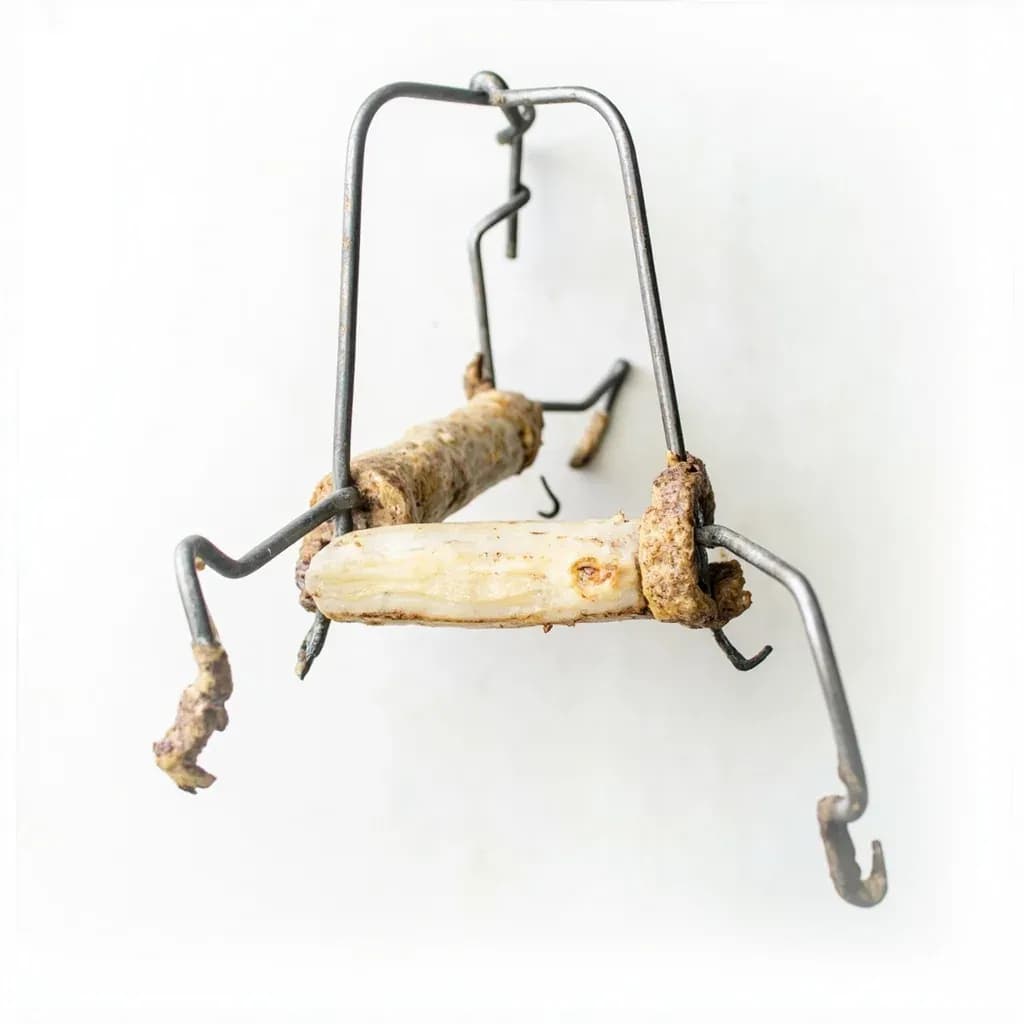
A spreader bar used to hang and splay a carcass for butchering and dressing.
A gambrel is a curved or V-shaped metal bar with hooks at each end used to hang an animal carcass by its hind legs during field dressing and butchering. Spreading the legs opens the body for easier skinning, gutting and breaking down. It is standard equipment for home butchery, hunting and whole-animal processing.
A gambrel is a short bar fitted with hooks at each end that drops through the Achilles tendons of a hanging carcass to splay the hind legs open. The spread it creates is not cosmetic: it holds the belly cavity open so the carcass can drain, cool, and be worked on by a standing butcher. The same bar — or a single S-hook version — lets a deer, hog, or side of beef hang at a workable height from a hoist, tripod, or barn beam, freeing both hands for the knife and saw.
In practice the gambrel is the middle link in a three-part system: a hoist or pulley above, the animal's hind legs below, and the gambrel between them. Get the link right and a 200-pound hog goes up smoothly and stays accessible for skinning, evisceration, and breaking. Get it wrong — wrong size, wrong hooks, wrong material — and the carcass folds back on itself, drainage stalls, the meat warms unevenly, and the butcher ends up working from a stepladder.
For most home cooks the gambrel is something they will encounter on a hunt or a farm visit rather than in the kitchen, but the geometry behind it is the same geometry that runs a small commercial shop: a defined hook height, a known load, a cleanable surface. Understanding how it works is what separates a clean, well-aged carcass from one that is bruised, contaminated, or dangerously unmanageable on the hoist.
Alternatives
Types & varieties
The classic shape: a straight bar with a downward hook at each end that engages the Achilles tendons of both hind legs, keeping the carcass splayed open.
An S-shaped or triangular hook that drops through a slit cut between tendon and bone of one leg, used when the carcass is to hang closed or vertical for aging.
Traditional hardwood bar with forged hooks; favored for home deer processing and the image most people picture.
Welded bar with fixed hooks; easier to sanitize, higher load rating, common in small commercial shops.
Hinged bar that collapses for transport; popular for hunting camps and field-dressed game.
Hook positions slide on a notched or telescoping bar to fit different carcass sizes (deer vs. hog vs. calf).
Pairs a bar with an integrated pulley for one-person raising on a gambrel post, tripod, or barn beam.
Anatomy of a hang
A gambrel is a connector, not a hoist. The chain it sits in runs hooks → tendons → pelvis → spine → carcass mass → the bar's center ring → hoist hook → pulley → beam. Each link has to be rated for the weight above it, and the weak link in most home setups is the tendon, not the metal.
- Hook placement is everything. The hook should sit in the tendon groove just above the hock joint, not below it. A hook seated on the cannon bone or jammed into the joint will tear out under load.
- Spread width is set by the bar, not by the animal. Wider is better for dressing (open belly, fast cooling); narrower is fine for aging or transport. Plan to swap bars or adjust hook positions rather than improvise with rope.
- Hoist speed matters. A slow, steady lift lets the tendons seat; a jerky lift can rip them. Short pulls, pause, pull, pause is the working rhythm.
- Never stand beneath the carcass while tension is being taken up. If a hook slips, the bar falls, and 200 pounds of hog becomes a projectile.
Common uses
Tips & pitfalls
- Hook the bar through the Achilles tendon above the hock, never through the leg bone — bone hooks snap under load and tear the meat.
- Set the spread wide enough that the carcass does not fold back on itself; too narrow and the belly collapses, slowing drainage and cooling.
- Match the bar to the hoist: a light aluminum deer gambrel is not safe for a 250 lb hog, and a beef bar is overkill for a yearling deer.
- Sanitize stainless bars in a hot (≥180 °F / 82 °C) water bath or an approved sanitizer between carcasses; wood cannot be truly sterilized, so replace it if it cracks or smells sour.
- Lubricate hook pivots and threads with food-grade mineral oil to prevent seizing; avoid petroleum or penetrating oils near food contact surfaces.
- Hoist the carcass in smooth, short lifts and never stand beneath it while tension is being taken up.
- For venison, skin the animal before hanging to age — the fat on wild game goes rancid quickly and an intact hide traps heat against the body.
- If the bar is wood, check for hairline splits each season; a splitting bar under load can drop a heavy carcass and ruin a day's work.
Good to know
- Tool type
- Butchering / meat-handling tool
- Also called
- Spreader bar, gambrel stick, gambrel bar, hock bar
- Traditional material
- Hardwood such as hickory or oak; modern versions are steel, stainless steel, or aluminum
- Standard spread width
- Roughly 12–24 in (30–60 cm) between hooks, sized to the carcass
- Capacity (typical)
- Deer gambrels often rated 250–500 lb; hog and cattle bars 600 lb and up when paired with a matching hoist
- Sanitation
- Stainless or food-grade coated steel is easiest to sanitize; wood should be scrubbed, fully dried, and replaced if it cracks or smells sour
- Etymology
- From Old North French 'gambail' (stilt/leg bend); 'gambrel' also names the hock joint of a horse or pig, which is why a horse's hind-leg outline is called gambrel-shaped
- Skill level
- Beginner-friendly with instruction; the safety risk is the heavy carcass, not the bar itself
Also called
meat gambrel · carcass spreader
Related

Peeler
Swift blade for stripping skin off fruit and vegetables

Grater
Sharp-toothed surface for shredding cheese and vegetables

Microplane
Ultra-fine rasp for citrus zest, garlic, and hard cheese

Mixing Bowl
All-purpose bowl for combining, whisking, and tossing

Whisk
Looped wires that beat air into eggs, cream, and sauces

Spatula
Flat blade for flipping, lifting, and scraping

Slotted Spoon
Pierced spoon that lifts solids and drains the liquid behind

Wooden Spoon
Gentle, heat-friendly spoon for stirring anything