Prep Tools
Girolle (Tête de Moine Shaver)
A spindle-and-blade tool that shaves Tête de Moine cheese into delicate rosette frills.
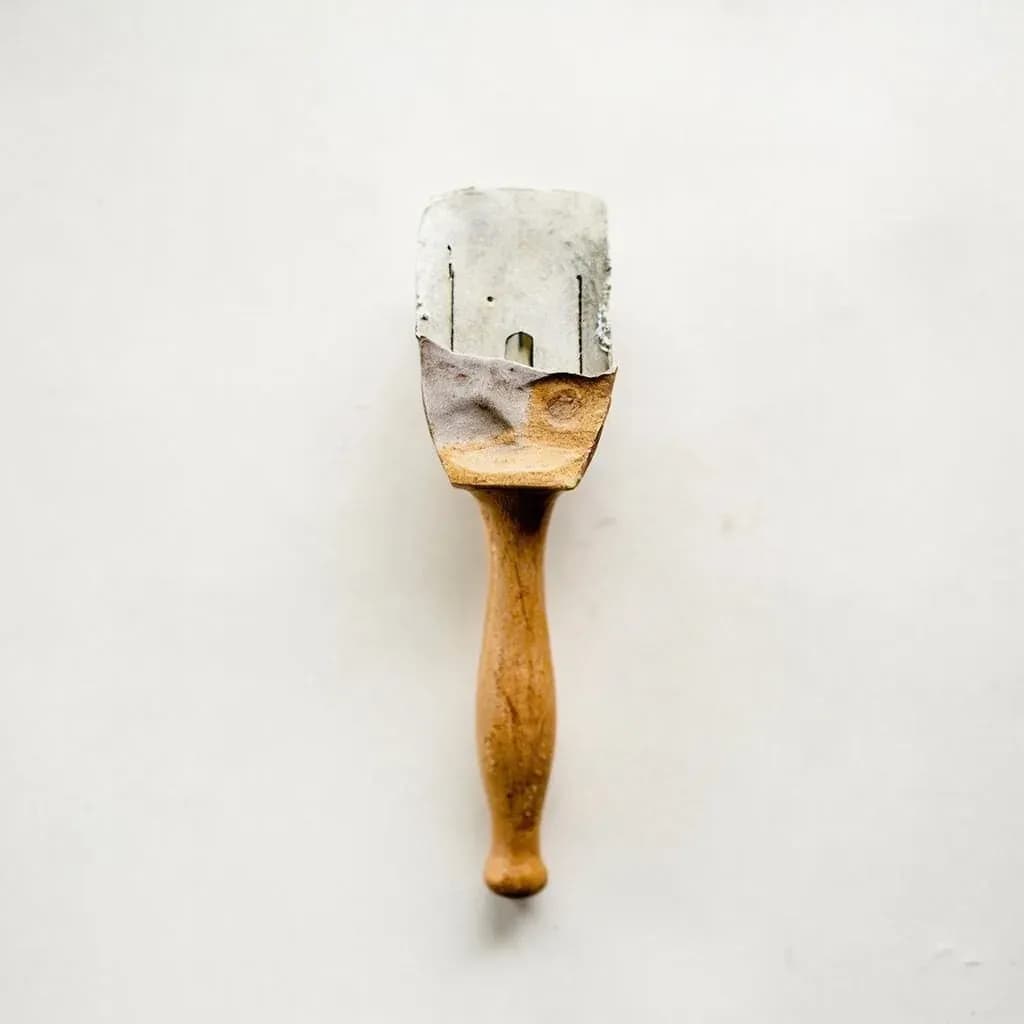
A girolle is a Swiss tool with a central spindle and a rotating blade that scrapes the top of a Tête de Moine cheese wheel into thin, ruffled rosettes. The cheese is fixed on the spindle and the handle is turned so the blade shaves a fragile floral curl. The shaving aerates the cheese, releasing aroma and a melt-in-the-mouth texture rather than a flat slice.
The Girolle is a single-purpose Swiss device engineered to do one thing with precision: shave a half-wheel of Tête de Moine AOP into the curled, flower-like rosettes that have defined the cheese's table service for decades. At its heart is a vertical spindle that holds a demi-tête pressed against a sprung, pivoted blade. As the spindle turns — by a small crank on the original or by hand on most copies — the blade peels a continuous, paper-thin curl roughly 1–2 mm thick that folds in on itself into the characteristic rosette the Swiss call a fleur. The original, patented in 1982 by Jura craftsman Nicolas Crevoisier in collaboration with the Tête de Moine inter-professional body, is built from turned beech or larch with a stainless steel spindle and blade; cheaper imitations use molded plastic and produce thicker, less even curls.
What looks like presentation theatre is actually working technique. Tête de Moine is unusually aromatic for a hard, cooked-curd cheese, but most of those volatiles are locked inside a dense paste. The rosette is the result of a controlled fracture: the blade shatters the curd structure along a wide, freshly exposed surface, and within seconds of shaving the characteristic aromas — fruity, faintly nutty, with a cellar-cool minerality — are released into the room. A knife or vegetable peeler gives you a ribbon, but it does not open the paste in the same way. This is why the Girolle was designed to the cheese and not the other way around: the half-wheel is approximately 10–12 cm in diameter and 7–10 cm high, and the geometry of the spindle, the blade angle, and the rotation speed are all tuned to that specific size and texture.
The device is not, despite occasional marketing, a general-purpose cheese shaver. The spindle must seat into the centre of a Tête de Moine demi-tête to rotate true, and the paste must be at 16–18 °C (60–65 °F) before shaving — cold cheese shatters into crumbs, over-warm cheese smears and tears. Crevoisier holds the trademark on the name "Girolle" (sometimes styled "La Girolle"), which is why rival manufacturers label their versions generically as "cheese rosette shavers" or "Tête de Moine shavers."
Alternatives
Types & varieties
The patented 1982 design with a turned wooden base (beech or larch), a central axle, and a spring-loaded blade; the benchmark version sold officially with Tête de Moine.
Dutch-made alternative with a similar spindle-and-blade layout, often in plastic or composite; the most widely available version outside Switzerland.
Co-branded version sold with cheese in Switzerland, typically in a wooden case, endorsed by the Tête de Moine inter-professional body.
Lower-priced imitations; functional but the blade geometry usually produces thicker, less delicate rosettes and can crack the half-wheel.
Heavier bases and sturdier spindles built for repeated service; some offer an adjustable blade height to fine-tune curl thickness.
The Monastery Story
The rosette predates the tool by several centuries. Tête de Moine — literally 'monk's head' — has been made at Bellelay Abbey in the Bernese Jura since at least the late 12th century. The monks are credited with the original shaving technique: holding a half-wheel against the table edge and drawing a knife across the flat top to peel a thin, curling sheet. The gesture was not decorative. It was a way of opening the dense, oily paste so the cheese would give up its aroma at the table — useful in a cold monastery refectory where a hard, almost rind-encased wheel would otherwise sit mute on the board. Crevoisier's 1982 patent is the mechanized, repeatable version of that monastic move: a vertical spindle replaces the palm, a sprung blade replaces the knife, and the rotation replaces the steady pull of the hand. Tête de Moine received Swiss AOP status in 2001, and the Girolle, by then a fixture of Swiss cheese service, went with it.
Why the Rosette Matters
A rosette is not a garnish. It is a controlled fracture of the paste, and it changes how the cheese behaves on the plate.
- A shaved surface exposes far more paste to air than a cut face, so volatile aromatics (esters, sulfur compounds, and the fruity notes characteristic of Tête de Moine) are released within seconds of shaving.
- Each full rotation of the spindle produces a single, complete rosette of consistent weight, which gives portion control that a hand-shaved wheel cannot match.
- The curl traps a pocket of air at its centre, so the cheese arrives at the table neither flat nor stacked — it sits upright, presenting its aroma upward.
- A rosette softens on the tongue almost immediately because of its thinness, while a cube or slice of the same cheese eaten cool can feel dense; the form is part of how the cheese is meant to be eaten.
Construction and Care
A traditional Girolle is a small piece of joinery. The base is a turned wooden disc (beech or larch) with a central socket for the spindle. The spindle is stainless steel with a sharpened point that seats into the centre of the demi-tête. The blade sits on a pivoting arm held against the cheese by a flat spring; the spring tension is what determines whether the curl is paper-thin or heavy, and it is set at the factory. Three details matter in everyday use:
- Wooden bases must never be soaked or run through a dishwasher. A quick wipe with a dry or barely damp cloth is enough; the cheese fats that season the wood are part of the tool's character.
- The blade is the working edge and the part that dulls with use. On a well-used original it can usually be unscrewed and replaced; on economy models it is often fixed, which is one reason the curls suffer.
- The stainless spindle and blade can be hand-washed in warm soapy water and dried immediately. Avoid the dishwasher: detergent and heat will pit the polish and dull the edge.
Common uses
Tips & pitfalls
- Always temper the demi-tête to 16–18 °C before shaving — this is the single biggest variable between a clean rosette and a crumbled mess.
- Mount the cheese cut-side down; the rounded top presents a more uniform surface to the blade than the flat cut face.
- Press the blade gently and let the rotation do the work. Forcing the blade crushes the curd and produces crumbs, not curls.
- Keep blade height consistent: a few millimetres too deep shaves into the rind; too shallow and the curl collapses before it forms.
- Stop shaving at the rind. It is too hard for the blade and will both dull the edge and contaminate the next rosette.
- Wipe the blade with a dry cloth between rosettes — sticky drag from residual paste is the most common cause of torn curls.
- If a rosette tears, the cause is usually cold cheese, over-ripe cheese, or a dull blade. Sharpen or replace the blade rather than pressing harder.
- Never immerse the wooden base. A quick wipe with a barely damp cloth preserves the wood and prevents the base from swelling and seizing the spindle.
Good to know
- Inventor
- Nicolas Crevoisier, Swiss craftsman from the Bernese Jura
- Year invented
- 1982
- Country of origin
- Switzerland (Bellelay / Jura Bernois region)
- Designed for
- Tête de Moine AOP cheese, exclusively
- Cheese format
- Half-wheel (demi-tête), approx. 10–12 cm diameter × 7–10 cm high
- Required cheese temperature
- 16–18 °C (60–65 °F) — room temperature, not chilled
- Output
- Thin curled shavings, the rosette or 'fleur,' roughly 1–2 mm thick
- Cleaning
- Hand-wash the blade; wipe the wood with a dry or barely damp cloth — never soak
Also called
Tête de Moine Shaver · Cheese Curler · Rosette Shaver
Related

Peeler
Swift blade for stripping skin off fruit and vegetables

Grater
Sharp-toothed surface for shredding cheese and vegetables

Microplane
Ultra-fine rasp for citrus zest, garlic, and hard cheese

Mixing Bowl
All-purpose bowl for combining, whisking, and tossing

Whisk
Looped wires that beat air into eggs, cream, and sauces

Spatula
Flat blade for flipping, lifting, and scraping

Slotted Spoon
Pierced spoon that lifts solids and drains the liquid behind

Wooden Spoon
Gentle, heat-friendly spoon for stirring anything