Baking & Pastry
Glass Baking Dish
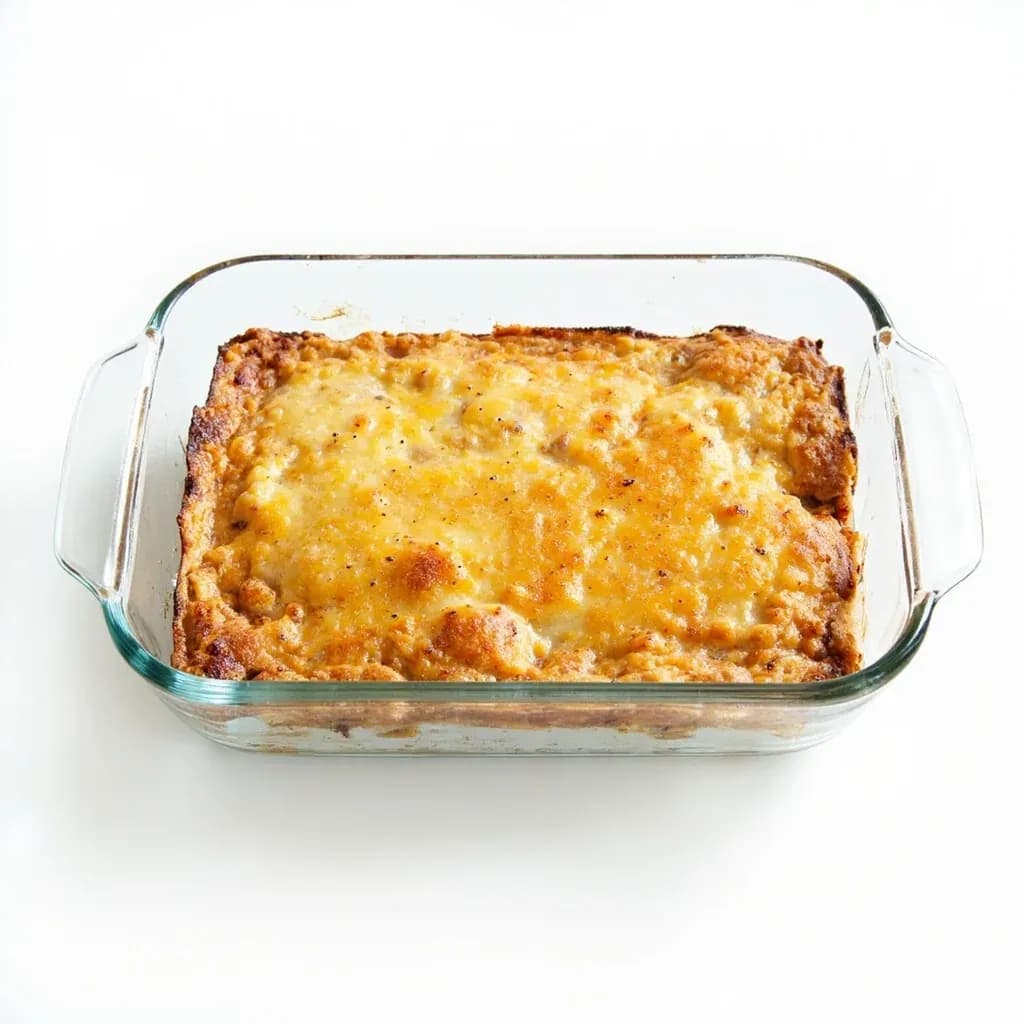
A tempered-glass rectangular dish for casseroles, gratins, and roasted dishes that need even, gentle heat.
A glass baking dish is an oven-safe vessel made from tempered borosilicate or soda-lime glass, used for casseroles, lasagna, gratins, and baked desserts. Its transparency lets you watch browning and bubbling from the side, and glass holds heat steadily for even cooking. Avoid sudden temperature swings, such as moving it from freezer to a hot oven, which can cause it to crack.
A glass baking dish is a transparent, oven-safe vessel made from tempered soda-lime or borosilicate glass, used for everything from lasagna to brownies. Its real virtue is not heat-proofness but heat retention: glass heats more slowly than metal but holds that heat longer once warm, which means a glass dish keeps food hot at the table and browns the bottom of a cake or the corners of a casserole more aggressively than a thin aluminum pan would. The clear walls are a working tool, too — you can watch a custard set, a crumble bubble, or a lemon bar finish without opening the oven door.
The single most important fact about a glass baking dish is that it is heat-retaining, not heat-proof. Tempered soda-lime glass, the U.S. standard since the late 1980s, is safe to roughly 425–450 °F but is genuinely fragile to rapid temperature change; borosilicate, still standard in Europe and in vintage American Pyrex, tolerates a wider thermal gradient. Treat the dish the way you would treat a ceramic mug: warm it gradually, never shock it, and never expose it to direct flame or a broiler element.
Glass is also non-reactive and non-porous, which makes it ideal for acidic tomato sauces, vinegar-based dishes, lemon bars, and leftovers that would pick up a metallic note from aluminum or a stain from plastic. It moves seamlessly between refrigerator, microwave, and dishwasher, and the standard 9x13-inch rectangular fits the overwhelming majority of American casserole, pasta, and bar-cookie recipes.
Alternatives
Types & varieties
Soda-lime tempered glass; chip- and break-resistant in everyday use but more vulnerable to thermal shock than borosilicate. Currently made by Instant Brands.
Borosilicate formula, more heat- and shock-tolerant; sold by Arc International in France.
U.S. soda-lime tempered glass bakeware, the main domestic competitor to Pyrex, made in Indiana.
Borosilicate, often with a faint blue or clear tint; prized by collectors for greater thermal stability than current production.
The all-purpose size for lasagna, casseroles, brownies, and sheet-style crisps.
For smaller gratins, brownies, and cornbread.
Shallow and wide; for vegetable gratins and individual portions.
For tall lasagna, deep-dish recipes, and large roasts braised in liquid.
For crisps, cobblers, and round cakes.
For meatloaf, banana bread, and pâtés.
Shallow fluted or smooth edge; the transparent bottom lets you gauge crust browning.
Soda-lime vs. borosilicate: what the difference means in your kitchen
The U.S. switched from borosilicate to soda-lime glass bakeware in the 1980s and '90s, mostly because soda-lime is cheaper to produce and more resistant to the chipping and breakage that happens during shipping and everyday use. The trade-off is thermal-shock tolerance: borosilicate handles a sudden swing of roughly 300 °F without complaint, while soda-lime is comfortable with only about 60–90 °F of change. In practical terms, that means you should never take a soda-lime dish out of a hot oven and set it on a cold granite counter or wet towel, and you should never pour cold stock into a hot dish. If you own an older American Pyrex with a faintly blue or aqua tint, or current European Pyrex, you have borosilicate and a wider margin. For most home cooks the difference is academic — the recipes we run rarely push either glass to its limit — but it is the reason every glass-dish care list begins with 'no thermal shock.'
- Soda-lime (U.S. Pyrex, Anchor Hocking): tougher against chipping, narrower thermal-shock margin.
- Borosilicate (European Pyrex, vintage U.S. Pyrex, some lab-grade bakeware): better against thermal shock, slightly more brittle to impact.
- If a recipe calls for an oven temperature above 425 °F, check the manufacturer's rating — many soda-lime dishes are rated only to 450 °F.
Glass versus metal: when to choose which
Metal pans heat faster and cool faster; glass heats slower and holds heat longer once warm. This is the underlying reason a glass dish gives you a darker, crispier bottom crust on a brownie or a more aggressively browned edge on a lasagna, and it is also why a cake baked in glass can over-bake at the edges if you follow a metal-pan recipe to the letter. As a rule of thumb, when adapting a recipe from metal to glass, drop the oven temperature by 25 °F and check for doneness five minutes earlier. Reach for glass when you want clear walls (to monitor a custard or a bubbling crumble), non-reactivity (for tomatoes, citrus, vinegar-based sauces), and easy leftovers storage; reach for metal when you want fast oven spring, even browning across the entire surface, or a higher temperature than the dish is rated for.
- Glass browns the bottom and corners more than the top — useful for crisps and bar cookies, less so for tall layer cakes.
- Glass is the better choice for acidic dishes (tomato, lemon, vinegar) that can react with aluminum.
- Metal wins for high-heat work above 450 °F and for anything that needs a quick sear before finishing.
Common uses
Tips & pitfalls
- Never put a hot dish on a cold, wet, or stone countertop — always set it on a dry wooden board, trivet, or dry towel to avoid thermal-shock fracture.
- Never add cold liquid (water, stock, milk) to a hot glass dish straight from the oven; the local temperature drop can crack it.
- Frozen food in a glass dish should thaw in the fridge first, then sit at room temperature 20–30 minutes before going into a preheated oven.
- Do not use under the broiler or on the stovetop; dry radiant heat from above or a burner concentrates temperature unevenly and will shatter it.
- Reduce the recipe's oven temperature by about 25 °F (15 °C) and shave roughly 5 minutes off the bake time when adapting a metal-pan recipe — glass holds heat longer and browns faster on the bottom.
- Grease the dish well or line with parchment for brownies and bar cookies; the non-porous surface releases them cleanly when fully cool.
- Use a plastic or wooden spatula — metal can scratch the rim and create stress points that weaken the dish over time.
- Inspect the rim and corners for chips and cracks before each use; a nicked rim is the most common failure point and can fracture fully in the oven.
Good to know
- Material
- Tempered soda-lime glass (most U.S. products since the late 1980s); borosilicate glass is used by some European makers and was the original Pyrex formula.
- Origin
- Modern oven-safe glass bakeware was developed by Corning Glass Works and introduced in 1915, after Bessie Littleton baked a sponge cake in a cut-down glass battery jar.
- Heat tolerance
- U.S. soda-lime glass bakeware is generally rated to about 425–450 °F (220–230 °C); borosilicate tolerates higher temperatures and greater thermal differentials.
- Thermal-shock limit
- Roughly 60–90 °F (15–30 °C) of sudden change is the practical safety margin for soda-lime glass; exceeding it risks shattering.
- Standard sizes
- 9x13 in (3 qt) is the workhorse; 8x8 in and 9x9 in for squares; oval gratin dishes, loaf pans, and round pie plates are also common.
- Safe for
- Oven, microwave, freezer, refrigerator, and top-rack dishwasher. Not safe for stovetop, broiler, or grill.
- Reaction
- Non-reactive and non-porous; will not stain, absorb odors, or impart metallic flavor to acidic foods like tomatoes or citrus.
Also called
Rimmed Baking Dish · Pyrex Dish · Casserole Dish
Related

Muffin Pan
Multi-cup pan for muffins, cupcakes, and egg bites

Bundt Pan
Fluted ring mold for showstopping cakes with a center hole

Springform Pan
Latch-release pan that frees delicate cakes without flipping

Pie Dish
Sloped round dish for crisp-bottomed pies and quiches

Tart Pan
Fluted pan with a pop-out base for clean-edged tarts

Rolling Pin
Rolls dough into even sheets for pastry and bread

Pastry Brush
Brushes on egg wash, glaze, butter, and marinades

Bench Scraper
Flat blade that divides dough and clears your work surface