Prep Tools
Glass Bottle (Bottling)
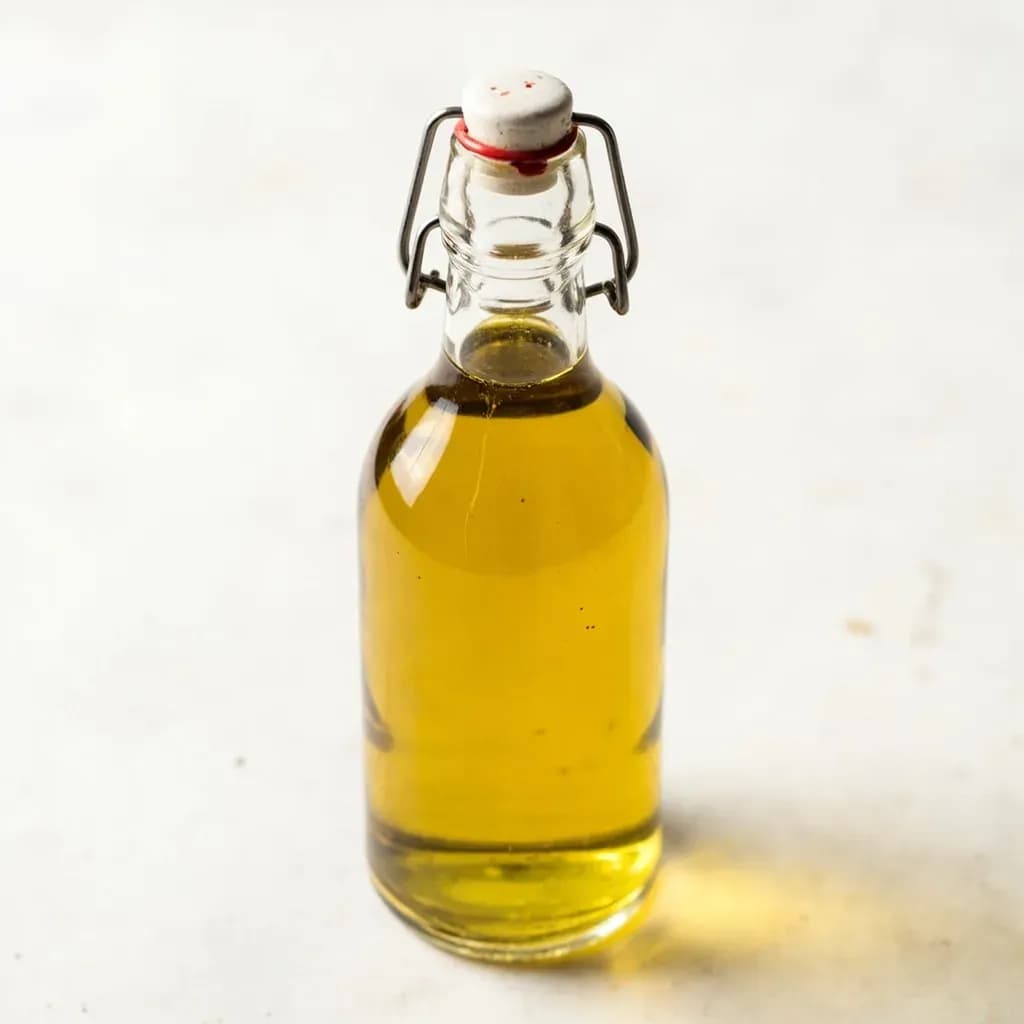
A sealable glass bottle for storing oils, syrups, sauces, and home-brewed liquids.
A glass bottle for bottling is a non-reactive, sealable container used to store and dispense infused oils, vinegars, syrups, sauces, cordials, and fermented drinks. Cooks favor dark or UV-protective glass for light-sensitive contents like flavored oils to slow rancidity, while clear bottles show off vinegars and syrups. A tight cap or swing-top seal keeps the contents fresh and, for carbonated brews, contained.
Glass bottles are the most chemically inert vessels a cook can keep on the shelf. They don't absorb flavors the way plastic can, they don't breathe oxygen through their walls the way wood or some ceramics do, and they leave nothing of themselves behind in the liquid. That is exactly why they have remained the default for storing oils, vinegars, ferments, extracts, and homemade liqueurs long after cheaper containers became available.
The trade-off is that glass is heavy, breakable, and vulnerable to thermal shock — a swing from ice water to a hot fill will crack standard soda-lime glass. The closure matters as much as the bottle itself: a woozy with a pour-spout is useless for a pressurized kombucha, and a swing-top is overkill for still olive oil. Choosing the right combination of glass color, wall thickness, and closure is what separates a bottle that protects its contents from one that just holds them.
Because glass is impermeable to gas and fully recyclable without quality loss, a good bottle is a one-time purchase that can outlive generations of contents. Treating it with a little care — matching color to the liquid, sterilizing before bottling ferments, and inspecting the closure — is what unlocks its full potential in the kitchen.
Alternatives
Types & varieties
Cylindrical body with rounded shoulders; workhorse bottle for syrups, oils, and tinctures; pairs with screw caps, sprayers, or pump tops.
Tall and slim with a narrow neck and steep shoulder; takes a pour-spout insert or dropper; classic for hot sauce, bitters, and extracts.
Squarish or rounded body with a ground-glass stopper or cork; traditional for vinegars and decorative counter display.
Four-sided flat bottle; shelf-efficient for syrups, flavorings, and bar bitters; typically paired with a screw cap.
Ceramic or glass stopper held by a wire bail with a rubber gasket; pressure-holding closure for carbonated ferments like kombucha and water kefir.
Small bottle, often with a built-in spout or stopper, sized for table-side oil and vinegar service.
Short, broad, and barrel-shaped; traditional for mustard, ketchups, and table sauces.
Thick-walled bottle with a flip-top or twist cap; for soy sauce, citrus juice, and finishing sauces; less common than plastic but inert and reusable.
Often dark green or amber, slender with a narrow neck and pour spout; designed for display alongside cooking.
Straight-sided, label-friendly bottle; common for kombucha, cold-brew coffee, and home-brewed sodas.
Matching Glass Color to Contents
Color is not decoration — it is protection. Light, especially in the UV and blue range, accelerates oxidation in fats and breaks down delicate aromatic compounds.
- Amber (brown) glass: the workhorse for light protection; blocks nearly all UV and short visible light. Use for olive oil, nut oils, vanilla extract, tinctures, and any oil-based infusion that will sit on a counter.
- Cobalt blue and dark green: largely decorative but offer moderate UV protection; traditional for infused oils, vinegars, and liqueurs where appearance matters as much as function.
- Clear (flint) glass: only practical for short-term storage (weeks, not months) of light-stable liquids like water-based syrups, drinking vinegars, and clear spirits. Show off the contents only when shelf life is short.
- Frosted: an aesthetic finish with the same light transmission as clear; treat it the same way.
Choosing the Right Closure
The closure is half the bottle. A mismatch is the most common reason homemade preserves spoil, ferments leak, or oils go rancid early.
- Screw caps (polycone or PTFE-lined): for oils, syrups, vinegars, and anything still. Tight, reusable, and easy to clean.
- Corks: traditional and attractive for vinegars and liqueurs, but they dry out, can harbor mold, and don't provide a hermetic seal for long storage.
- Swing-tops: the standard home-kitchen closure for real pressure. Reserve them for kombucha, water kefir, ginger bug sodas, and naturally carbonated beer. Always inspect the rubber gasket for cracks or perished spots.
- Pour-spouts and dropper inserts: fit woozy-neck bottles; ideal for controlled dispensing of hot sauce, bitters, and extracts — but only with thin, particulate-free liquids.
- Flip-tops and pump tops: pump tops limit air exposure for oils; flip-tops suit thicker sauces used at the table.
Sterilizing and Preparing Bottles
Bottles intended for ferments, syrups, or anything shelf-stable must be sterilized; otherwise mold can colonize the closure line within days.
- Boiling-water method: submerge clean bottles and closures in boiling water for 10 minutes; lift out with tongs and drain upright on a clean towel.
- Oven method: place empty bottles on a rack at 135°C/275°F for at least 20 minutes — never cap them in the oven, as plastic liners will melt and gaskets will degrade.
- Hot fill, warm bottle: when pouring hot liquid (syrup, jam, infused oil), warm the bottle first in the oven or with hot rinse water to prevent thermal shock.
- Always sterilize fresh closures and gaskets separately, then seat them as soon as the bottle is filled and at a temperature appropriate for the closure material.
Common uses
Tips & pitfalls
- Always sterilize bottles in boiling water or a low oven (135°C/275°F) before bottling ferments, syrups, or anything to be shelf-stable — skip this and mold can take hold at the closure.
- Match the glass color to the contents: amber or green for olive oil, vanilla extract, and anything light-sensitive; clear only for short-term storage or display.
- Leave 2–3 cm (roughly an inch) of headspace in swing-top bottles for carbonated ferments; filling to the brim risks gasket blowout.
- Never transfer a cold glass bottle straight into hot water (or vice versa) — thermal shock will crack it. Warm the bottle gradually or use borosilicate for hot fills.
- Inspect bottles and closures each use: a chipped rim prevents a seal; a perished rubber gasket on a swing-top will leak carbonation.
- Use screw caps or corks for still liquids; reserve swing-tops for pressurized ferments; use dropper inserts only for thin liquids like extracts and bitters.
- Label with the date and contents — homemade ferments and infusions lose quality fast and look alike once bottled.
- Hand-wash swing-top bottles and gaskets; dishwasher heat degrades rubber seals and can rust the wire bail.
- Choose bottle size to turnover: 100–250 ml for oils used weekly; 500 ml+ only for items you'll finish in a few weeks before flavor turns.
- Don't reuse single-use commercial bottles (e.g., beer bottles) for pressure-bearing ferments — they aren't rated for the stress of repeated carbonation cycles.
Good to know
- Material
- Soda-lime glass (standard) or borosilicate glass (heat-resistant)
- Typical capacity range
- 30 ml (1 oz) to 2 L (½ gal); home kitchen common sizes 4–16 oz
- Common closure types
- Cork, screw cap, swing-top (Grolsch/bail), dropper insert, pour-spout, pump top, flip-top
- Color options
- Clear (flint), amber, cobalt blue, green, frosted
- Light protection
- Amber glass blocks UV and short-wavelength visible light below ~450 nm, protecting oils, extracts, and other light-sensitive liquids
- Thermal shock tolerance
- Standard soda-lime glass can crack from sudden temperature swings greater than ~40°C/70°F; borosilicate tolerates far more
- Reactivity
- Inert — does not absorb flavors, odors, or leach chemicals
- Sterilization
- Boiling-water bath safe; can also be oven-sterilized at 135°C/275°F (un-capped)
- Recyclability
- 100% and infinitely recyclable without loss of quality
- Origin
- Glass vessels date to Mesopotamia and Egypt (~1500 BCE); sealed glass bottles for food became widespread in the 19th century with industrialization
Also called
Dark Glass Bottle (UV-Protective) · Weck Jar · Glass Spice Jar · Swing-Top Bottle · Bottle
Related

Peeler
Swift blade for stripping skin off fruit and vegetables

Grater
Sharp-toothed surface for shredding cheese and vegetables

Microplane
Ultra-fine rasp for citrus zest, garlic, and hard cheese

Mixing Bowl
All-purpose bowl for combining, whisking, and tossing

Whisk
Looped wires that beat air into eggs, cream, and sauces

Spatula
Flat blade for flipping, lifting, and scraping

Slotted Spoon
Pierced spoon that lifts solids and drains the liquid behind

Wooden Spoon
Gentle, heat-friendly spoon for stirring anything