Prep Tools
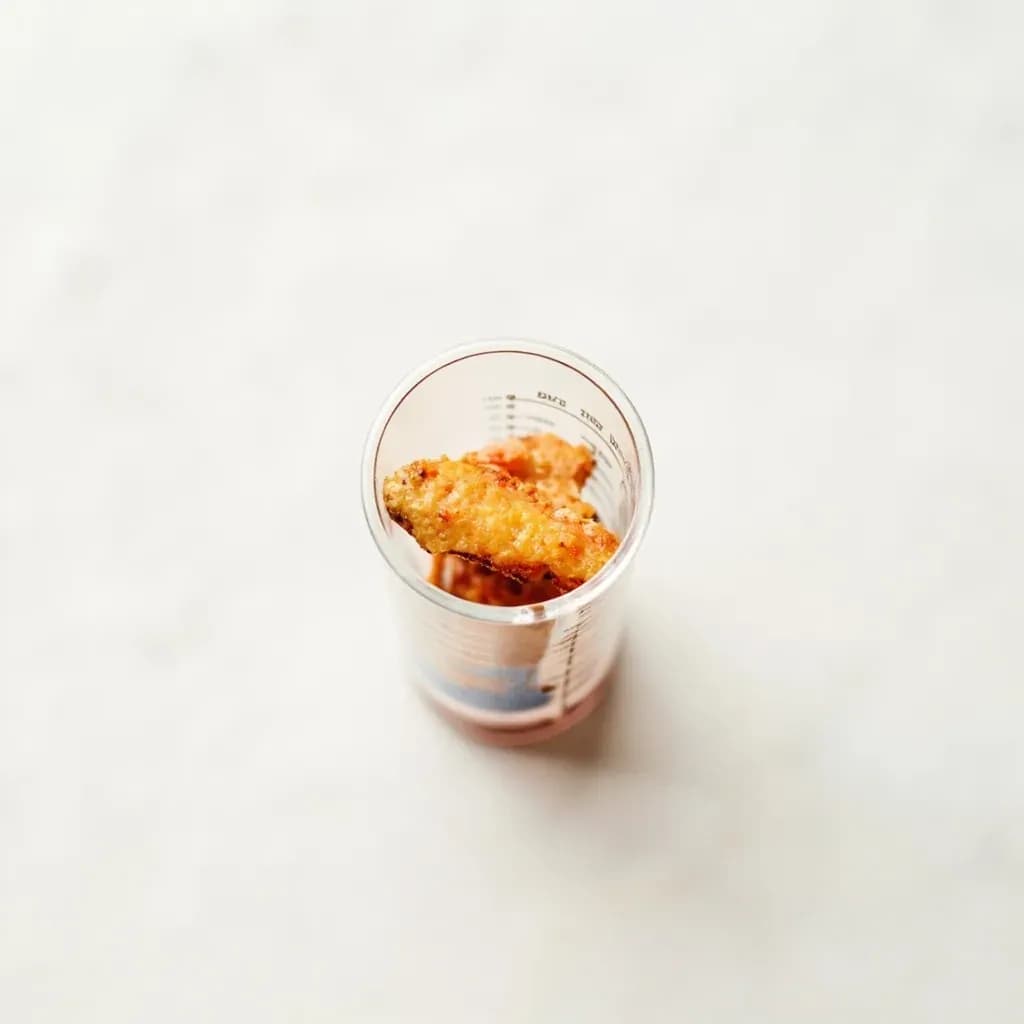
Graduated Cylinder
A tall marked tube for measuring liquid volume precisely, also used to float a hydrometer.
A graduated cylinder is a narrow upright tube marked with volume gradations for accurate liquid measurement. In fermentation and brewing it doubles as a trial jar, holding a sample so a hydrometer can float to read gravity or density. Its tall narrow shape gives finer readings than a wide cup or jug.
A graduated cylinder is a tall, narrow vessel with printed volume markings along its side, borrowed from the chemistry lab and pressed into kitchen service when ordinary liquid measuring cups aren't precise enough. In a home kitchen the cylinder earns its keep in three specific niches: brewing and winemaking (where it doubles as a hydrometer jar), precision bread baking (where hydration is calculated in milliliters against flour weight), and pickling and fermentation (where brine strength is a safety and texture concern). It is far more accurate than a liquid measuring cup — typically within 1–2% of true volume versus 5–10% for a typical glass measuring cup — because the narrow bore amplifies small volume changes into visible meniscus movement.
Most cylinders are calibrated "to contain" (TC) at 20 °C, meaning the markings reflect the volume of liquid held rather than the volume delivered when poured. Read the bottom of the meniscus at eye level on a flat surface, and the cylinder will give you the kind of repeatable, sub-percent accuracy that makes scaled recipes, acid dilutions, and gravity readings trustworthy. For everyday sauce-pan cooking it is overkill, but for any task that depends on knowing exactly how much liquid is in the tube, nothing else on a home cook's shelf does the job as cleanly.
Alternatives
Types & varieties
Heat- and chemical-resistant; the most common and most accurate choice for kitchen and brew use.
Highest-accuracy grade; carries a printed or etched tolerance and usually a serialized certificate.
About double the tolerance of Class A; fine for home brewing, bread baking, and brine work.
Clear like glass but shatter-resistant; good for active kitchens and teaching environments.
Tough and inexpensive, but the meniscus is harder to read; a lower-accuracy option.
An ungraduated variant tall enough to float a hydrometer; cheap, but cannot replace a true graduated cylinder for volume measurement.
Heavy, wide hexagonal foot for stability; preferred for hydrometer work where tipping is a risk.
Tall-form cylinders give finer graduations per unit height and better accuracy; short-form is more stable but coarser.
Reading the meniscus correctly
The single biggest source of error with a graduated cylinder is reading the meniscus — the curved surface a liquid forms against the glass. Get it right and the cylinder is more accurate than any other tool on your shelf. Get it wrong and you can be off by several percent without realizing it.
- Crouch so your eye is level with the liquid surface; looking down reads high, looking up reads low.
- Always read the bottom of the curve for water-based liquids (clear, concave meniscus).
- Place the cylinder on a flat counter — even a slight tilt shifts the apparent level across the bore.
- Tap the side gently to release air bubbles clinging to the wall; bubbles falsely raise the reading.
- For dark liquids (wort, coffee, soy sauce), hold a white card behind the cylinder to silhouette the meniscus.
Class A vs Class B — what actually matters at home
Lab cylinders are graded by tolerance. Class A is the tightest (e.g., ±0.5 mL on a 100 mL unit) and ships with a printed certificate; Class B runs roughly double the tolerance. For most home brewing, bread baking, and brine work, Class B is genuinely sufficient and the savings are real. Reach for Class A when you are publishing a recipe, scaling a formula for sale, or doing analytical work like titrating an unknown acid.
- Class A: best when results must be defensible or replicable by others.
- Class B: the practical sweet spot for home and prosumer use.
- Certificates matter for resale and QC, less so for a single home cook.
- Material matters as much as class — borosilicate glass outlasts plastic for years of daily use.
Choosing a cylinder for the kitchen
Match the cylinder to the job. A 100 mL tall-form glass unit is the most versatile starter cylinder: precise enough for bread hydration, large enough to measure a small batch of brine, and inexpensive. Brewing and winemaking almost always want at least 250 mL so a standard hydrometer can float freely without touching the bottom. Hex bases are worth the small premium for any hydrometer work, where a tipped jar ruins a sample.
Common uses
Tips & pitfalls
- Always read the bottom of the meniscus at eye level; reading from above or below gives a false volume every time.
- Set the cylinder on a flat, level counter — even a slight tilt shifts the liquid level noticeably across the bore.
- Use a tall-form cylinder for the most precise reads; wider cylinders sacrifice accuracy for stability.
- For hydrometer use, choose at least 250 mL capacity and a vessel tall enough that the hydrometer floats freely without touching the bottom.
- Rinse the cylinder with water close to the temperature of your sample — large temperature swings change the liquid's volume and shift the reading.
- Don't pour very hot liquids into thin plastic cylinders; PMP softens well below boiling and polypropylene can warp or distort.
- Avoid abrasive scrubbers on glass; scratched walls distort the meniscus and ruin the cylinder's accuracy over time.
- Air bubbles clinging to the wall will falsely raise the level — tap the cylinder gently to dislodge them before reading.
- If you only need approximate volumes, reach for a kitchen measuring cup; the cylinder earns its keep when precision matters.
- Class A cylinders with a printed certificate are worth the cost if you're publishing brewing calculations or scaling recipes for sale.
Good to know
- Type
- Precision liquid measuring vessel, adapted from laboratory glassware
- Common kitchen sizes
- 100 mL, 250 mL, 500 mL (also 50 mL, 1000 mL, 2000 mL)
- Primary materials
- Borosilicate glass, polymethylpentene (PMP), polypropylene
- Accuracy grades
- Class A (tightest tolerance) and Class B (roughly double the tolerance)
- Calibration
- Most are 'To Contain' (TC) at 20 °C
- Typical graduation spacing
- 1 mL on a 100 mL cylinder; 2 mL on 250 mL; 5–10 mL on 500–1000 mL
- Reading point
- Bottom of the meniscus, at eye level, on a level surface
- Standards
- Many are manufactured to ASTM E1272 / ISO 4787 specifications
Also called
Trial Jar (Test Jar) · measuring cylinder · test cylinder
Related

Peeler
Swift blade for stripping skin off fruit and vegetables

Grater
Sharp-toothed surface for shredding cheese and vegetables

Microplane
Ultra-fine rasp for citrus zest, garlic, and hard cheese

Mixing Bowl
All-purpose bowl for combining, whisking, and tossing

Whisk
Looped wires that beat air into eggs, cream, and sauces

Spatula
Flat blade for flipping, lifting, and scraping

Slotted Spoon
Pierced spoon that lifts solids and drains the liquid behind

Wooden Spoon
Gentle, heat-friendly spoon for stirring anything