Prep Tools
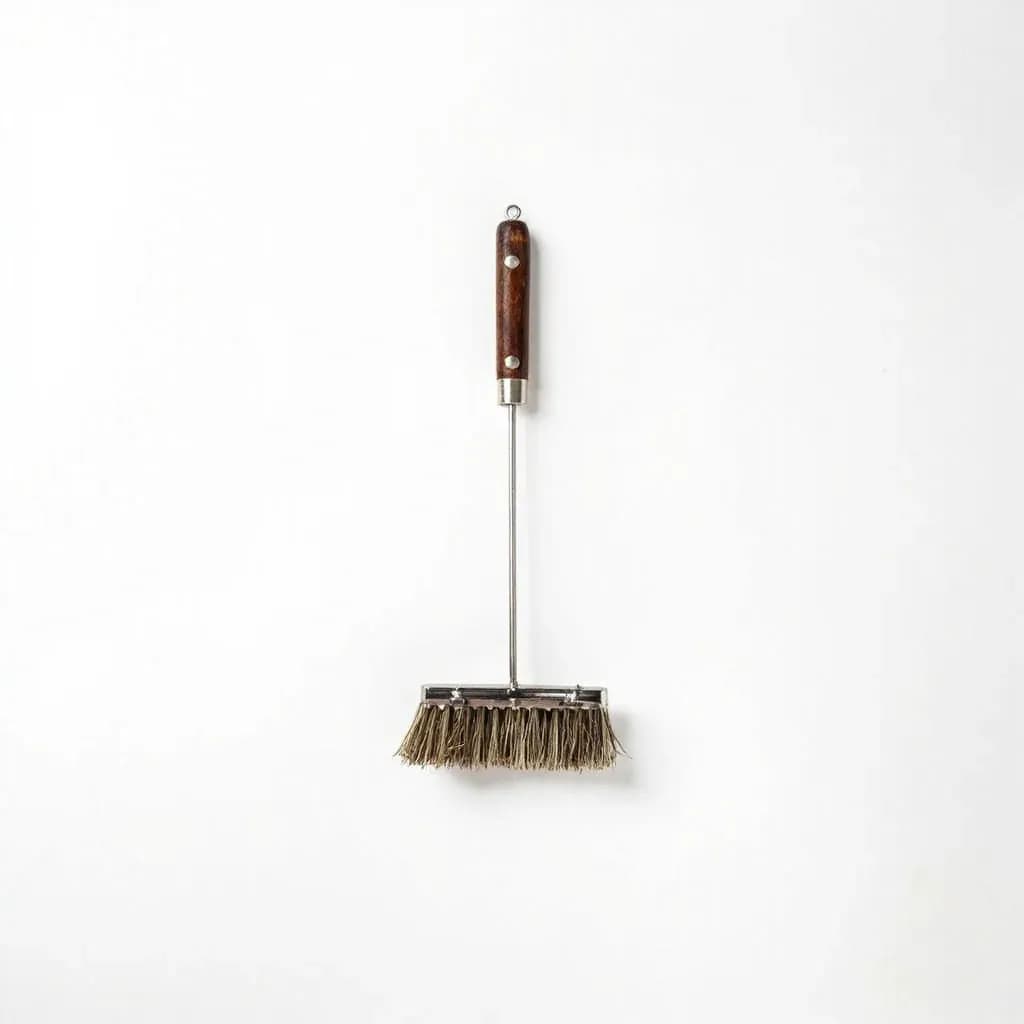
Grill Cleaning Brush
A stiff-bristled long-handled brush for scrubbing cooked-on residue off grill grates.
A grill brush is a stiff wire or bristle scrubber on a long handle used to clean burned-on residue from grill grates, usually while they are still warm. Keeping grates clean prevents sticking, off-flavors, and flare-ups during the next cook. Many include a built-in scraper edge for the stubborn carbon that bristles can't lift.
A grill cleaning brush is the workhorse of outdoor cookery maintenance. The long handle—typically 12 to 20 inches—keeps your knuckles clear of radiant heat while the stiff bristles scour carbonized grease and food residue from metal grates. Used well, it preserves a clean cooking surface, prevents off-flavors from building up between cooks, and extends the life of cast iron by keeping the seasoning intact rather than stripped by harsh chemical cleaners.
The brush is most effective when the grate is hot—around 400°F after a preheat—because heat carbonizes leftover sugars and fats into a brittle crust that bristles can sweep away in a few passes. Cold scrubbing demands real elbow grease and rarely gets the grate truly clean; a hot grate, by contrast, makes the job almost effortless. This is also why you should never brush over open flame: grease flares up, and the heat fatigues the crimp that holds wire bristles in place, accelerating shedding.
The trade-off is real. Wire-bristle brushes are the most aggressive option and the fastest, but loose or broken bristles can lodge on food and, in documented cases, be swallowed by diners. The U.S. Consumer Product Safety Commission and the FDA have both issued advisories, and a 2016 study in the Journal of Surgical Research put ER visits from wire-bristle ingestion at roughly 1,600–1,700 a year in the United States alone. Knowing when to retire a brush—and when to reach for a bristle-free alternative—is part of using one well.
Alternatives
Types & varieties
Most aggressive option; fastest on cast iron and stainless grates, but carries documented bristle-breakage and ingestion risk
Softer than steel; the right choice for porcelain-coated and chrome grates where steel would scratch the finish
Gentlest option; suits porcelain-enamel and non-stick surfaces but wears out faster than wire
Bamboo, palmyra, or coir bristles; food-safe and compostable, with moderate scrubbing power
Metal scraper edge paired with bristles for burned-on carbon that brushing alone won't shift
Three rotating heads that follow the contour of round kettle grates or wide flat tops in fewer passes
Woven stainless rings in a glove or pad; popular bristle-free alternative that still scrubs aggressively
Solid abrasive block with no bristles at all; effective on a hot grate, zero shedding risk
Brush head fed by a water reservoir that produces steam to loosen residue before scrubbing
Matching bristles to your grate
The single biggest mistake cooks make with grill brushes is using the same brush on every grate. Bristle hardness should track the delicacy of the surface: harder brushes clean faster but can strip coatings, while softer brushes preserve finishes at the cost of more effort and faster wear.
- Cast iron (bare or seasoned): stainless or brass wire; the seasoning can take the abrasion and benefits from it
- Stainless steel rods: stainless or brass wire; nothing softer will shift carbonized fat
- Chrome-plated: brass only; steel will scar the plating and expose the metal underneath to rust
- Porcelain-enamel: brass or nylon; steel chips the enamel and once it goes, the grate is finished
- Non-stick or coated aluminum grates: nylon or natural fiber only
The bristle-ingestion question
Wire-bristle injuries are uncommon but real, and they are almost always preventable. They happen when a brush is past its prime, has been dropped, stored wet, or used over open flame, and a single bristle comes free onto the food. The bristle is then nearly invisible once cooked and can lodge in the throat or digestive tract.
- Inspect the brush before every use: pull a tuft of bristles; if any move, bend, or shed, retire the brush
- Never use a wire brush over open flame; heat fatigues the wires and accelerates breakage
- Replace brushes that have been dropped on hard ground or stored in a damp shed—corrosion loosens the crimp
- If you want to remove the risk entirely, switch to chain-mail, grill stone, or a ball of aluminum foil gripped in tongs
- Bristle-free alternatives cost a little more time per cook but eliminate the issue at the source
Caring for the brush itself
A brush is a tool, and like any tool it lasts longer when it's maintained. Embedded grease transfers flavor between cooks, and rust on the bristles or handle shortens the working life of the head.
- After each use, run the bristles across a scrap of concrete or a brick to knock out embedded carbon and grease
- Stainless-only brushes can go on the top rack of a dishwasher; wood-handled brushes should never be soaked
- Wipe handles dry and store indoors; a hanging hook in a garage or shed works well
- Keep a small wire pick or old toothbrush handy to clear clogged bristles, especially on triple-head models
Common uses
Tips & pitfalls
- Preheat the grill to about 400°F so residue carbonizes and brushes off easily—but never scrub over open flames, which fatigue the wires and can cause shedding.
- Match bristle hardness to the grate: stainless or brass on bare cast iron and stainless; brass or nylon on porcelain-enamel and chrome to avoid stripping the coating.
- After brushing, wipe the grates with a paper towel dipped in high-smoke-point oil to season cast iron and prevent flash rust on bare metal.
- Inspect wire brushes before each use: pull on the bristles; if any move, break, or shed, discard the brush—this is the leading cause of wire-bristle ingestion injuries.
- If you want to eliminate bristle risk entirely, switch to a chain-mail scrubber, grill stone, or a ball of heavy-duty aluminum foil held in tongs.
- Avoid soaking wooden or composite handles; wipe them dry and store indoors to extend the life of the tool.
- Clean the brush itself occasionally by running it across a piece of concrete or through a dishwasher (stainless models only) so embedded grease doesn't transfer off-flavors to the next cook.
- Don't use a wire brush on cold grates—you'll scrub off seasoning and the residue will smear rather than release.
Good to know
- Typical handle length
- 12–20 inches; keeps hands clear of radiant heat from a 400°F grate
- Bristle materials
- Stainless steel, brass, nylon, natural plant fibers (bamboo, coir, palmyra), or stainless chain mail
- Compatible grates
- Cast iron, stainless steel, chrome-plated, and porcelain-coated when matched to the right bristle hardness
- Best cleaning temperature
- Warm, around 400°F after preheating; not flaming, not cold
- Safety concern
- Wire bristles can break off and be ingested; CPSC and FDA have both issued advisories
- Reported injuries
- Roughly 1,600–1,700 U.S. emergency-room visits per year from wire-bristle ingestion (Journal of Surgical Research, 2016)
- Replacement cue
- Retire the brush when bristles bend, splay, shed, or any wire moves when pulled
- Storage
- Dry thoroughly after cleaning; store indoors to prevent bristle and handle corrosion
Also called
Grill/Grate Brush · Camp Grill Brush · Oven Cleaning Brush · Oven Brush · Grate Brush
Related

Peeler
Swift blade for stripping skin off fruit and vegetables

Grater
Sharp-toothed surface for shredding cheese and vegetables

Microplane
Ultra-fine rasp for citrus zest, garlic, and hard cheese

Mixing Bowl
All-purpose bowl for combining, whisking, and tossing

Whisk
Looped wires that beat air into eggs, cream, and sauces

Spatula
Flat blade for flipping, lifting, and scraping

Slotted Spoon
Pierced spoon that lifts solids and drains the liquid behind

Wooden Spoon
Gentle, heat-friendly spoon for stirring anything