Prep Tools
Grill Clamp (Capitan)
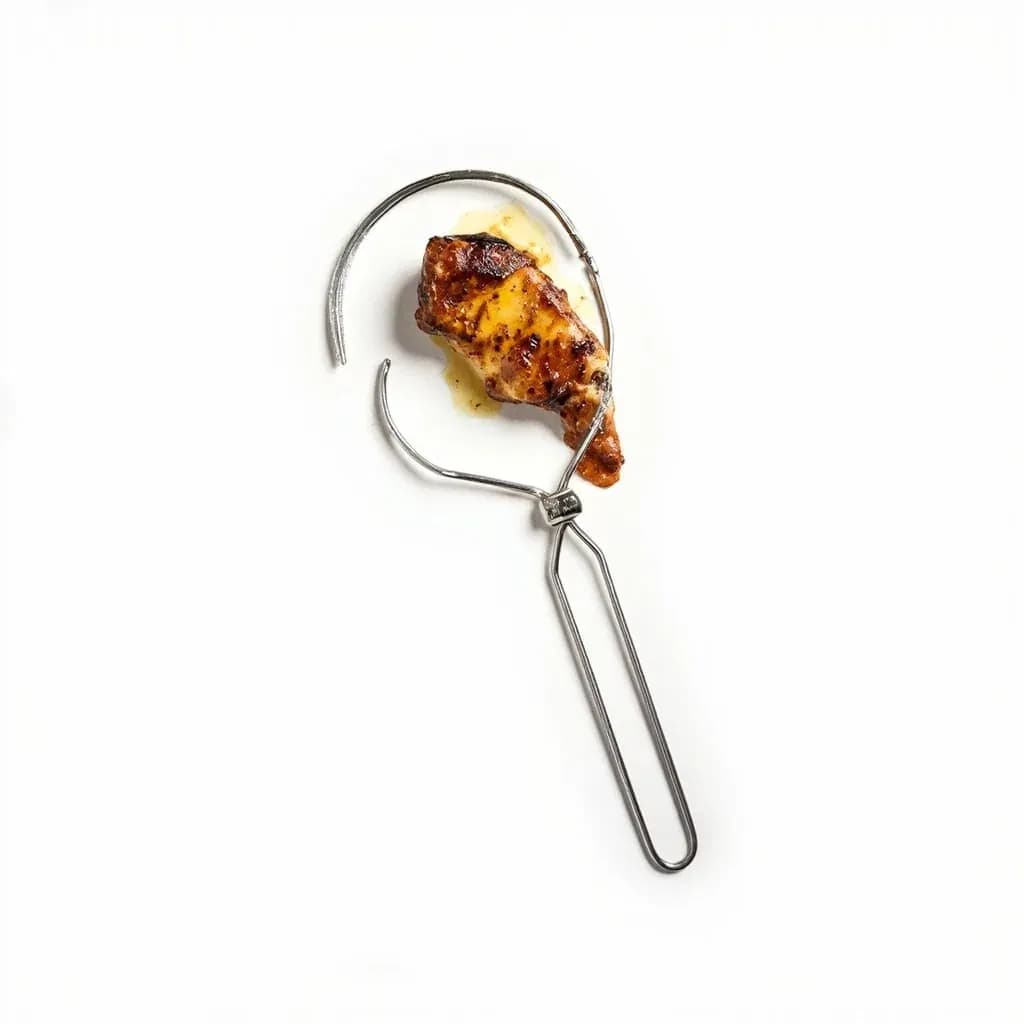
A hinged wire clamp that grips a whole fish or cut of meat for easy flipping over open fire.
A grill clamp is a flat hinged frame, often a double-grid of wire, that sandwiches a whole fish, ribs, or sausages so they can be turned over the fire as one piece. It is essential when grilling delicate items that would break apart if flipped with tongs. The long handle keeps hands away from the heat, and the clamp opens flat for loading and cleaning.
The grill clamp — known across the Mediterranean as a capitan, balık maşası, or pinza de pescado — is a hinged wire basket built for one job: holding delicate or unwieldy food flat against an open flame so you can flip it cleanly. Two long-handled frames of wire mesh close like a clamshell around a whole fish, fillet, or thin cut of meat, gripping the food by its own shape rather than by skewering it. That means skin stays intact, flesh doesn't flake through the bars, and you can turn a whole branzino, a row of sardines, or a tray of thin-cut vegetables with a single confident motion — no fish spatula, no lost tail.
It earns its place at any serious live-fire cookout because it solves problems a standard grate can't. Whole fish slump between the bars, skin-on fillets glue themselves to the iron, and small fish like smelts and anchovies are nearly impossible to flip without tearing. The clamp's mesh supports the food on both sides at once, so it cooks evenly and can be lifted, rotated, and turned without ever poking at the flesh. The long wire handles keep your knuckles out of the heat, and once you've used one for whole sea bass over charcoal, the open grate starts to feel limiting.
Material and mesh size matter more than brand. Stainless steel lasts decades and tolerates direct fire; nickel- or chrome-plated steel is cheaper but the plating can flake under heavy heat and corrode faster if neglected. Tighter weaves are for sardines, anchovies, and smelts; wider weaves for trout, sea bream, and mackerel. Match the size to the fish — a 30–35 cm clamp handles most whole Mediterranean fish, while anything over 40 cm is for big salmon sides or cooking several fish at once.
Alternatives
Types & varieties
Tight wire grid for very small or delicate whole fish (sardines, anchovies, smelts, whitebait); holds fins and tails in place so nothing escapes the basket
Medium spacing for medium whole fish such as sea bass, sea bream, mackerel, trout, and small flatfish like sole
Wider frame for big fish (whole salmon sides, large sea bass) or for cooking several smaller fish at once
Two hinged frames connected so food can be turned from both sides without opening; favored in Turkish fish restaurants for high-volume grilling
Lighter and cheaper than stainless, but the plating can flake with heavy heat and is more prone to rust if not dried promptly
Heavier-gauge stainless wire with reinforced rivets and a locking clip; the standard in fish restaurants and serious home setups
Choosing the right clamp
A clamp that matches the food you cook most will outperform a fancier one in the wrong size. Most home cooks who grill whole fish two or three times a season are well served by a 30–35 cm stainless standard-mesh clamp with a locking clip; it handles a whole branzino or two trout with room to spare, and the clip makes flipping one-handed possible over a hot fire. If your repertoire leans toward small fish, anchovies, or sardines, step down to a 20–25 cm fine-mesh version — the tighter weave keeps tails and fins from poking through and charring. If you entertain often or cook large whole salmon, the 40+ cm model earns its drawer space.
- Pick stainless steel unless budget is the priority; the price difference pays back in years of service and rust resistance.
- A locking clip on the handle is worth seeking out — it keeps the clamp shut while you walk it to the grill and during the flip.
- Folding handles save drawer space and make storage in a narrow kitchen much easier.
- Weight matters: a heavier-gauge wire holds heat better and resists warping over years of use.
Seasoning and care
A new clamp benefits from a short soak and a hot rinse before its first use to remove manufacturing oils and dust. Plated versions especially need immediate drying after washing to prevent the kind of flash rust that ends a tool's life in a single season. Stainless models are far more forgiving but still appreciate prompt drying and an occasional scrub with a stiff brush to keep the mesh open.
- Before first use, soak in hot water with a pinch of baking soda for 10–15 minutes, then scrub and dry thoroughly.
- Hand wash with a stiff brush; stainless steel is dishwasher-safe, plated steel is not.
- Dry immediately with a towel after washing — never let a plated clamp air-dry, or rust will set in within hours.
- Scrub while still warm (not hot) with a wire brush to release carbonized bits from the mesh between batches.
- Store flat or hang by the handle hook so air circulates and moisture cannot pool in the hinge.
Common uses
Tips & pitfalls
- Oil both the clamp and the food before closing it; a well-oiled interior is the single biggest factor in keeping skin from tearing on the first flip
- Preheat the open clamp on the grill for 30–60 seconds before adding food so the mesh sears the surface on contact rather than steaming it
- Do not overfill — leave at least a finger-width of space around each piece so heat and smoke can circulate
- Flip only once, about two-thirds of the way through cooking; opening the clamp too often lets juices escape and can split delicate flesh
- Position the hinge away from the hottest part of the fire so the joint does not seize or scorch
- For whole fish, score the skin lightly on both sides and stuff the cavity with lemon, fennel, and herbs — the clamp holds the shape during the flip
- If food sticks between batches, dip a folded towel in oil and run it along the wires with tongs rather than soaking the whole tool
- Engage the locking clip before transporting a loaded clamp to the grill; an open clamp over hot coals is a quick way to drop a whole fish into the fire
Good to know
- Tool type
- Hinged wire clamp (clamshell-style grilling basket) for open-flame cooking
- Also known as
- Fish clamp, Capitan grill, balık maşası (Turkish), pinza de pescado (Spanish)
- Primary material
- Stainless steel wire mesh; budget versions are nickel- or chrome-plated steel
- Typical sizes
- Small (20–25 cm) for sardines; medium (30–35 cm) for sea bass, bream, trout; large (40+ cm) for big fish or multiple fillets
- Handle style
- Long wire handles (30–40 cm) to keep hands away from flames; some models fold for storage
- Mesh gauge
- Fine-to-medium wire spacing; tight weaves hold delicate skin and small whole fish like sardines and smelts
- Region of use
- Mediterranean — Turkey, Greece, Spain, Portugal, and the Levant, wherever whole grilled fish is a staple
- Heat tolerance
- Stainless tolerates direct charcoal and wood-fire contact; plated versions are best kept over moderate heat to prevent flaking
Also called
Capitan · Fish Clamp · Grilling Clamp
Related

Peeler
Swift blade for stripping skin off fruit and vegetables

Grater
Sharp-toothed surface for shredding cheese and vegetables

Microplane
Ultra-fine rasp for citrus zest, garlic, and hard cheese

Mixing Bowl
All-purpose bowl for combining, whisking, and tossing

Whisk
Looped wires that beat air into eggs, cream, and sauces

Spatula
Flat blade for flipping, lifting, and scraping

Slotted Spoon
Pierced spoon that lifts solids and drains the liquid behind

Wooden Spoon
Gentle, heat-friendly spoon for stirring anything