Prep Tools
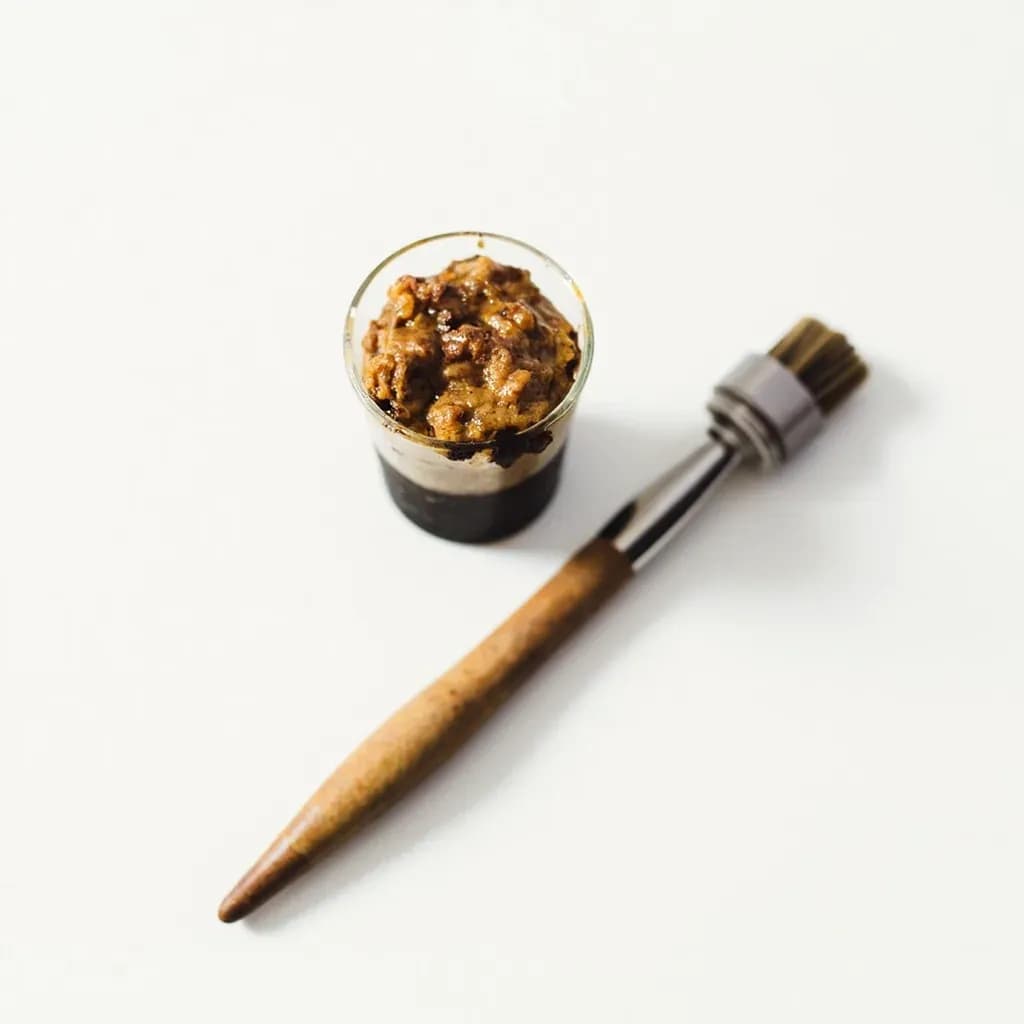
Group Head Brush
Stiff-bristled brush for cleaning coffee grounds and oils from an espresso group head.
A group head brush is a small brush with stiff, heat-resistant bristles and an angled head used to scrub spent grounds and coffee oils from an espresso machine's group head and gasket. Baristas brush it daily to keep extraction clean and prevent rancid buildup. Similar natural-bristle brushes clean cheese rinds and mushrooms without water.
The group head brush is a small, purpose-built scrubber designed to reach the surfaces an espresso machine's group head accumulates residue on — the stainless shower screen, the brass or stainless dispersion plate beneath it, the silicone gasket that seals against the portafilter, and the recessed groove where that gasket sits. Unlike a generic utility brush, its bristle head is sized and shaped to fit inside a 58 mm (or comparable) group, with bristles stiff enough to dislodge coffee fines and soft enough not to score polished metal. Most are 15–20 cm long with a round or combination head, balanced for the short, deliberate strokes a barista makes between shots.
This brush matters because espresso group heads foul quickly. Spent grounds lodge in the gasket groove, and the fine mist of coffee oils that escapes with every shot coats the shower screen and dispersion plate. Left alone, those oils oxidize and turn rancid, then leach into the next extraction as bitter, cardboard-like off-flavors. A brushed group also seats a portafilter more cleanly: a single grain caught under the gasket will deflect the seal and produce a sidesprayer or leak. In a café the brush is touched dozens of times a day; at home it is the difference between a group that pulls clean shots for years and one that quietly goes stale.
In use, the brush behaves like a stiff toothbrush for metal. Damp bristles pick up detergent powder readily, and a circular motion follows the natural path of the gasket groove. The small head pivots easily inside the housing, so the same tool can sweep the underside of the dispersion screen, the lip where the portafilter locks in, and the three-way solenoid discharge port. It is a simple object, but it is the only practical way to keep a saturated or E61-style group free of the residue that degrades coffee flavor.
Alternatives
Types & varieties
The classic design: a small disc of stiff bristles sized to scrub inside the group and around the shower screen
Round brush on one end, flat paddle or scraper on the other for gasket seating and dispersion-plate edges
Bristles designed to be paired with group-head cleaning powder (Puly Caff, Cafiza) so the cleaner is delivered as you scrub
Bristles arranged in a flat strip, useful for sweeping grounds from the drip tray and gasket groove
Tampico or boar fibers for users who prefer non-synthetic materials; softer than nylon and gentler on screens
Extended handle for deep group heads or hard-to-reach dispersion screens on certain prosumer machines
Anatomy of the group head and what the brush actually cleans
Understanding why a specialized brush exists means understanding the four surfaces inside a saturated or E61-style group that collect residue. The shower screen — the perforated stainless disc the water sprays through — and the dispersion plate beneath it catch the heaviest oil load. The silicone gasket that seals the portafilter has a recessed groove on its outer edge where spent grounds pack in and harden. Finally, the three-way solenoid discharge port, where spent water and grounds exit after a shot, can clog with fines if never brushed.
- Shower screen: perforated stainless disc that diffuses brew water; oils coat both faces and clog the holes
- Dispersion plate: sits beneath the screen; spreads water evenly and traps fines underneath
- Gasket and groove: the silicone seal and its channel; one stuck granule deflects the portafilter, causing a sidesprayer or drip leak
- Three-way solenoid port: the small discharge opening where post-shot water exits; grounds collect here and cause slow drips
Group head brush vs. related brushes
The brush is often confused with three other tools in an espresso kit. They are not interchangeable: each is sized and bristled for a different surface, and using the wrong one either wastes time or damages a part.
- Portafilter brush: a smaller, often double-ended brush with a spoked head that scrubs inside the portafilter basket and spouts — too small to reach into a group head
- Drip-tray brush: a longer, stiffer utility brush for the tray beneath the group; the group head brush is too short and too fine-bristled for that job
- Generic utility scrub brush: usually has a larger head and softer bristles; cannot fit inside the group or follow the gasket groove without bending
- Steam-wand brush: has a coiled wire head sized for steam tips; metal versions can scratch polished shower screens and must never be substituted in the group
Daily, weekly, and monthly routine
The brush is a daily tool in a working café, but home users can scale the routine down without losing much. The goal is the same: keep oil from polymerizing on the screen and grounds from packing into the gasket groove.
- After every shift (cafés) or each session (home): brush the gasket groove, the group lip, and the visible face of the shower screen with the damp brush, no detergent
- Weekly: backflush with a blank portafilter and group head detergent, brushing the dispersion screen vigorously while the detergent foams; rinse with several plain backflushes
- Monthly: remove the shower screen with the appropriate tool, brush both sides and the dispersion plate under running water, then reassemble
- Replace the brush when bristles splay or shorten — a worn brush no longer reaches the dispersion screen effectively and just smears oil around
Common uses
Tips & pitfalls
- Brush in a circular motion, following the natural path of the gasket groove — straight strokes miss where grounds actually pack
- Dampen the bristles and dip them in group head cleaner powder before scrubbing; dry bristles carry the powder poorly
- Backflush with detergent first, then brush — the chemistry loosens oils so the bristles can sweep them away rather than smearing them
- Replace the brush the moment bristles splay, shorten, or bend; a worn brush stops reaching the dispersion screen and just redistributes residue
- Rinse the brush under hot water after each session and stand it bristle-down to dry, so oil does not wick back into the ferrule and harden
- Never use brass- or steel-wire brushes inside the group — they scratch the polished shower screen and can damage brass dispersion plates
- Do not skip the underside of the dispersion screen; the heaviest oil load sits where you cannot see it from above
- For home machines, a 30-second daily brush plus a weekly detergent backflush is enough to keep the group tasting neutral
Good to know
- Tool type
- Handheld cleaning brush with stiff bristles, designed for espresso machine group heads
- Primary use
- Scrubs coffee grounds and oils from the shower screen, dispersion plate, gasket, and gasket groove
- Bristle material
- Stiff nylon is most common; polypropylene and natural fibers (tampico, boar) are alternatives
- Bristle head shape
- Round disc, flat paddle, or a combination (round brush on one end, flat scraper/brush on the other)
- Overall length
- Roughly 15–20 cm (6–8 in)
- Handle material
- Typically beech wood or food-safe plastic; some models use stainless steel
- Pairs with
- Group head cleaning detergent (Puly Caff, Cafiza), backflush blank/portafilter, shower screen and gasket
- Cleaning frequency
- Daily in cafés; weekly or whenever backflushing for most home users
- Maintenance
- Rinse after use and air-dry bristle-down; replace when bristles splay, shorten, or lose stiffness
Also called
Natural Bristle Rind Brush · Mushroom Cleaning Brush · Bee Brush · Espresso Brush
Related

Peeler
Swift blade for stripping skin off fruit and vegetables

Grater
Sharp-toothed surface for shredding cheese and vegetables

Microplane
Ultra-fine rasp for citrus zest, garlic, and hard cheese

Mixing Bowl
All-purpose bowl for combining, whisking, and tossing

Whisk
Looped wires that beat air into eggs, cream, and sauces

Spatula
Flat blade for flipping, lifting, and scraping

Slotted Spoon
Pierced spoon that lifts solids and drains the liquid behind

Wooden Spoon
Gentle, heat-friendly spoon for stirring anything