Cookware
Gumbo Pot
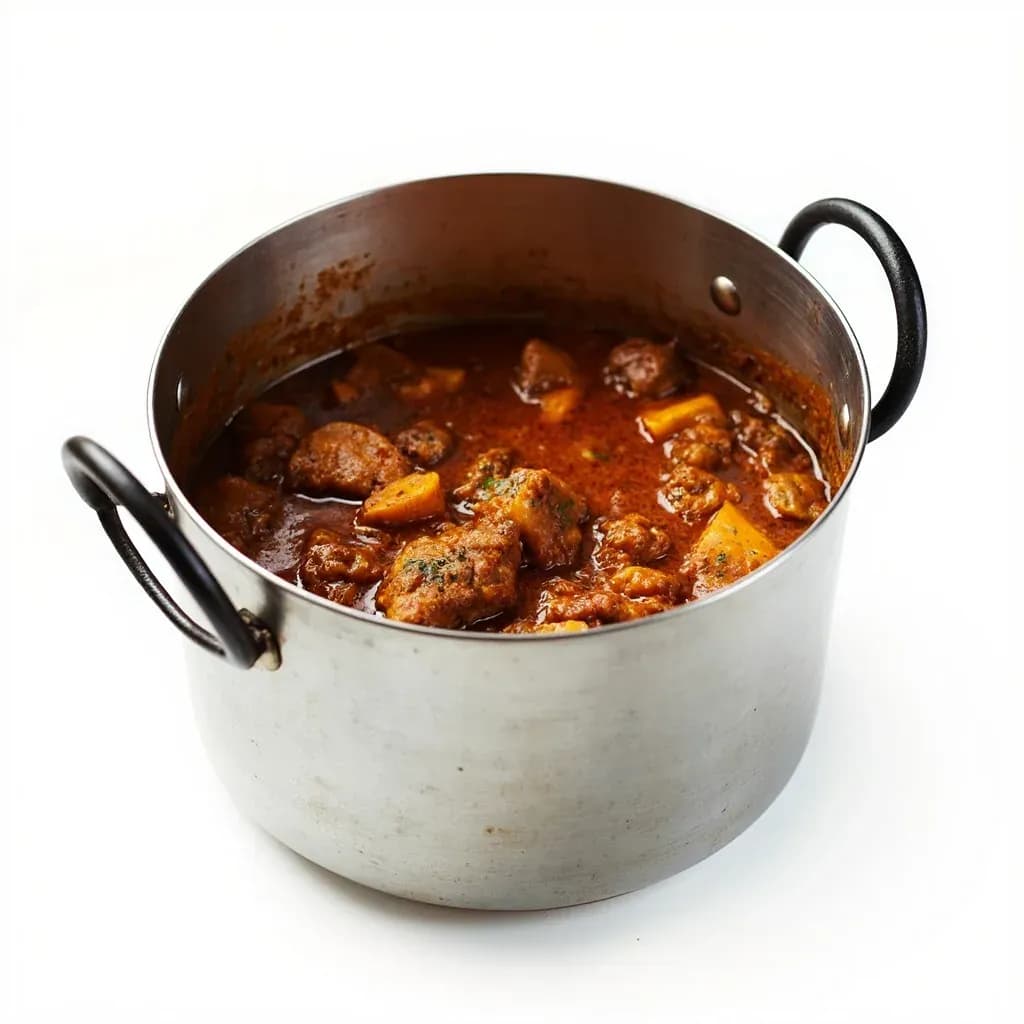
A tall, heavy stockpot used to simmer large batches of Louisiana gumbo and other slow stews.
A gumbo pot is a large, deep, heavy-bottomed stockpot built for making roux and simmering big batches of gumbo, jambalaya, or seafood boils. Its thick base spreads heat evenly so the roux can brown without scorching, and its height holds plenty of stock and ingredients. Aluminum and stainless versions are common, often sized at twelve quarts or more for family and party cooking.
A gumbo pot is a Louisiana-born specialization of the stockpot, defined less by any trademark than by its tall, narrow proportions and the cultural expectation that it will host a slow-simmered dish for a crowd. The height is the key engineering choice: where a wide stockpot encourages rapid evaporation and sloshing, the gumbo pot's vertical walls give it enough headroom to absorb a surge from rice, okra, or a late addition of oysters without spilling over the rim. That clearance also matters for the stir — a flat-edged roux paddle can sweep the base without slopping over, which is exactly what a long, steady roux demands.
The other defining trait is weight in the walls. A proper gumbo pot is heavy-gauge, almost always aluminum in its traditional form, because the dish begins with a flour-and-fat roux that turns from nut-brown to bitter charcoal in seconds if heat arrives unevenly. Thicker metal damps down hot spots and lets the cook build color at a steady pace over gas or a high-BTU propane burner. Stainless steel versions exist but need a clad aluminum or copper base to behave the same way; thin, single-ply stainless is the enemy of a careful roux.
In practice the gumbo pot is also the workhorse of an outdoor Louisiana kitchen: it doubles as a fry pot for turkeys, a boil pot for crawfish with a perforated basket, and the family-size vessel for red beans, jambalaya, and étouffée. Home cooks without one can substitute a standard 12-quart stockpot, but they lose the vertical clearance that makes the dish forgiving — which is why anyone who cooks Cajun or Creole food for more than four people eventually gravitates to one.
Alternatives
Types & varieties
Lightweight, heats quickly, traditional choice; can develop hot spots on a weak burner.
Thicker walls for more even heat and a steadier roux; pricier and heavier but favored by serious Cajun cooks.
Non-reactive and durable; only worth it in a clad version with an aluminum or copper core to compensate for poor heat conduction.
Dark, non-reactive surface with even heating; a modern upgrade from plain aluminum.
Functionally identical; sometimes shorter and slightly wider, marketed specifically for one-dish rice cooking where evaporation matters.
30–60+ quart versions with basket inserts for crawfish, crab, and shrimp boils; usually paired with a high-BTU propane burner.
Less common; superb heat retention but very heavy, requires seasoning, and is more vulnerable to rust if left wet.
Choosing the Right Pot
Most home cooks reach for a 12- to 16-quart pot, which handles a standard chicken-and-sausage gumbo for six to eight people with comfortable headroom. A 20-quart version gives you room to add shrimp and oysters at the end without risking a boil-over, and it is the right size for a large batch of jambalaya or étouffée. For a whole turkey fry, however, jump to at least a 30-quart pot so the bird can submerge safely with several inches of oil headroom; a 20-quart pot is far too small. For seafood boils, move straight to a 30- to 40-quart pot with a matching perforated basket; smaller pots cannot submerge a full sack of crawfish in enough seasoned water to cook evenly. On material, spun aluminum is the traditional default: cheap, light enough to lift when full, and forgiving on a gas burner. If you cook roux often, spend up for cast aluminum — the thicker walls buy you time when your attention drifts, and they forgive the occasional spike in burner output. Stainless is handsome and indestructible but only worth it in a clad version with an aluminum or copper core; bare stainless will scorch roux in ways that frustrate even seasoned cooks.
- Match pot size to your largest recipe, then go up two quarts for headroom.
- Spun aluminum for budget and tradition; cast aluminum for serious roux work.
- Stainless only if clad; bare stainless will scorch a slow roux.
- Hard-anodized aluminum is a strong modern middle ground — non-reactive and even.
Outdoor and High-Heat Use
Many gumbo pots spend more time on a patio than on a kitchen stove, which means thinking about burners and stands as seriously as the pot itself. A high-BTU propane burner (50,000+ BTU) paired with a sturdy steel stand is the standard Louisiana setup for crawfish boils and turkey frying. The pot should sit level on the stand with clearance above for a lid and below for the gas line. Always set up on concrete or bare ground, never on a wooden deck, under a low overhang, or near siding. Keep a spray bottle or fire extinguisher within reach, and never leave a heated pot unattended. For deep-frying, a clip-on thermometer is non-negotiable; for crawfish boils, time the soak rather than the boil.
- Pair the pot with a burner rated for its size; undersized burners scorch, oversized ones warp thin metal.
- Set up on concrete or dirt, well clear of structures and overhanging branches.
- Use a thermometer for oil and for any stock held much above 200°F.
- Lower a loaded basket slowly into boiling water to avoid splashing.
Common uses
Tips & pitfalls
- Buy a pot at least 2 quarts larger than the food you plan to cook — gumbo expands, and rice dishes can nearly double in volume once liquid is absorbed.
- Heavy-gauge aluminum is the traditional default because it spreads heat evenly enough to build a slow, controlled roux without scorching.
- Never crank the burner to high while building a roux in a thin pot; the color goes from peanut to burned in under a minute.
- Leave the lid off or ajar whenever a foaming boil is possible (beans, pasta, rice) — a tall pot helps, but it does not stop a determined boil-over.
- Stir the bottom corners frequently during long simmers; that is where roux and proteins tend to catch and scorch first.
- Use a wooden spoon or a flat-edged roux paddle rather than a wire whisk; whisks cannot scrape the corners of a tall, narrow pot.
- If you must use stainless, insist on a clad pot with an aluminum or copper core — bare stainless hot spots will burn a milk-based or roux-based dish.
- Deglaze the pot with hot water while it is still warm; cooled gumbo cement on the base is far harder to clean than a quick rinse.
- Hand-wash aluminum with a non-abrasive pad and mild soap; steel wool strips the natural patina and can leave a metallic taste on acidic foods like tomato or lemon.
- For outdoor boils, never set a stockpot on a wooden deck or under a roof overhang; radiant heat alone can ignite wood and vinyl siding.
Good to know
- Type
- Tall, heavy stockpot — a regional specialization of the standard stockpot
- Origin
- Louisiana / Cajun and Creole cooking tradition, USA
- Also called
- Jambalaya pot, Cajun pot, deep stockpot
- Typical material
- Heavy-gauge cast or spun aluminum; also stainless steel (clad) and hard-anodized aluminum
- Typical capacity
- 12 to 20 quarts (home); 30 to 60+ quarts (catering, fish-fry, crawfish boil)
- Shape
- Tall and narrow, with a flat or gently rounded base and straight or slightly flared sides
- Heat source
- Gas, electric coil, induction (only if magnetic stainless or induction plate), outdoor propane burner
- Defining feature
- Vertical headroom that contains boil-over and gives a roux paddle room to work
Also called
Stockpot · Gumbo Stockpot
Related

Steamer
Gentle moist heat that keeps vegetables, fish, and dumplings tender

Frying Pan
Shallow sloped pan for frying, sautéing, and quick sears

Saucepan
Tall, straight-sided pot for sauces, grains, and small batches

Sauté Pan
Wide straight-sided pan with room to brown and braise

Dutch Oven
Heavy lidded pot that turns tough cuts tender over hours

Stock Pot
Tall, roomy pot for stocks, pasta, and big-batch cooking

Wok
High-sided bowl pan built for blistering-hot stir-fries

Griddle
Flat, broad surface for pancakes, smash burgers, and breakfast