Prep Tools
Gutting Spoon
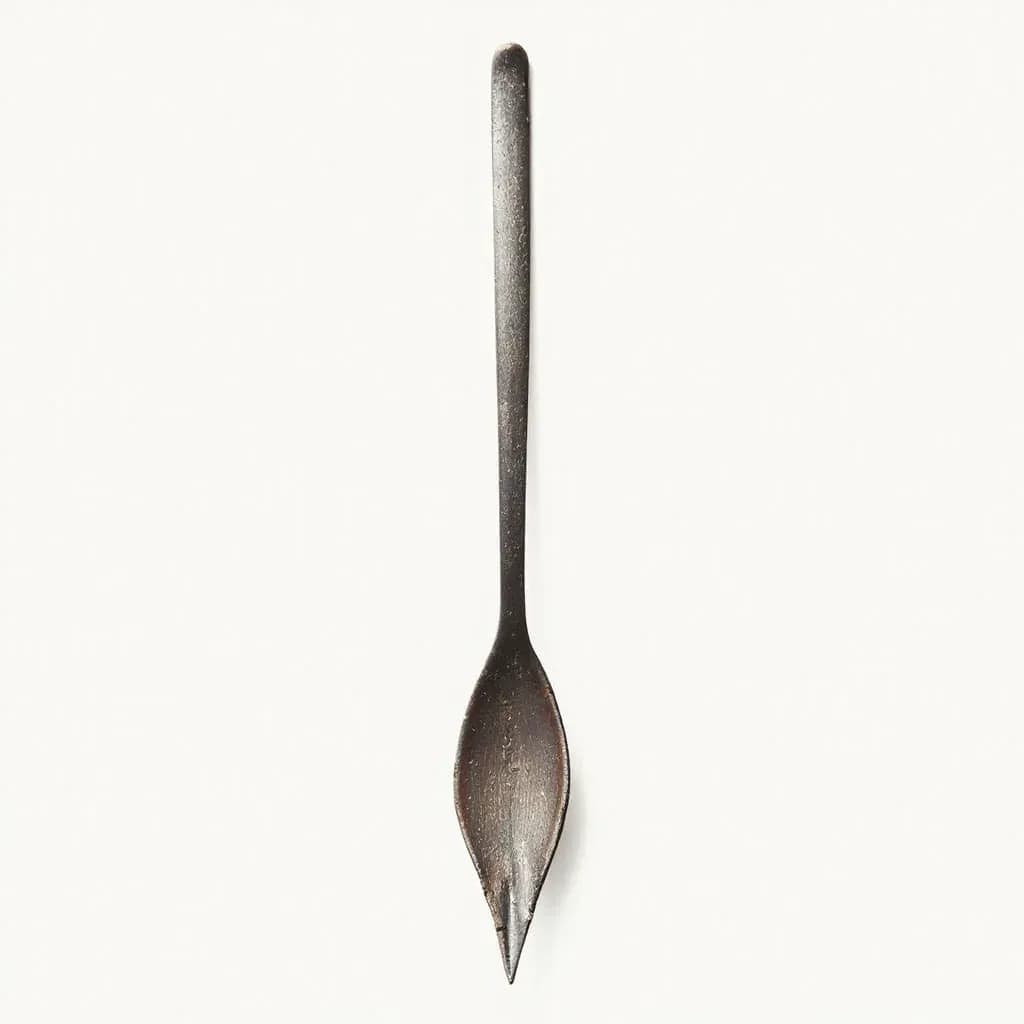
A narrow spoon with a sharp edge used to scrape blood line and guts from inside fish or game.
A gutting spoon is a slim metal spoon with a sharpened or serrated edge used to scoop out the dark blood line, organs, and membrane along the spine of fish and game. The bowl shape lets it reach into the cavity and scrape clean against the bone where fingers and knives cannot. It is a common tool when processing fresh-caught fish before cooking.
A gutting spoon is a long-handled, narrow-bowled spoon with one edge of the rim sharpened into a working edge, designed for the messy, blunt-force work of opening a fish or small animal cavity. The bowl is shallow and elongated so it can slide along the spine of a trout, into the ribcage of a rabbit, or through the body cavity of a small bird without the user ever putting a sharp point near their fingers. The sharpened rim does the cutting of membrane and the dark kidney bloodline, while the curve of the bowl scoops innards away in a single motion.
This tool matters most in the moments when a knife is either too dangerous or too clumsy. A flexible boning knife can pierce skin by accident and slices cleanly through guts, spreading their contents; a gutting spoon's rounded bowl cannot stab, and its scooping action lifts material out cleanly. It is the traditional choice of anglers, market porters, and gamekeepers for whole fish in the 1–10 lb range (trout, mackerel, small salmon, panfish) and for small birds and rabbits where a dedicated gutting knife feels excessive. In practical terms, it trades a fillet knife's precision for control, which is exactly the right trade-off at the cleaning station.
Behaviorally, a gutting spoon wants to be pulled, not pushed. The sharpened edge cuts best on a draw stroke toward the user, and the bowl holds just enough material to be emptied every pass without spilling. A wet, slippery bowl releases innards readily; a dry one drags and tears. This rhythm — wet, draw, scoop, empty, rinse — is the whole technique, and the tool is forgiving enough that a beginner with a sharp spoon can clean a fish more confidently than a beginner with a sharp knife.
Alternatives
Types & varieties
Traditional heirloom style, common in European hunting households. The dense natural material holds a working edge and will not rust, but it can dry and crack if not oiled.
Light and gentle on delicate fish flesh. The edge dulls fastest of any material and is best for scraping rather than aggressive cutting.
Modern, dishwasher-safe, and the easiest to keep sharp. The most common retail version today, including Westmark-style designs with a serrated or honed rim.
Inexpensive, non-reactive, and safe for aluminum cookware. Sold in sporting-goods shops for casual anglers; edge life is short but adequate for a season.
A hybrid design that adds a serrated scaling edge or a notched back edge for descaling fish, letting one tool handle both gutting and scaling.
How it compares to knives and other gutting tools
The gutting spoon occupies a deliberate middle ground. A flexible fillet knife is sharper and more precise but slices through guts as readily as it slices skin, and its point can puncture the belly wall with a careless grip. A dedicated gutting knife (the stiff, upswept blade favored for deer and boar) is overkill on a 12-inch trout and clumsy in a small bird's body cavity. A spoon is the right tool when the job is removing a lot of soft material from a confined space without cutting it apart: the bowl scoops, the rim cuts only what you want cut, and the long handle keeps the hand clear of fins, feathers, and mess.
For cooks who clean fish often, the practical choice is usually a pair: a sharp fillet knife for the final separation of flesh from bone, and a gutting spoon for the dirty opening work that precedes it. For cooks who own only one specialized tool and are uneasy with knives, the spoon is the more approachable and more forgiving option.
Care and maintenance by material
- Stainless steel: wash and dry after use; sharpen the working rim on a fine stone or diamond rod as needed.
- Bone and antler: wash in cool water only (no dishwasher), dry immediately, and rub with food-safe mineral oil monthly to prevent drying and cracking.
- Hardwood: rinse, towel-dry, and stand upright to air-dry; never soak. A light coat of mineral oil refreshes the surface and keeps the edge from fuzzing.
- Polymer: dishwasher-safe; replace when the sharpened rim rounds over, as the edge cannot be reliably re-honed.
Common uses
Tips & pitfalls
- Sharpen one edge of the rim on a fine stone before use — a dull edge tears the belly lining instead of cutting it, and the resulting mess is harder to clean than the original guts.
- Work the spoon tip-to-heel along the bloodline in a single, confident pass; the kidney is a thin red strip and comes away cleanly when the edge is sharp and the motion is steady.
- Keep the bowl wet and slippery so guts slide off easily between scoops — a dry bowl drags and smears.
- Rinse the spoon in cold water as you work; warm water sets proteins and leaves a gummy film that dulls the edge and contaminates later scoops.
- Do not pry or lever with the handle — the bowl is the cutting surface. Using the stem as a lever can snap bone or wooden handles and will not cut effectively.
- Hold the fish belly-down over a board and let gravity help: innards fall away on their own, fewer rinses are needed, and the cavity stays cleaner for the cook who is about to fillet it.
- Bone and antler spoons should be oiled lightly with food-safe mineral oil after washing to prevent drying, hairline cracks, and flavor transfer to delicate fish.
Good to know
- Also called
- Sportsman's spoon, hunting spoon, game spoon, bloodline spoon
- Primary materials
- Bone, antler, hardwood, stainless steel, polymer
- Typical length
- Around 7–8 in (18–20 cm) overall; bowl roughly 1.5–2 in wide
- Edge geometry
- One side of the rim is sharpened or lightly serrated; cuts on a draw stroke toward the user
- Origin
- Traditional field tool carried by anglers and gamekeepers since the 18th–19th century; predates the modern fillet knife
- Safe skill level
- Beginner; the rounded bowl cannot pierce skin, making it safer than a knife for novice cleaners
- Ideal quarry
- Whole fish 1–10 lb (trout, mackerel, small salmon, panfish) and small game such as pheasant, grouse, and rabbit
- Working motion
- Pulled toward the user (draw stroke), not pushed; the sharpened rim cuts on the return pass
Also called
Fish Gutting Spoon · Blood Line Spoon
Related

Peeler
Swift blade for stripping skin off fruit and vegetables

Grater
Sharp-toothed surface for shredding cheese and vegetables

Microplane
Ultra-fine rasp for citrus zest, garlic, and hard cheese

Mixing Bowl
All-purpose bowl for combining, whisking, and tossing

Whisk
Looped wires that beat air into eggs, cream, and sauces

Spatula
Flat blade for flipping, lifting, and scraping

Slotted Spoon
Pierced spoon that lifts solids and drains the liquid behind

Wooden Spoon
Gentle, heat-friendly spoon for stirring anything