Prep Tools
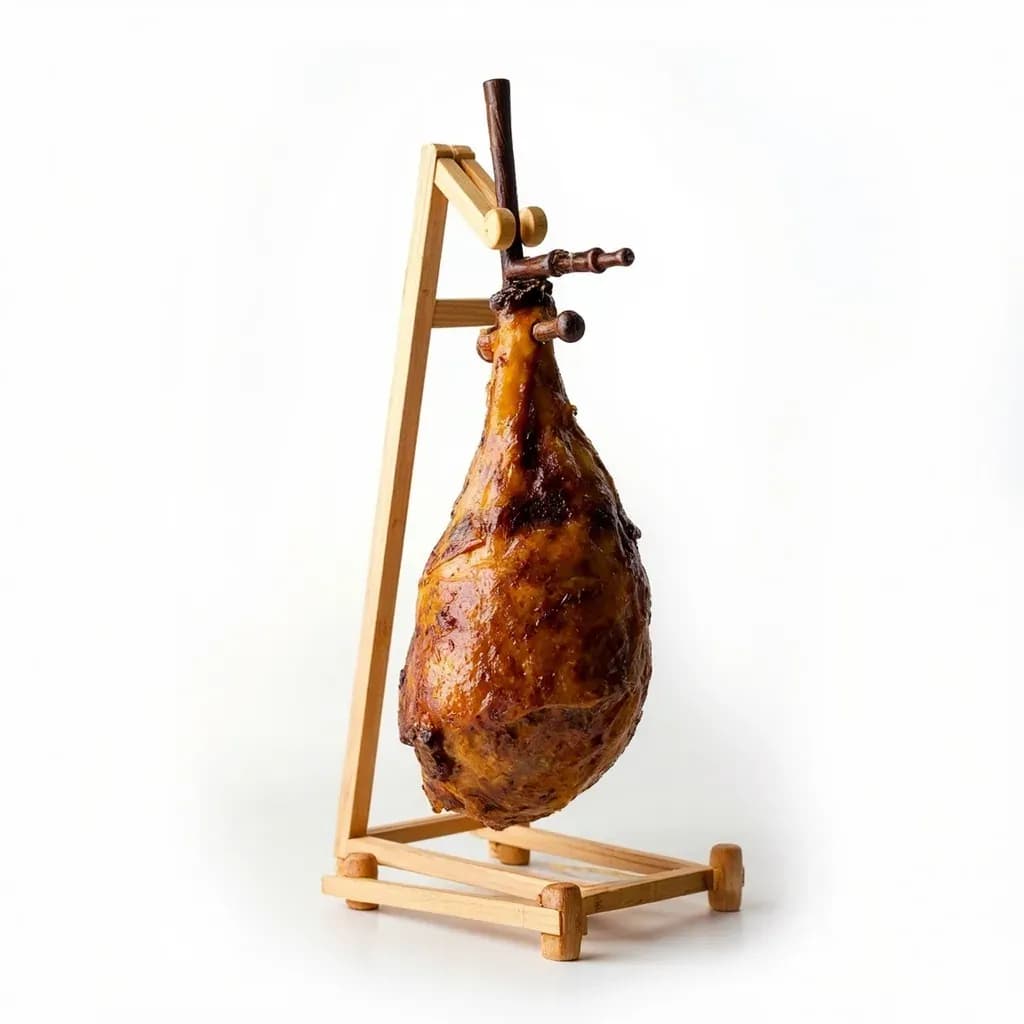
Ham Holder Stand (Jamonero)
A clamping stand that grips a whole cured ham leg steady for slicing.
A jamonero is a wooden or metal stand that holds a whole bone-in cured ham, such as jamón serrano or ibérico, firmly in place. It is used in Spanish kitchens and at the table to carve thin slices safely with a long flexible knife. The clamp and tilting cradle let the carver rotate the leg to reach every face of the ham.
A jamonero is a clamping stand that grips the bone of a whole, bone-in cured ham leg and holds it at a comfortable working angle for thin, hand-sliced service. It is, in effect, a sturdy third hand: a base, a post, and a clamp that bites onto the bone — usually at the hoof end — so the carver can focus entirely on the knife. Without one, a whole jamón or prosciutto is awkward to handle: it rolls, the bone obstructs the blade, and slices come out ragged or dangerously uneven. The stand solves that problem with a piece of hardware so simple it looks almost improvised, which is part of why good ones and bad ones look nearly identical until you actually start carving.
The tool emerged from the Spanish tradition of the cortador de jamón — the professional ham carver — and is now standard equipment anywhere a whole leg is brought to the table, counter, or bar: Spanish and Portuguese homes, Italian prosciutto service, tapas bars, and the deli counter. Most are wooden (beech, pine, or mahogany), though stainless steel is common in professional settings. The stand itself is not a complicated purchase, but the choice of fixed versus swivel, and the quality of the clamp and base, has an outsized effect on how the carving goes.
A whole leg is heavy — roughly 5–9 kg (11–20 lb) for a full jamón, 2.5–4.5 kg for a paletilla (shoulder) — and once you are a third of the way through it, the geometry has changed: the hoof no longer gives you anything to grip, and the remaining meat sits at a different angle. A swivel base is the elegant answer to that problem. A fixed stand is cheaper and more traditional-looking, but it asks you to unmount and remount the leg when you want to work the other side. For anyone carving more than a couple of times a year, the swivel is worth the modest premium.
Alternatives
Types & varieties
Ham sits at a fixed angle; the simplest, most traditional, and least expensive style. Requires unmounting the leg to work the opposite face.
Base pivots so the carver can flip from maza to babilla without remounting; the most ergonomic and common modern type.
Larger and taller; sized for the full rear leg, which can weigh up to 9 kg (20 lb).
Smaller and shorter; sized for the front shoulder cut, which is more tapered than a full leg.
Classic Spanish choice with a warm tabletop look; will absorb odors and stains if not kept dry.
Hygienic, durable, and easy to wipe down; the standard in professional delis and bars.
Covers the cut face between sessions to slow drying and oxidation.
All-in-one service setup common in restaurants and at long tasting counters.
The Two Faces of a Cured Ham
Every whole leg has two distinct working faces, and understanding them is what turns a stand-and-knife setup into proper carving. The shape of the leg is roughly conical, narrow at the hoof and broad at the cut end, and the two long sides behave very differently under the blade.
- Maza: the wider, fleshier, more marbled side. It is the side that faces up when you mount the ham hoof-up, and it is the side most carvers start on because the slices are larger, more forgiving, and visually generous.
- Babilla: the narrower, leaner side, opposite the maza. Slices are smaller and the meat is drier; it is traditionally served later in the carving and is where good knife control matters most.
- Contramaza: the zone between maza and babilla, often grouped with the babilla in casual carving but technically distinct; it transitions from fatty to lean and marks the turn point when flipping the leg.
- Punta: the tapered end nearest the hoof, where the bone (the caña) runs long. Trimming and slicing here requires shorter, more controlled strokes.
Fixed vs. Swivel: The Practical Difference
The clamp and the base are the only parts of a jamonero that really matter. A wobbly clamp or a thin, top-heavy base is the single biggest source of frustration when carving — far more than the wood species or the finish. Choosing between fixed and swivel comes down to how often you carve and whether you mind remounting the leg partway through.
- A swivel base is the most user-friendly choice: once the ham is clamped, you pivot the entire stand to attack the maza, then pivot it the other way to attack the babilla, with no remounting and no loss of orientation.
- A fixed stand forces you to unmount the leg and reclamp it in the opposite orientation when you finish the maza. This is fiddly, especially when the hoof has been largely cut away and there is less bone to grip.
- For occasional home use (one or two legs a year), a fixed wooden stand is traditional, attractive, and adequate. For more frequent carving, a swivel stand pays for itself in time and clean slices.
- Weight and footprint matter: a heavy base with a low center of gravity will not slide on a smooth counter when you are pressing the knife through. Lightweight stands tend to creep.
Mounting and Orienting the Leg
How you put the ham on the stand determines the whole carving session. The conventional Spanish starting position is hoof-up, maza-up; this is not aesthetic, it is ergonomic.
- Start hoof-up so the meatiest face (the maza) is on top and the cut face is up. This is the easiest geometry for a right-handed carver and yields the largest, most photogenic slices first.
- Tighten the clamp on the bone, not on the rind or fat, so the leg is truly immobilized. A clamp that bites into soft tissue will slip as you cut.
- Begin by trimming a clean, flat face on the cut end before you start slicing the side. This creates a stable reference surface and reveals the marbling and color of the meat.
- Trim the rind and outer fat only a few slices ahead of the knife. Removing the protective fat cap in bulk dries the cut face and dulls the appearance of the slices.
Common uses
Tips & pitfalls
- Mount the ham hoof-up to start; the maza (meatiest face) is on top in this position and is the easiest side to begin on.
- Clamp onto the bone, not the meat or rind — a clamp that bites soft tissue will slip under knife pressure.
- Slice with a long, thin, flexible ham knife held nearly parallel to the face of the meat; long, even strokes give cleaner, thinner slices than sawing.
- Only expose the cutting face you are actively working on; leave the trimmed fat cap or a clean cloth over the rest to prevent drying and oxidation.
- Bring the ham to roughly 20–22°C (68–72°F) before carving — cold fat is brittle, tastes muted, and flakes unevenly under the blade.
- Aim for slices about 1–1.5 mm thick, with a thin streak of fat along one edge; this is the traditional presentation and the fat carries most of the flavor.
- When the maza is finished, pivot a swivel stand (or remount on a fixed stand) to attack the babilla; rotate the hoof to the opposite side and reclamp on fresh bone.
- Between sessions, cover the cut face with a layer of the trimmed fat or a light cloth, then plastic wrap, and store at cool room temperature; do not refrigerate a mounted leg unless the room is warm.
- Avoid the common mistake of stripping the entire rind and fat cap at once — trim only a few slices ahead of the knife to keep the cut face moist and attractive.
- Avoid loosening the clamp mid-carve: a wobbling leg produces ragged slices and increases the risk of the knife skating off the bone.
Good to know
- Origin
- Spain; developed alongside the cortador de jamón (ham-carving) tradition
- Spanish name
- Jamonero (also soporte para jamón or porta-jamones)
- Primary purpose
- Holds a whole bone-in cured ham steady at a working angle for thin, hand-sliced service
- Common materials
- Beech, pine, mahogany, or oak wood; also stainless steel and plastic
- Holds
- A whole jamón (rear leg, 5–9 kg) or paletilla (front shoulder, 2.5–4.5 kg)
- Clamping point
- The bone, typically at the hoof (pezuña) end
- Paired knife
- Long, flexible 25–30 cm (10–12 in) ham knife (cuchillo jamonero)
- Cleaning
- Hand-wipe wooden stands with a dry or barely damp cloth; never soak or put in a dishwasher
Also called
jamonero · ham clamp · ham slicing stand
Related

Peeler
Swift blade for stripping skin off fruit and vegetables

Grater
Sharp-toothed surface for shredding cheese and vegetables

Microplane
Ultra-fine rasp for citrus zest, garlic, and hard cheese

Mixing Bowl
All-purpose bowl for combining, whisking, and tossing

Whisk
Looped wires that beat air into eggs, cream, and sauces

Spatula
Flat blade for flipping, lifting, and scraping

Slotted Spoon
Pierced spoon that lifts solids and drains the liquid behind

Wooden Spoon
Gentle, heat-friendly spoon for stirring anything