Prep Tools
High-Pressure Wash-Down Hose
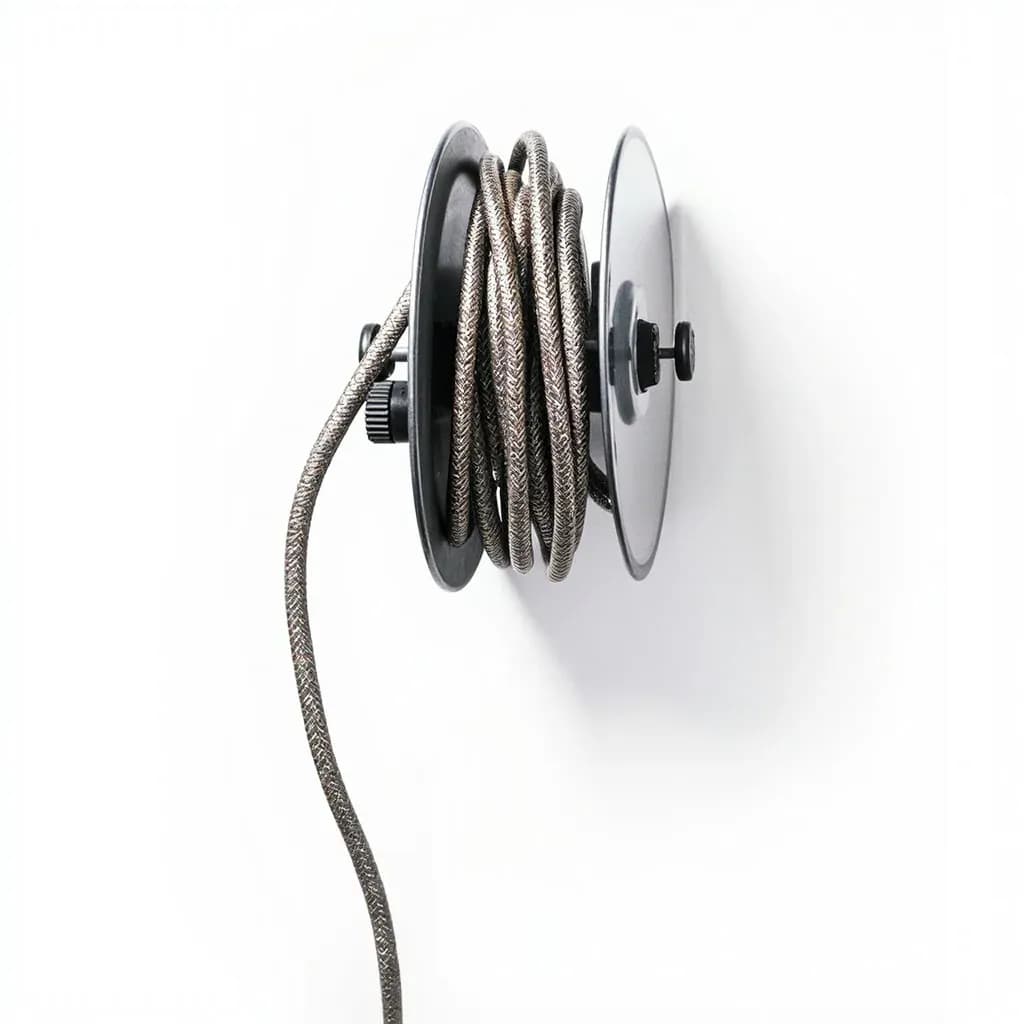
A coiled spray hose for blasting down floors, equipment, and prep surfaces in pro kitchens.
A high-pressure wash-down hose delivers a strong jet of hot or cold water for cleaning commercial kitchen floors, drains, and large equipment. It is used during closing and deep-cleaning routines to rinse away grease and food debris that mops cannot shift. Many units mix in detergent or sanitizer and retract onto a wall-mounted reel.
A high-pressure wash-down hose is the heavy-duty spray hose mounted on a wall or ceiling reel in a commercial kitchen, paired with a hand-squeeze spray valve (or, in the toughest jobs, fed by an electric or gas pressure washer). In day-to-day use it is the workhorse at the dish pit and the end-of-shift cleanup station: it rinses dishes, blasts food residue off prep tables, washes down floors and walls, and feeds 180 °F water into the routine that makes a kitchen pass inspection. Most kitchen operators treat two slightly different tools as a single coordinated system — the everyday pre-rinse spray hose at line pressure (roughly 40–80 PSI at the nozzle) and the true high-pressure washer hose (1,000–3,000+ PSI) reserved for floors, drains, loading docks, and periodic deep cleans.
The hose matters because it is the only piece of equipment in the kitchen that routinely delivers both the volume and the temperature of water required for effective hot-water sanitizing across surfaces. Plain mops and buckets rarely hold 180 °F from start to finish, and pressure washers without a food-grade hose can contaminate the water they spray. A proper wash-down assembly is also the simplest way to make a HACCP plan operational — open the valve, hit the surface with measured heat and pressure, then drain.
In practice the tool is judged on three things: how hot it will run without softening, how cleanly it retracts out of the work zone, and how long the fittings and seals last under daily chemical exposure. White or blue food-grade covers, NSF/ANSI 169 certification, and a stainless or chrome-plated brass spray valve are the visual cues that a hose belongs in a professional kitchen; garden-hose green or unmarked rubber means it does not.
Alternatives
Types & varieties
The spring-loaded squeeze valve on a coiled 3/8–1/2 in hose at the dish pit; line pressure (40–80 PSI), not true high-pressure, but the everyday workhorse.
180 °F-rated rubber hose, usually on a wall reel, used to rinse floors, equipment, and walls at the end of a shift.
Utility hose for produce prep, ice-machine drains, or any task where hot water is unnecessary or would damage a surface.
Wire-braided reinforced hose paired with an electric or gas pressure washer, 1,000–3,000+ PSI, for deep-cleaning floors, drains, and exterior service areas.
Fully sealed cabinet reel used in hygiene-critical zones (dairy, meat rooms, pharma-grade kitchens) where exposed hose surfaces are unacceptable.
Lightweight wall- or ceiling-mounted reel; common in smaller restaurants — cheaper, less hygienic, harder to clean around.
Push-button rewind; standard in high-volume operations where manual cranking slows closing duties.
Venturi or proportioner built into the spray valve for one-step cleaning-and-sanitizing without a separate bucket.
Allows fast swap between fan nozzles, foamers, and the pressure-washer unit without tools.
Certified for direct contact with food — filling kettles, rinsing produce — with a smoother inner liner and no plasticizers that could taint water.
Line pressure vs. true high pressure
Most kitchen staff call every wall-mounted spray a 'high-pressure hose,' but there are two distinct tools sharing the same reel station. The everyday pre-rinse assembly runs on building hot-water pressure (typically 40–80 PSI at the nozzle) and is what you use to clear plates, rinse a prep table, or wash a floor. The true high-pressure washer hose is thicker, wire-braided, and only used when fed by an electric or gas pressure washer at 1,000 PSI and up; it is reserved for stubborn grease, drain lines, dumpster pads, and weekly deep cleans. Treating the two interchangeably is a common mistake — the lighter pre-rinse hose cannot take sustained high pressure and will balloon or burst, while using a pressure-washer hose at line pressure delivers a weak, unsatisfying stream and wastes the extra cost.
Temperature targets that actually sanitize
Hot water is the whole point of a wash-down hose, and the temperature at the nozzle is what counts, not the temperature at the heater. 180 °F (82 °C) is the long-standing USDA benchmark for floor and equipment wash-down in meat, poultry, and food-processing plants. The FDA Food Code accepts 171 °F (77 °C) as the minimum for utensil sanitizing, so plumb equipment rooms for 180 °F+ and assume the nozzle will land a few degrees lower. Insulate the supply line to the reel — uninsulated pipe can drop 10 °F per 25 ft, and by the time water reaches the far end of a long hose reel it may be below sanitizing temperature entirely.
Common uses
Tips & pitfalls
- Verify the hose is rated for the temperature and chemical you plan to use; standard rubber hoses have a published maximum sanitizing-chemical concentration, and exceeding it swells the inner liner.
- Aim at roughly a 45° angle to floors and walls rather than straight on — this lifts debris and moves it toward the drain instead of driving it into grout lines.
- Drain and fully recoil the hose after every use; standing water left inside the hose accelerates bacterial growth and shortens the life of the inner liner.
- Replace the washers and O-rings inside the spray valve every 60–90 days; a dripping valve wastes hot water, erodes fittings, and quietly drops the nozzle below sanitizing temperature.
- Use a fan-jet nozzle for broad surfaces and save the pinpoint nozzle for crevices and equipment corners — pinpoint jets at 1,000+ PSI can etch soft metals and shred rubber gaskets.
- Never aim a high-pressure washer hose (1,000+ PSI) at electrical panels, control boards, glass seals, or unsealed wood; even food-grade machines are not universally safe.
- Sanitize the hose itself weekly by running a 50–100 ppm chlorine or quat-amm solution through it for 2–3 minutes, then flushing with clean potable water.
- Install a backflow preventer on the supply line — it is required by NSF/ANSI 169 and by most U.S. plumbing codes, and it is the only thing standing between a submerged hose end and a contaminated water system.
Good to know
- Primary function
- Delivers pressurized hot or cold water to rinse and sanitize floors, walls, and equipment in commercial kitchens and food-processing facilities.
- Operating pressure
- Line-pressure pre-rinse hoses run about 40–80 PSI at the nozzle; true high-pressure washer hoses used in the same facility operate at 1,000–3,000+ PSI.
- Hot-water rating
- Rated for 180–200 °F (82–93 °C); 180 °F is the long-standing benchmark for hot-water sanitizing in meat, poultry, and food-processing wash-down.
- Common materials
- EPDM or nitrile rubber tube, often with a white or blue food-grade cover; stainless-steel or chrome-plated brass fittings. Reinforced wire-braided covers are used on the high-pressure variants.
- Standard diameters
- 1/2 in and 3/4 in ID for wall reels; 3/8 in for compact pre-rinse assemblies at the dish pit.
- Reel lengths
- 15, 25, 35, and 50 ft cover most back-of-house layouts; longer runs lose pressure and temperature at the nozzle.
- Certifications
- NSF/ANSI 169 (Specialty Food Equipment) and FDA food-contact compliance; 3-A or USDA-accepted markings appear on dairy and meat-processing models.
- Sanitizer compatibility
- Food-grade hoses tolerate dilute chlorine, iodine, and quat-amm sanitizers; always cross-check the manufacturer's chemical-resistance chart before prolonged exposure.
Also called
wash-down hose · spray hose · pressure rinse hose
Related

Peeler
Swift blade for stripping skin off fruit and vegetables

Grater
Sharp-toothed surface for shredding cheese and vegetables

Microplane
Ultra-fine rasp for citrus zest, garlic, and hard cheese

Mixing Bowl
All-purpose bowl for combining, whisking, and tossing

Whisk
Looped wires that beat air into eggs, cream, and sauces

Spatula
Flat blade for flipping, lifting, and scraping

Slotted Spoon
Pierced spoon that lifts solids and drains the liquid behind

Wooden Spoon
Gentle, heat-friendly spoon for stirring anything