Prep Tools
Honey Gate (Bottling Valve)
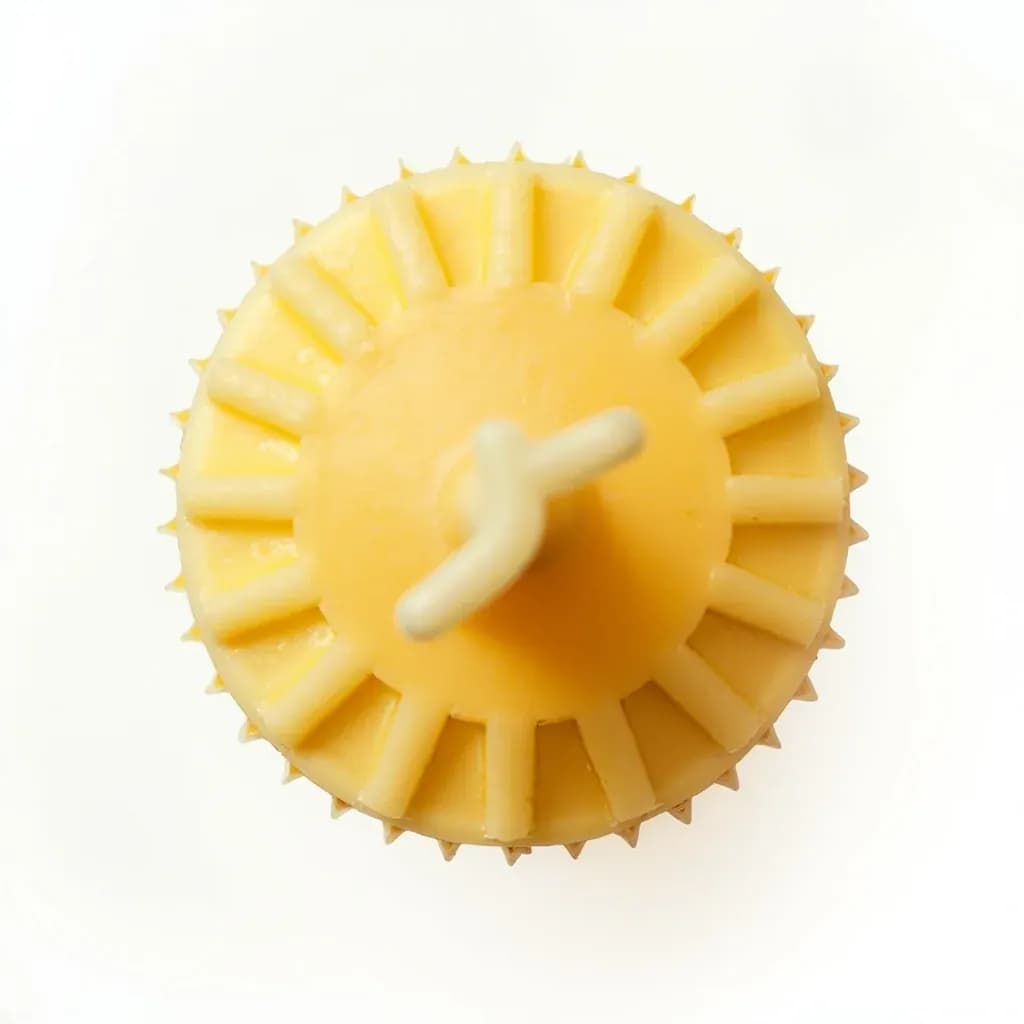
A lever-action spigot fitted to a honey bucket to dispense thick honey cleanly into jars.
A honey gate is a slide or lever valve mounted near the base of a honey bottling bucket or extractor that opens to pour viscous honey into jars without drips or mess. The flat gate design handles thick liquids and seals fully to stop slow oozing between fills. Beekeepers rely on it for clean, controlled bottling straight from the harvest bucket.
A honey gate is a wide-bore slide valve that mounts through the side of a food-grade bucket, turning a settling pail of extracted honey into a controlled bottling station. The lever action slides an internal gate open or closed, giving a positive mechanical shutoff that does not rely on springs or rubber washers — components that gum up quickly when coated in crystallizing sugar. Because the bore is wide and unobstructed, the gate passes honey, and other viscous liquids, without the chokepoint an ordinary faucet would create.
The design is a scaled-down industrial bottling valve, adapted for hobbyist beekeepers in the late 20th century. It matters because extracted honey, even when warmed, is far thicker than water; pouring it straight from a bucket produces splashing, foam, drips, and air pockets in the jar. The gate gives the bottler a single, slow, repeatable pour with one hand free to cap and weigh.
Fitting one is a ten-minute project: drill a clean hole near the base of a food-grade pail, thread the shank through with a sealing gasket, and snug it down. Once installed, the same bucket can be reused across harvests, and the tool pays for itself the first time you fill a dozen queen-line jars without a sticky countertop.
Alternatives
Types & varieties
Lightweight, inexpensive, food-safe; prone to cross-threading and cracking if over-tightened; the common entry-level choice
More durable, tolerates warmer honey and tighter torque, and outlasts plastic by many seasons; favored by serious hobbyists and small producers
Fits the most common 5-gallon honey buckets sold by major beekeeping suppliers (Mann Lake, Harvest Lane patterns)
Fits buckets with a finer thread pitch; must be matched exactly to avoid a persistent leak
Sized for 1- and 2-gallon bottling pails or smaller settling tanks; useful when only a few jars are needed
Fitting the gate to a bucket
A clean installation is the difference between a gate that lasts a decade and one that weeps honey onto the floor. The work has three points where things go wrong: the hole, the seal, and the torque.
- Drill a burr-free hole sized to the gate's shank — a hole saw or step drill cuts more cleanly than a utility knife and gives the O-ring a flat surface to seat against.
- Match thread pitch before you buy: a coarse-thread gate will not seal in a fine-thread bucket no matter how hard you tighten it, and vice versa.
- Apply any sealant (food-grade silicone or beeswax) only on the outside of the shank where it meets the bucket wall; sealant inside the bore will contact honey and is hard to remove.
- Snug, then stop: plastic threads strip easily. A gasket plus hand-tight is usually enough; stainless can take a wrench without complaint.
Temperature, settling, and flow
A honey gate does not fight viscosity — it simply gives the honey a way out. Getting the timing right before you open the lever is what separates clean jars from foam-flecked, drippy ones.
- Warm the bucket in a warm room, water bath, or seed-warming mat to 95–105 °F; cold honey stalls in the bore and the gate feels 'empty' when it is actually full of stuck sugar.
- Settle 24–48 hours before bottling so fine wax, pollen, and trapped air rise to the top — and stay there when the gate is open, because the gate draws from the bottom.
- Crack the lever open the first time: a fully open gate on a full 5-gallon bucket of warm honey produces a startling surge, and once the surge is in the jar you cannot get it back into the bucket.
- Plan jar height before you set the bucket. A 1-lb queen-line is about 5" tall and a 2-lb jar is about 7"; the gate adds 4–6" of needed clearance, so a sturdy bench or block under the bucket saves a lot of awkward bending.
Common uses
Tips & pitfalls
- Warm honey to 95–105 °F before opening the gate — cold honey stalls in the bore and looks like a clog.
- Settle honey 24–48 hours after extraction so bubbles and wax float to the top, away from the gate's draw point.
- Do not over-tighten a plastic gate; the threads strip easily and a crushed O-ring leaks worse than a loose one.
- Match the gate's thread pitch (coarse vs. fine) to the bucket — a mismatch cannot be fixed with more torque.
- Use food-grade sealant only on the outside of the shank; sealant inside the bore contacts honey and is nearly impossible to rinse clean.
- Clean only with warm water. Soap residue clings to the sliding mechanism and taints the next batch.
- Crack the lever open the first time you use a new gate on a full bucket — a wide-open surge on warm honey is genuinely surprising.
- Set the bucket at a height that gives you 4–6" of clearance under the gate; stooping with a heavy pail of honey is how spills happen.
Good to know
- Tool type
- Lever-action slide valve (gate) fitted to a food-grade bucket to dispense honey
- Primary materials
- Food-grade polypropylene plastic or stainless steel
- Standard bucket size
- 5-gallon (19 L) food-grade plastic pail; 3-gallon versions also common
- Hole / thread size
- 1.5" (≈38 mm) threaded shank; thread pitch (coarse or fine) must match the bucket exactly
- Sealing method
- O-ring or gasket against the bucket wall; food-grade silicone or beeswax on the outside of the shank
- Ideal honey temperature
- 95–105 °F (35–40 °C) for steady flow; below ~70 °F honey is too viscous to pour cleanly
- Settling time before bottling
- 24–48 hours after extraction so air bubbles and wax particles rise to the top
- Cleaning
- Warm water only; no soap, since residues cling to the mechanism and taint the next batch
Also called
Bottling Valve · Honey Valve · Honey Spigot
Related

Peeler
Swift blade for stripping skin off fruit and vegetables

Grater
Sharp-toothed surface for shredding cheese and vegetables

Microplane
Ultra-fine rasp for citrus zest, garlic, and hard cheese

Mixing Bowl
All-purpose bowl for combining, whisking, and tossing

Whisk
Looped wires that beat air into eggs, cream, and sauces

Spatula
Flat blade for flipping, lifting, and scraping

Slotted Spoon
Pierced spoon that lifts solids and drains the liquid behind

Wooden Spoon
Gentle, heat-friendly spoon for stirring anything